

Your competitors are talking about augmented reality. Your ERP may already mention digital twins. At the last trade show, several booths were offering virtual reality demonstrations.
But concretely, what does this change for your SME?
XR, or extended reality, is not just a family of immersive technologies. For a B2B company, it can become a very practical innovation lever: to train better, sell better, explain better, maintain better and support better decisions.
But it has to be approached in the right order.
This article is not designed to list every possible XR use case. We have already done that in our guide to 15 practical examples of XR in business, as well as in our article dedicated to the XR use cases with the strongest ROI potential.
Here, the goal is different: to understand how a B2B SME can integrate XR into a realistic, progressive and measurable innovation approach, without falling into the trap of a showcase project.
💡 To get straight to the point, here are the key takeaways.
- XR becomes relevant when it solves a specific business problem, not when it is used simply to “look innovative”.
- For a B2B SME, the best starting points are often training, maintenance, sales, project visualization or product demonstrations.
- A good first XR project should be simple, focused, reusable and connected to a measurable indicator.
- XR does not replace your existing tools. It makes them more tangible when immersion brings real value.
- ROI figures should always be put into context, depending on the sector, the number of users, the quality of the experience and the level of adoption.
- An effective XR strategy starts with a pilot, not a full platform.
- The challenge is not to choose the most advanced technology, but the right level of immersion for the right use case.
Why XR is becoming an innovation topic for B2B SMEs
For a long time, XR was associated with large corporations, futuristic prototypes or spectacular demonstrations. That image still exists, but it is less and less representative of reality.
The European Commission1 states that around 90% of companies working on XR in Europe are SMEs. It also notes that the European XR market was expected to reach between €35 billion and €65 billion in 2025. These figures remain projections, but they point to a clear trend: XR is no longer reserved for multinationals or research labs.
For B2B SMEs, this changes the way innovation should be approached.
The question is no longer: “Should we do XR?”
The real question becomes: “In which situation could immersion help us understand better, transmit better or make better decisions?”
XR becomes useful when it responds to a real friction point:
- training that is difficult to reproduce in real conditions
- a complex product that is hard to explain
- a project that is difficult to visualize
- a machine that cannot be transported to a trade show
- a maintenance process that depends too heavily on one expert
- a sales cycle slowed down by a lack of projection
- decisions delayed by a poor understanding of the project
In these situations, innovation does not mean adding a new layer of technology. It means making a situation clearer, more accessible and easier to act on.
XR, VR, AR, MR: just enough to frame the topic
XR is an umbrella term that brings together several immersive technologies.
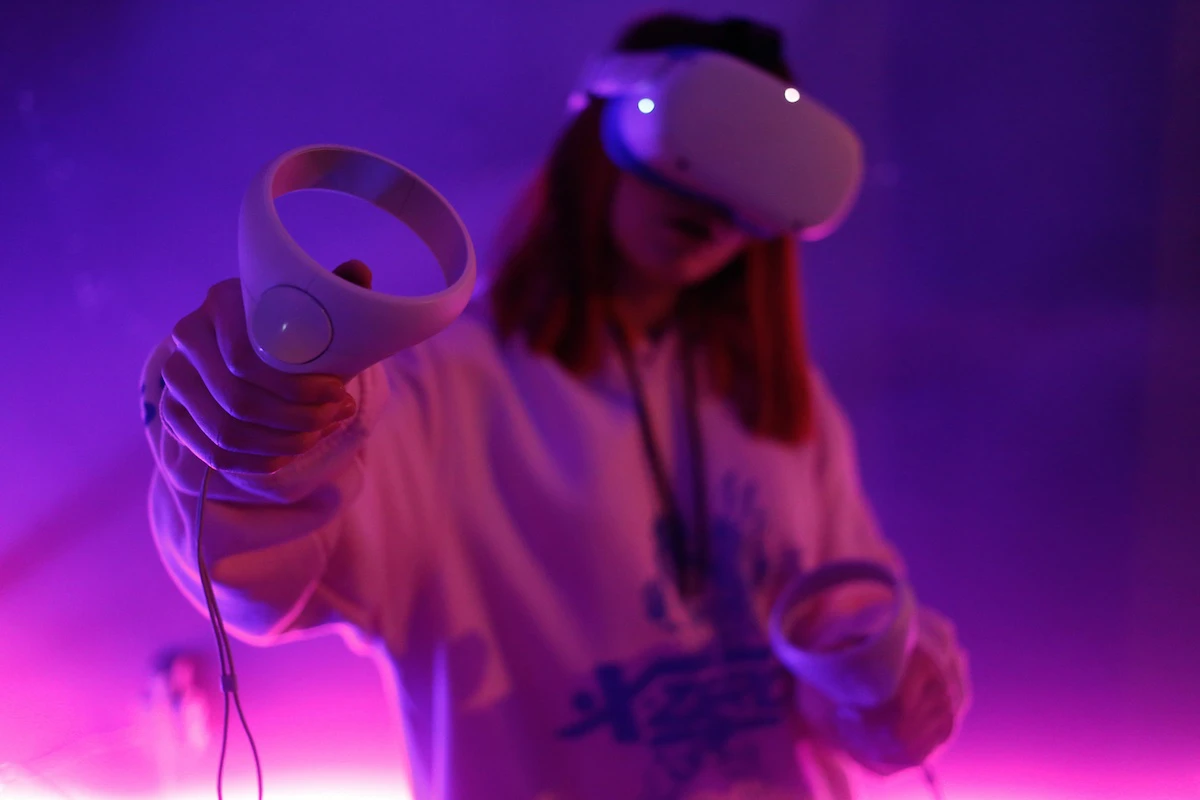
Virtual reality places the user in a fully digital environment, usually through a headset. It is useful when you want to simulate, train, visit or experience a situation.
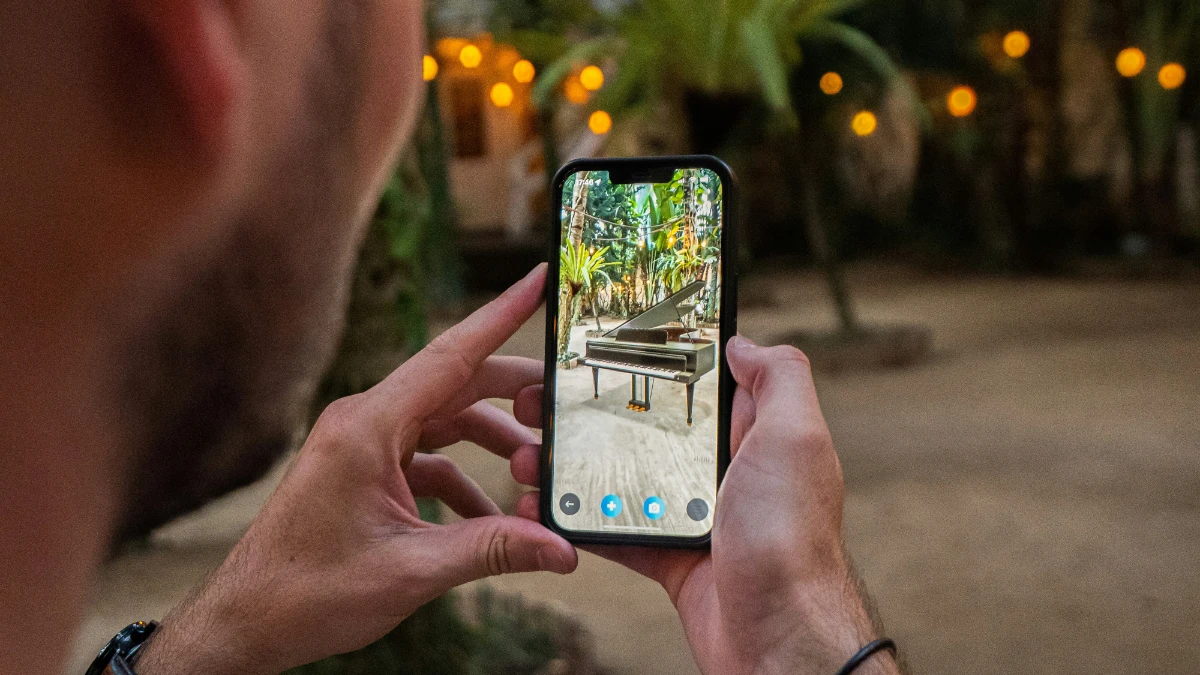
Augmented reality adds digital elements to the real world, through a smartphone, tablet or connected glasses. It is useful when the user needs to remain in their environment while receiving contextual information.
Mixed reality goes further by anchoring digital objects in physical space, with a more advanced level of interaction.
These technologies do not serve the same needs. VR immerses. AR contextualizes. MR enables a more advanced interaction between the real and digital worlds.
To explore the differences in more detail, the best starting point is our dedicated guide: VR, AR, MR, XR: understanding the differences to make the right choices.
In an innovation strategy, the key point is simple: technology comes after the use case.
What XR changes in an innovation strategy
An innovation strategy is not about testing every new tool on the market. It is about finding better ways to solve existing problems.
This is precisely where XR can become useful.
It turns an explanation into an experience. An employee no longer just reads a procedure: they practice it. A prospect no longer just looks at a brochure: they explore a product or a space. A project team no longer just comments on a model: they visualize it at scale, in a context closer to reality.
This shift matters because many business blockers come from the gap between what is explained and what the other person actually understands.
XR can reduce that gap.
It can make abstract concepts visible, make risky situations safe to practice, make future projects tangible or make complex decisions easier to share.
For an SME, the value is also methodological. An XR project can begin within a limited scope: one training module, one demonstration, one procedure, one virtual visit, one trade show or one strategic product.
There is no need to transform everything from day one.
An immersive experience can be designed as an innovation prototype: you test, observe, measure and then decide whether the use case deserves to be enriched or deployed.
How to choose your first XR experimentation area
To avoid repeating our articles dedicated to XR use cases and ROI, we will not detail every possible use case here. The goal is rather to understand how to choose the right first experimentation area.
A good first XR project usually brings together four criteria.
| Criterion | Why it matters |
|---|---|
| A clear problem | XR must solve a real friction point, not respond to a desire for novelty |
| A frequent or strategic use | The more the experience is reused, the more it can justify its cost |
| A measurable indicator | Without KPIs, the project will be difficult to defend |
| A limited scope | A simple pilot reduces risk and supports adoption |
From there, several starting points can be considered.
If your challenge is skills development: look at immersive training
Training is often one of the most relevant first experimentation areas. It becomes particularly useful when learning depends on movement, repetition, safety or situational practice.
A PwC2 study on VR soft skills training indicates that learners trained in virtual reality can complete training up to four times faster than in a classroom and feel up to 275% more confident in applying what they have learned. These results relate to a specific context, but they show the potential of VR when learning is based on practice.
In an industrial context, Siemens also used virtual training modules for turbine maintenance, with a 66% reduction in overall training time according to a customer case published by DiSTI3. This figure should be read in context, as it comes from a solution provider, but it illustrates the value of a focused XR training scenario.
To explore training use cases in more depth, you can read our article on 15 practical examples of XR in business.
If your challenge is field efficiency: look at AR assistance
Augmented reality becomes useful when your teams need to operate in the real world with clearer, faster or more contextual information.
A technician can receive step-by-step instructions. An expert can support an intervention remotely. Documentation can be displayed directly on the equipment concerned.
Porsche4, for example, deployed Tech Live Look, an augmented reality connected glasses solution used in its dealerships. According to Porsche, the tool can help reduce service resolution time by up to 40%, based on a pilot program conducted in 2017.
For an SME, the goal is not to reinvent the entire maintenance process. It may simply be to test AR on one sensitive procedure, one critical machine or one situation where expertise is difficult to mobilize quickly.
If your challenge is commercial: look at immersive demonstrations
In B2B, many offers are difficult to sell because they are complex, technical, expensive or hard to visualize.
XR can help turn a promise into an experience. A prospect can explore a virtual showroom, view a product at real scale, visit a remote site or understand an installation before it is built.
But one common mistake should be avoided: confusing an immersive demonstration with a guaranteed conversion boost.
XR does not sell instead of your teams. It can, however, make the conversation more concrete, qualify the prospect’s interest more precisely and reduce certain uncertainties.
To go further on this topic, you can read our article on why brands are beginning to integrate XR into their marketing strategy.
If your challenge is real estate or architectural projection: look at virtual tours
In real estate, architecture and spatial planning, the main difficulty is often projection.
How do you understand a building that does not yet exist? How do you communicate volumes from a floor plan? How do you align a client, a public authority, an investor and a technical team around the same vision?
XR can play a clarification role here. It does not replace consulting or advisory work, but it makes the project more tangible.
We have dedicated a full article to this topic: Virtual real estate tours: a lever for developers and architects.
The right method: start with a pilot, not a platform
For an SME, XR should be treated as a progressive approach.
The risk is not only spending too much. The risk is building an attractive experience that remains disconnected from the daily reality of teams or customers.
A first pilot should answer one simple question: does this immersive experience really improve the targeted situation?
1. Formulate a business hypothesis
Before talking about technology, formulate a hypothesis. For example:
- “We believe a VR simulation can reduce the time needed to learn this procedure.”
- “We believe AR visualization can reduce commercial back-and-forth.”
- “We believe an immersive tour can improve prospect qualification.”
- “We believe AR assistance can reduce the need for an expert on site.”
This hypothesis keeps the project focused and avoids the gadget effect.
2. Define a short scope
An XR pilot does not need to be exhaustive. It can focus on:
- one procedure
- one product
- one product range
- one training module
- one trade show
- one space
- one customer case
- one stage of the sales journey
The clearer the scope, the easier it will be to produce, test and measure.
3. Measure before and after
Measurement should be planned before the launch. Depending on the case, you can track:
- training time
- error rate
- learner confidence
- intervention time
- avoided travel
- appointment rate after the demonstration
- lead quality
- sales cycle length
- user satisfaction
- recurring questions avoided
These indicators do not need to be perfect from the start. Their main purpose is to compare the situation before and after the pilot.
4. Decide what comes next
An XR pilot should lead to a clear decision. There are three possible options:
- stop if the value is not strong enough
- improve if the use case is promising but incomplete
- deploy if the results are convincing enough
This logic protects the company from overly heavy investments and makes it possible to move forward with more confidence.
Mistakes to avoid in an XR approach
XR can create significant value, but it can also become an isolated project if it is poorly framed.
Here are the most common mistakes.
Starting with the headset instead of the problem
The choice of hardware comes after the need.
A project may sometimes be more relevant in augmented reality on a smartphone than in a VR headset. Conversely, some training scenarios require full immersion. The right technology depends on the usage context.
To compare the options, you can read our article: How to choose between VR and AR in three questions, depending on your business use case.
Looking for spectacle before usefulness
An impressive experience is not necessarily a useful one.
In a B2B context, value often comes from clarity, reusability, conversation quality or operational gains. Not just from the surprise effect.
Underestimating team adoption
An XR experience must be easy to use.
If employees or customers need too much explanation before entering the experience, adoption may remain low. Experience design is just as important as visual quality.
Failing to connect the experience to an existing journey
XR must fit into a process.
For training, it must connect to a learning objective. For sales, to a specific stage of the commercial journey. For maintenance, to a procedure or field tool. For real estate, to a clear stage in the client relationship.
Without this integration, the experience remains outside the work. It impresses, but it does not transform.
Trying to do everything in the first project
An SME does not need to create a full XR ecosystem to get started.
A first project can be deliberately simple. Like software, an immersive experience can evolve in stages: new content, new scenarios, new features, new integrations.
The important thing is to build a first useful foundation.
✨ XR isn’t here to impress. It’s here to be useful.
If you’d like to go further, we’ve gathered concrete XR project examples (visualize, train, engage) with realistic formats.
What innovation path should an SME follow?
To structure an XR approach, it can be useful to think in levels of maturity.
| Level | Objective | Example |
|---|---|---|
| Discovery | Understand the possibilities | workshop, demonstration, benchmark |
| Pilot | Test a specific use case | VR module, AR configurator, immersive tour |
| Measurement | Compare before and after | time saved, fewer errors, qualified leads |
| Deployment | Extend to other teams | multi-site training, sales tool, field assistance |
| Integration | Connect to existing processes | LMS, CRM, ERP, CMMS, BIM |
This path helps avoid two traps.
The first is staying forever at the demonstration stage. The second is aiming too big too soon.
An SME can move between the two: start with a useful case, measure the value, then expand progressively.
This is what separates a real innovation strategy from a simple technology test.
How to know whether XR is relevant for your SME
XR is not suited to every situation.
It becomes useful when immersion provides something that a traditional support cannot deliver as effectively.
Before launching a project, ask yourself these questions:
- Is the subject difficult to explain with words, slides or video?
- Does the user need to project themselves into a space, movement or situation?
- Is the cost of error high?
- Is the demonstration difficult to reproduce in real life?
- Do several stakeholders need to share the same understanding?
- Can the experience be reused several times?
- Can an indicator be tracked before and after the pilot?
If several answers are positive, XR deserves to be explored.
If the goal is only to appear innovative, it is better to wait. A clear video, a simple 3D model or a traditional demonstration may sometimes be more appropriate.
Good innovation is not always the most spectacular. It is the one that simplifies a decision, clarifies a situation or improves a process in a concrete way.
Conclusion: XR is not a revolution to endure, but a lever to frame
For a B2B SME, XR should not be approached as a technological revolution that must be adopted urgently.
It should be considered as a pragmatic innovation tool.
Used well, it can help companies train better, sell better, explain better, maintain better and support better decisions. It makes difficult ideas visible. It enables safe practice. It gives customers, teams and partners a more concrete experience than traditional formats.
But its value always depends on framing.
A good XR project starts with a specific problem, a limited scope and a measurable indicator. It moves forward step by step. It improves through user feedback. It gradually integrates into existing processes.
The real question is not: “Should we integrate XR into our innovation strategy?”
It becomes: “Which first use case could create measurable value for our teams or our customers?”
Want to identify the most relevant XR use case for your business? We help SMEs define their innovation roadmap and create immersive experiences that are useful, measurable and aligned with their business challenges. Let’s discuss it in a 30-minute call.
📌 Let’s see what’s truly relevant for you
We help you clarify where XR can genuinely create value, based on your context, your priorities, and your teams.
- https://digital-strategy.ec.europa.eu/en/policies/extended-reality ↩︎
- https://www.pwc.com/us/en/tech-effect/emerging-tech/virtual-reality-study.html ↩︎
- https://www.disti.com/case-study/siemens-global-training ↩︎
- https://newsroom.porsche.com/en/company/porsche-tech-live-look-augmented-reality-smart-glasses-north-america-dealerships-technology-high-tech-software-14517.html ↩︎