
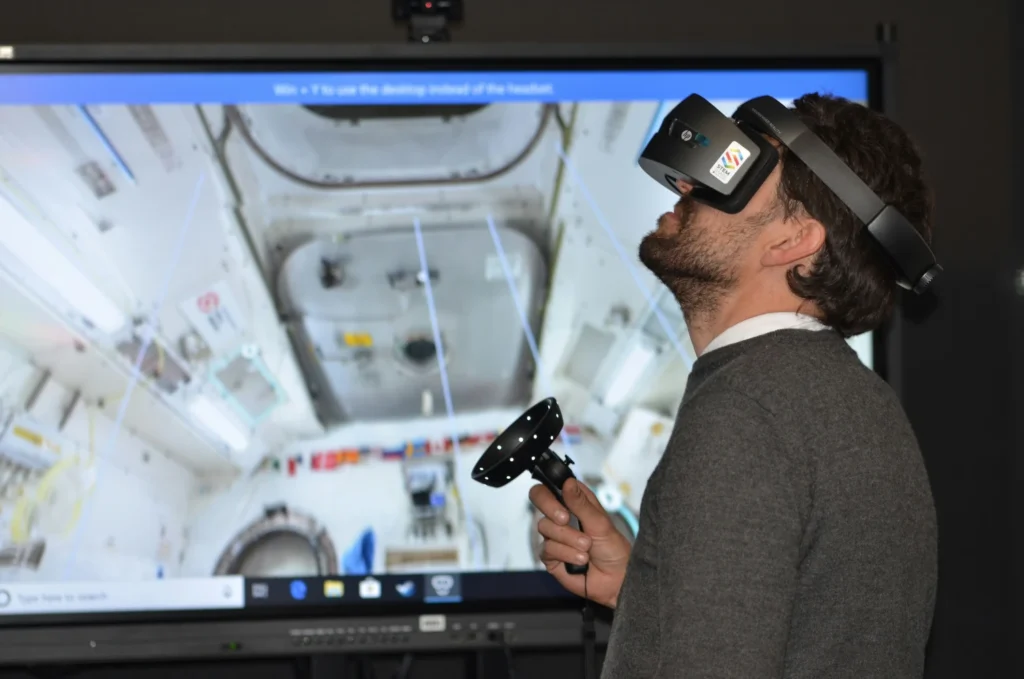

XR, or Extended Reality, is getting a lot of attention. Yet for many companies, one question remains: what can it actually be used for?
Behind the term are three main families of technologies: virtual reality (VR), augmented reality (AR) and mixed reality (MR). They all share one simple purpose: making a situation more visible, more understandable or more immersive. Instead of reading a procedure, looking at a model or discovering a product on a screen, users step into the experience.
That is what makes XR valuable for businesses. It is not only a way to impress. It can help teams train faster, sell more effectively, secure operations, guide technicians or help clients imagine a place that does not yet exist.
The market confirms this momentum. According to Fortune Business Insights1, the global XR market was valued at $253.5 billion in 2025 and could reach $2,127.81 billion by 2034, with a CAGR of 25.5% over the 2026 to 2034 period.
But beyond market forecasts, the real question is operational: where can XR create value inside your organization?
Here are 15 practical examples to better understand how XR can be used in training, sales, industry and real estate.
💡 To get straight to the point, here are the key takeaways.
- XR brings together virtual reality, augmented reality and mixed reality to make business situations more concrete, visible and immersive.
- In training, it enables learning by doing, repeated practice of complex tasks and preparation for difficult situations without real-world risk.
- In B2B sales, it helps prospects better imagine a solution through virtual showrooms, 3D configurators and immersive demonstrations.
- In industry, XR can guide technicians, support maintenance, improve quality control and prepare teams for crisis situations.
- In real estate, it makes unbuilt projects easier to understand through virtual tours, on-site AR and immersive customization.
- The most effective XR projects always start from a clear, measurable and useful business need, rather than from a desire to showcase technology.
- To get started, companies should choose one priority use case, test it on a small scale, measure results and then scale progressively.
- XR creates value by reducing uncertainty, supporting decision-making and keeping technology focused on human experience.
XR for training: learning through real situations, without exposure to risk
Training is one of the most mature use cases for XR. It can recreate realistic situations, including rare, complex or dangerous ones, without mobilizing real equipment or putting employees at risk.
The value is not just technological. It is educational. In virtual reality, learners do not just listen or watch. They act, make mistakes, try again and understand. This learning-by-doing approach can be especially useful for technical gestures, stressful situations or interpersonal skills.
A PwC2 study on VR soft skills training found that learners trained in virtual reality can complete training up to four times faster than in a traditional classroom, while feeling more confident in applying what they learned.
1. Simulating complex or dangerous technical tasks
Training a technician on a real machine can be expensive, disrupt production or create risk if something goes wrong. VR makes it possible to reproduce the work environment in a safe space.
Learners can repeat a maintenance procedure, handle a machine, identify a fault or apply a safety protocol, without any real-world consequences if they make a mistake. This is particularly useful in industry, energy, healthcare, logistics and technical professions.
Action to take: identify a procedure where errors are frequent, costly or risky. Start with a short module focused on one specific job-related task before expanding to other scenarios.
2. Training soft skills through realistic role-play
Soft skills are difficult to teach through a simple presentation. How do you train people to manage conflict, speak in public, conduct a sales conversation or deliver difficult news?
XR can create immersive scenarios where employees interact with a virtual counterpart. They can practise rephrasing, answering, negotiating, listening or managing a tense situation in a realistic setting, without direct social pressure.
This use case is relevant for sales teams, managers, HR departments, support teams and any role involving direct contact with customers or the public.
Action to take: choose a recurring interpersonal situation in your company, such as a difficult client conversation or a management feedback session. Turn it into an immersive scenario with several levels of difficulty.
3. Accelerating onboarding for new employees
Joining a company can involve a lot of information: new locations, new rules, new tools and new people. In industrial, multi-site or complex environments, this phase can take several weeks.
VR can help a new employee visit a site, understand safety rules, discover key areas or visualize the steps of a process before even being physically present. The experience becomes more engaging than a welcome booklet or a corporate video.
It can also be useful for companies hiring remotely or regularly onboarding teams across different locations.
Action to take: create a 20 to 45-minute immersive onboarding journey focused on key locations, essential rules and the right reflexes to adopt from day one.
4. Recreating sensory situations that are hard to explain
Some situations can only really be understood by experiencing them: an alarm, an unusual vibration, reduced visibility, an emergency situation or information overload.
XR devices can include visual, audio and sometimes haptic elements to make the experience closer to the field. The goal is not to make it spectacular, but to prepare employees to recognize weak signals or react in a realistic context.
This is especially relevant for safety, maintenance, healthcare, transportation and high-risk environments.
Action to take: list the situations your teams struggle to understand in conventional training. If they involve sensations, signals or contextual pressure, they may be strong candidates for XR.
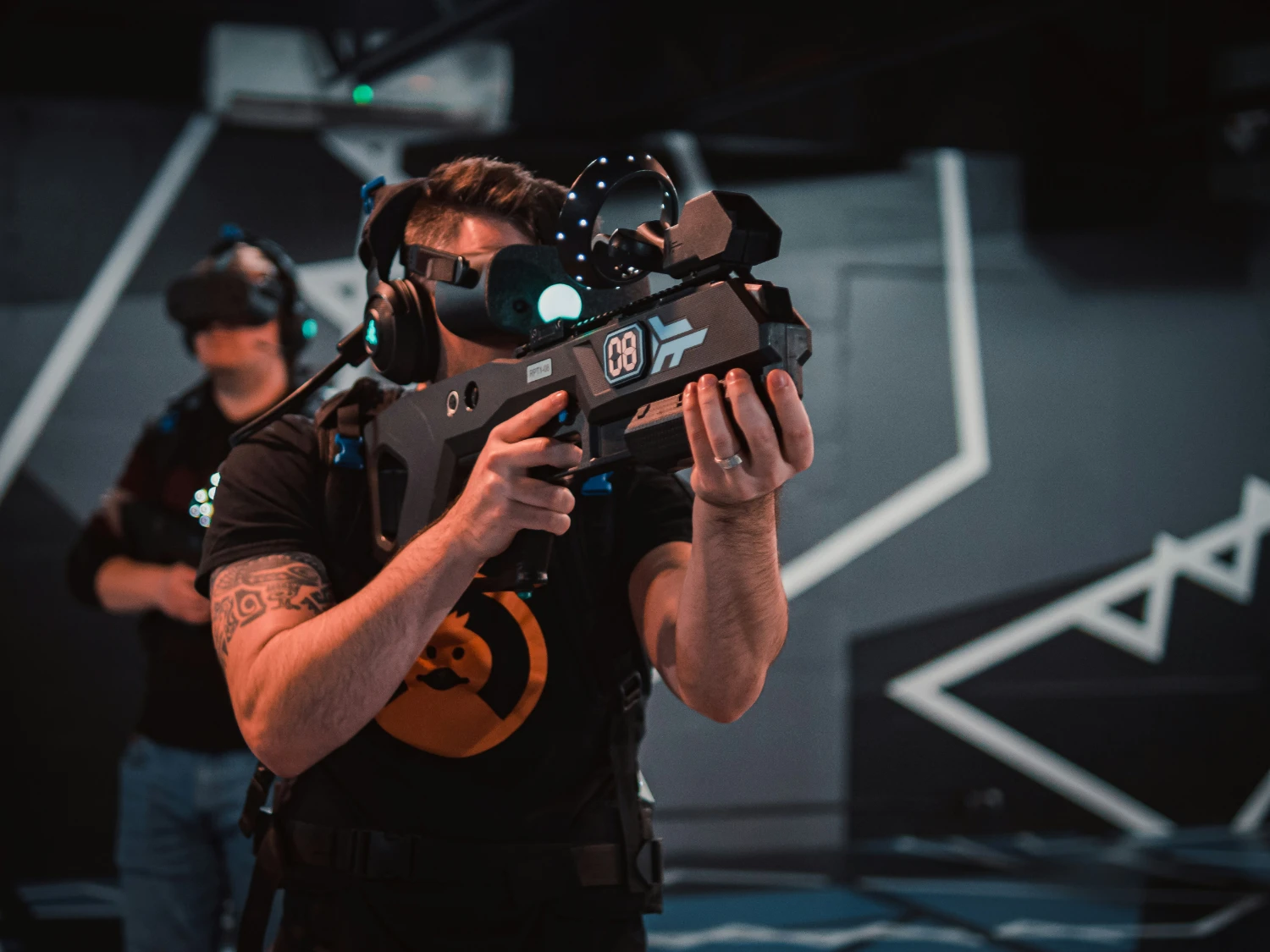
XR for sales: helping customers imagine before they buy
In B2B, products are often complex, expensive or difficult to transport. Sales cycles involve several decision-makers, and prospects need to understand precisely what they are buying before they commit.
XR answers a simple challenge: how can you let customers experience an offer before it is installed, delivered or built?
It does not replace the sales pitch. It makes it more concrete. It turns a promise into an experience.
5. Creating a virtual showroom
A virtual showroom allows prospects to discover a product range in an immersive environment without having to travel. They can observe dimensions, compare options, visualize use cases or understand the differences between several configurations.
This format is useful for industrial companies, equipment manufacturers, premium brands, businesses with large catalogues or companies selling solutions that are difficult to demonstrate at a trade show or in a meeting.
The showroom can be accessed with a VR headset, but also from a computer or web browser, depending on the desired level of immersion.
Action to take: select your most strategic product range or the one that is hardest to explain. Build a first version of the showroom around three to five key products, with simple interaction points.
6. Using a 3D configurator in augmented reality
Augmented reality makes it possible to visualize a product in the customer’s real environment: a machine in a workshop, furniture in an office, equipment on a construction site or a display in a retail space.
The value is immediate: the prospect is no longer simply looking at a product sheet. They can see how the solution fits into their own context, at scale.
This is particularly useful when size, footprint, aesthetics or spatial integration strongly influence the decision.
Action to take: identify the product that generates the most projection-related questions: “Will it fit?”, “What will it look like?”, “How will it integrate into our space?” This is often the best starting point for an AR experience.
7. Strengthening the impact of a trade show or B2B event
At a trade show, attention is limited. Visitors move quickly from one booth to another, often exposed to the same messages, brochures and demonstrations.
An XR experience can create a moment of pause. It can show a product that is too large to exhibit, simulate a usage environment, offer a remote site visit or present an innovation in a more memorable way.
The goal is not just to attract people. It is to create a richer sales interaction, with more qualified questions and a stronger memory of the experience.
Action to take: for your next trade show, replace part of your passive materials with a short immersive demonstration lasting 2 to 4 minutes, designed to start a conversation with your sales team.
8. Testing a product concept or sales environment
Before launching a product, packaging, commercial space or store layout, XR can help simulate the usage context. It makes it possible to observe reactions, choices, hesitations and behaviours in a controlled environment.
This can be useful for testing a shelf layout, comparing several designs, validating a store setup or observing how a user interacts with a new offer.
XR does not replace every research method, but it can effectively complement focus groups, physical prototypes and real-life testing.
Action to take: integrate an XR phase into a launch or redesign project. Use it to compare several assumptions before producing, deploying or industrializing.
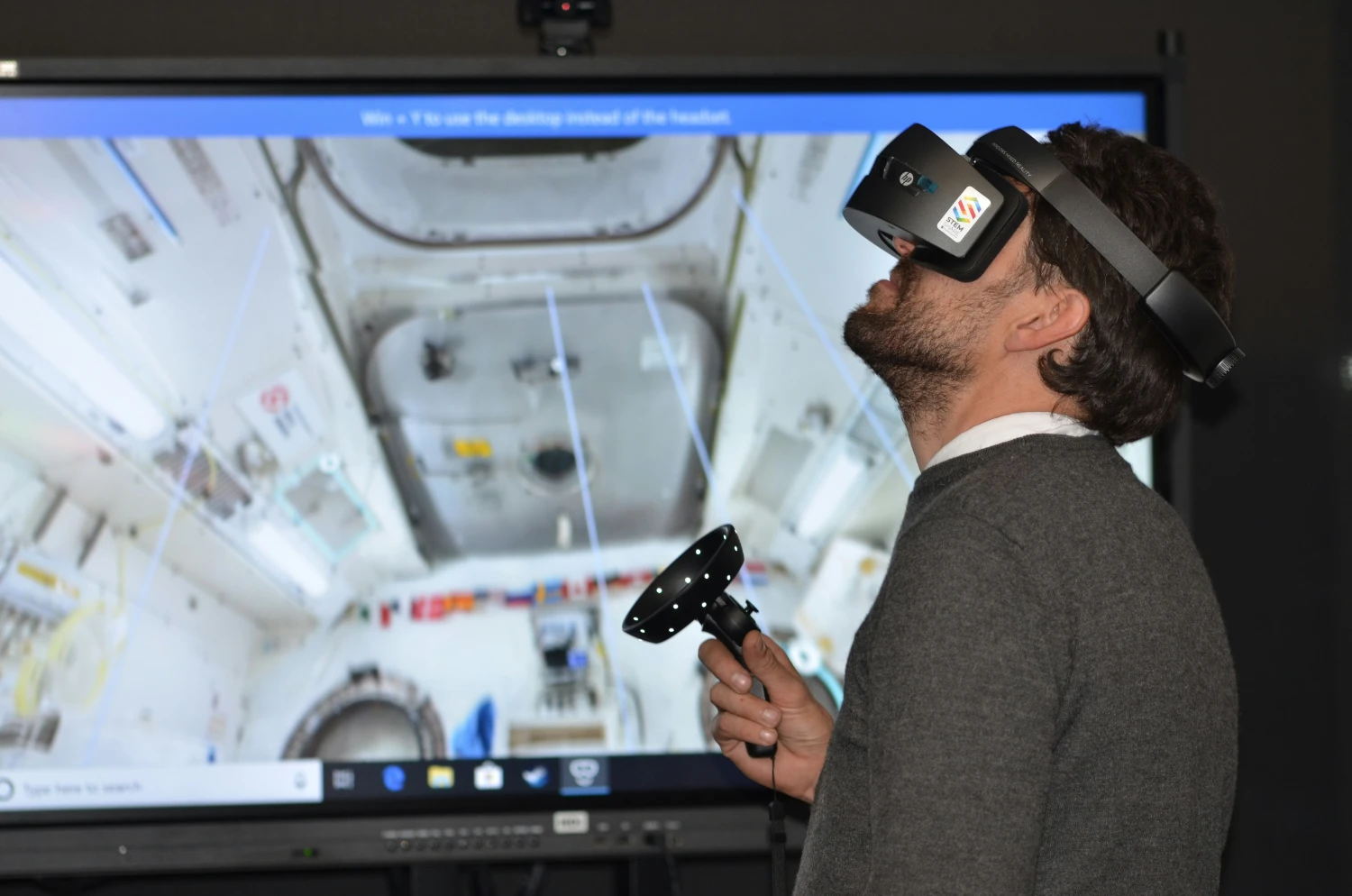
XR for industry: guiding, securing and improving operations
In industry, XR addresses very concrete challenges: reducing errors, transmitting the right gestures, supporting operators, improving maintenance and limiting unnecessary travel.
Here, value can often be measured quickly: fewer stoppages, fewer errors, fewer risks and less dependence on an expert being physically available on site.
9. Supporting a technician remotely with augmented reality
When a machine issue occurs, it is not always possible to bring in the right expert quickly. With AR glasses, a tablet or a smartphone, an on-site technician can share what they see with a remote specialist.
The expert can then guide the intervention, add visual annotations, point to a specific area or validate a step. The technician remains hands-free or semi-hands-free while receiving contextual guidance.
This use case is particularly valuable for remote sites, critical equipment or companies that lack local expert availability.
Action to take: test AR remote assistance on a limited scope: a few critical machines, a few technicians and a few recurring failure cases. Then measure resolution time and the number of avoided interventions.
10. Guiding maintenance step by step
Maintenance procedures are sometimes long, technical or difficult to consult during an intervention. Augmented reality can display instructions directly on the equipment or near the relevant part.
Technicians can follow steps, check control points, consult a diagram or receive an alert without leaving their workstation. This reduces dependence on paper documentation and helps less experienced profiles build confidence.
The goal is simple: deliver the right information in the right place, at the right time.
Action to take: turn your most sensitive procedures into interactive visual instructions. Start with those that generate the most errors, returns or support requests.
11. Checking compliance with mixed reality
Mixed reality can superimpose a theoretical 3D model onto a physical object. In an industrial context, this can help an operator verify an assembly, detect a discrepancy or check the position of a component.
This type of use can be valuable in aerospace, automotive, industrial equipment or any environment where assembly compliance is critical.
XR then becomes a decision-support tool. It does not replace human expertise, but it makes discrepancies more visible.
Action to take: identify a control station where errors are difficult to detect visually. Test a 3D overlay on a simple case before integrating it into a broader process.
12. Preparing teams for crisis situations
Some situations are too dangerous, too rare or too costly to reproduce in real training conditions: chemical leaks, fires, line accidents, evacuations, critical breakdowns or interventions in sensitive areas.
VR makes it possible to recreate these scenarios and train teams to respond. Employees can repeat the right actions, understand the consequences of a poor decision and learn to keep their bearings in a simulated stressful environment.
This type of training is particularly useful when a simple theoretical reminder is not enough.
Action to take: complement your existing safety drills with a VR module. Measure reaction times, decisions made and recurring friction points that need to be corrected.
✨ XR isn’t here to impress. It’s here to be useful.
If you’d like to go further, we’ve gathered concrete XR project examples (visualize, train, engage) with realistic formats.
XR for real estate: selling what does not yet exist
In real estate, XR addresses a major challenge: helping clients imagine a property that has not yet been built, renovated or made accessible.
Plans, 3D images and brochures all have their place. But they require a strong effort of imagination. Virtual tours and augmented reality make the project more readable, more concrete and more emotionally engaging.
In residential real estate, Zillow3 states that listings with a 3D Home tour sold, on average, 14% faster than listings without one, according to its own data. Zillow Research4 also reported that listings with a 3D tour generated more views and saves on its platform between March 2020 and February 2021.
13. Offering immersive virtual tours for off-plan property sales
For a real estate developer, selling off-plan depends on the client’s ability to imagine their future home. VR makes this projection easier: the buyer can enter the apartment, perceive the volumes, understand the layout, visualize the light and picture their daily life inside the space.
It reduces the gap between a technical floor plan and the lived experience. The client is no longer just looking at square meters. They are visiting a place.
This is especially relevant during the pre-sales phase, when the physical sales office or show apartment is not yet available.
Action to take: integrate an immersive visit from the earliest sales phases, focusing first on the most strategic layouts or the units that are hardest to sell off-plan.
14. Showing the future building in AR on site
Augmented reality can help a prospect, elected official, investor or partner visualize a building directly on its plot. By pointing a smartphone or tablet at the site, they can see the future development appear at scale, including its volumes, façades and position.
This use case is useful for addressing questions about how the project fits into its environment: height, orientation, distance from neighbouring buildings or perception from the street.
It can also make discussions easier with local authorities, residents or project stakeholders.
Action to take: for an upcoming development, test a simple AR experience accessible via QR code from the construction site sign, the sales brochure or the project website.
15. Enabling immersive home customization
XR can go beyond the visit. It can allow buyers to customize their future home: flooring, colours, materials, kitchen, furniture, layout or design options.
This immersive customization helps clients project themselves more strongly into the property. It can also reduce misunderstandings, hesitation and some late-stage change requests, because choices are visualized more clearly.
For sales teams, it is a support tool. For technical teams, it is also a way to better frame the options available.
Action to take: add a customization module to your virtual tours, starting with the options that are actually available: flooring, wall finishes, kitchen, bathroom or finish packages.
Where should a company start with XR?
XR is not meant to replace your existing tools. It becomes relevant when it addresses a specific business problem.
An employee needs to learn a risky gesture. A prospect struggles to imagine the solution. A technician needs guidance. A property buyer wants to understand a space before it is built. In all these cases, XR can reduce uncertainty.
The right approach is progressive.
- Choose a priority use case: start from a concrete, measurable problem that is important enough to justify experimentation.
- Start small: a training module, product demonstration, immersive visit or maintenance procedure can be enough to test the value.
- Measure the right indicators: training time, error rate, sales engagement, decision time, user satisfaction, reduction in travel or fewer support requests.
- Improve before scaling: the first version should help you learn. Once the use case is validated, you can enrich it, extend it or integrate it into your processes.
- Keep people at the centre: technology should not make the journey more complex. It should make the experience clearer, more useful and more accessible.
XR becomes truly valuable when it disappears behind the use case. It is no longer a gadget or a technical demonstration. It becomes a tool for understanding, projection and decision-making.
Conclusion: XR is not a distant promise, but a field-ready tool
Training, sales, industry, real estate: XR already has many practical applications. But the most effective projects share one thing in common. They do not start with the technology. They start with a need.
- Training without risk.
- Convincing without overpromising.
- Maintaining with greater precision.
- Selling a space before it is built.
- Helping a client, employee or decision-maker understand faster.
That is where XR finds its rightful place: serving situations where people need to see, try, feel or decide differently.
Want to identify the right XR use cases for your business?
XR can create value, provided you start from the right problem. At Black Centauri, we help you map your opportunities, prioritize the most relevant use cases and define a realistic roadmap, adapted to your teams, your goals and your level of maturity.
Book a discovery workshop to explore the XR use cases that can bring the most value to your sector.
📌 Let’s see what’s truly relevant for you
We help you clarify where XR can genuinely create value, based on your context, your priorities, and your teams.
- Extended Reality Market Size, Share & Industry Analysis, By Type (Virtual Reality, Augmented Reality, and Mixed Reality), By Industry (Healthcare, Education, Retail & E-commerce, Gaming, Automotive, Media & Entertainment, and Others), and Regional Forecast, 2026–2034 ↩︎
- What does virtual reality and the metaverse mean for training? ↩︎
- How Virtual Tours Can Help Your Home Sell Faster ↩︎
- Virtual Home Selling Tools Benefit Buyers & Sellers — And are Here to Stay Post-Pandemic ↩︎