

You hear about VR headsets, immersive demos at trade shows, virtual building tours. But one question often remains: does this really have a concrete impact on your business?
Virtual reality is a technology that immerses a person in a fully digital environment, perceived as real through a headset that tracks movement and displays 3D images in real time. But beyond the technology, it is above all a tool to make things clearer, more tangible, more obvious.
It simply allows you to make people experience.
💡 To get straight to the point, here are the key takeaways.
- Virtual reality allows you to deliver an immersive experience rather than just present information
- It is accessible to non-technical profiles: your role is to define the use case, not to build the solution
- It is especially useful for making complex or abstract ideas tangible
- It reduces misunderstandings and accelerates decision-making
- A single, well-targeted project is often enough to create real impact
Virtual reality: a clear and concrete definition
Virtual reality (VR) refers to a computer-generated environment in which the user is fully immersed, to the point of no longer seeing the real world around them. This immersion relies on a simple principle: the headset displays a slightly different image to each eye, recreating depth and giving the impression of being physically present in another space.
Unlike a traditional video, the user is not passive. They can look around, lean, and sometimes move. Every movement is tracked and integrated in real time.
The result: they are not watching a scene, they are inside it. This sense of presence makes all the difference. Understanding something you experience is always faster than understanding something you observe.
How it works, without unnecessary complexity
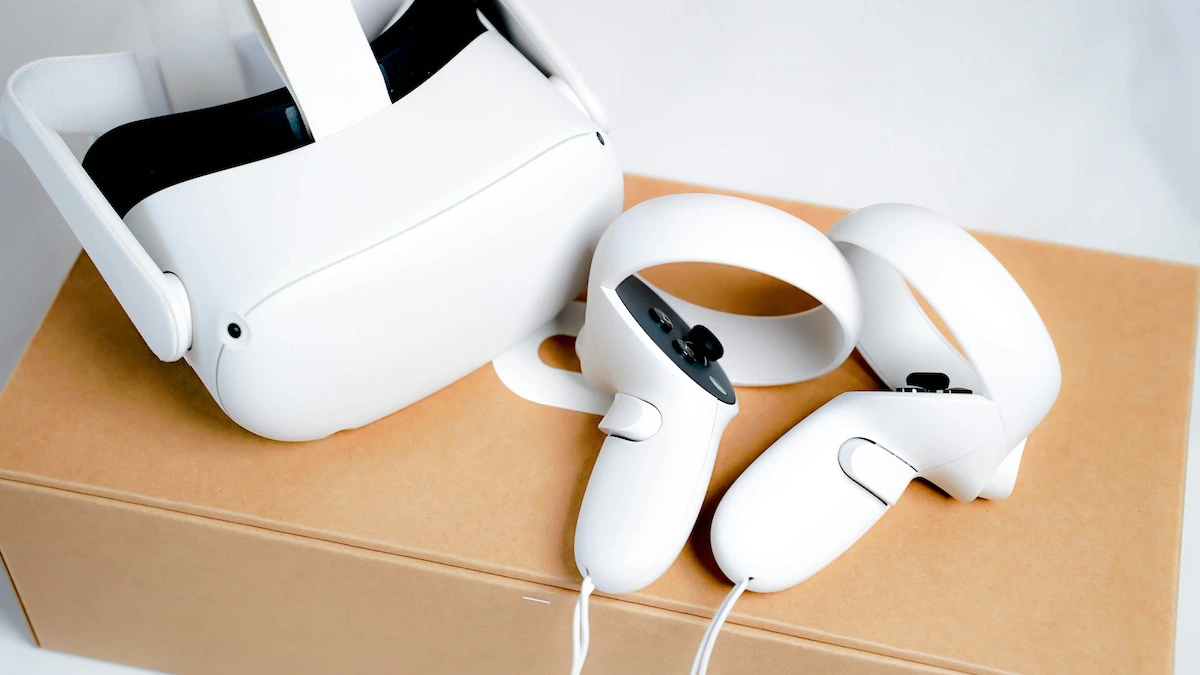
To understand VR, three elements are enough:
- The headset: it replaces your real environment with a virtual one
- Motion tracking: it adapts the experience based on your movements and gestures
- 3D content: the environment you are immersed in, created from plans, models, or existing assets
What matters is this: you do not need technical skills to launch a VR project. Your role is simply to ask the right questions:
- What message do you want to convey?
- What experience do you want to create?
- At which stage of the customer journey?
The rest is handled by the partner supporting you.
What VR actually changes
VR does not just change the format. It changes how information is understood and experienced. In a traditional context, you explain. And often, this requires effort from your audience to interpret what you mean.
With VR, you show and more importantly, you let people experience. This creates three very concrete effects:
- Faster understanding : A prospect immediately grasps a space, a product, or a process without mental effort
- Less uncertainty: They can project themselves more easily, which reduces doubts
- Smoother decisions : Fewer back-and-forths, fewer repeated explanations
In other words, VR strengthens a key factor in B2B: the ability to project oneself.
Marketing and business development
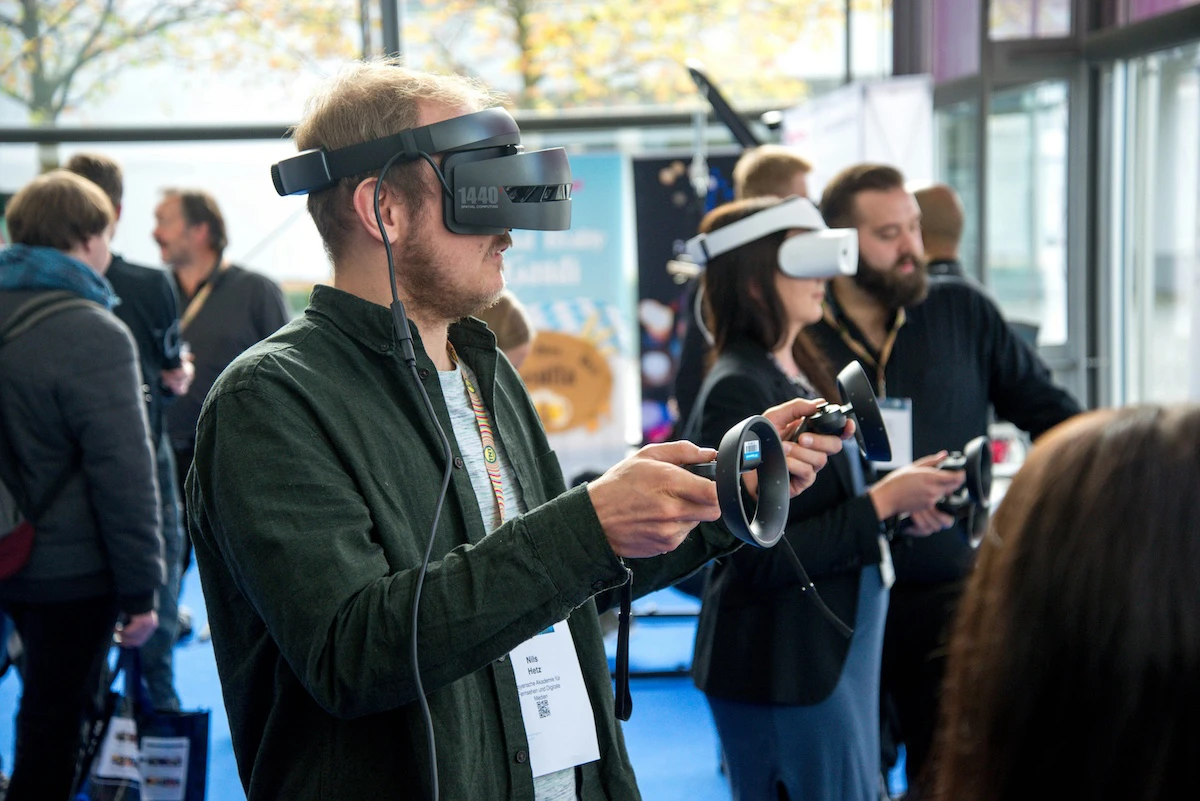
VR transforms a presentation into an experience. At trade shows, it allows you to showcase a factory, a data center, or a product that cannot be physically brought on site. But its real impact goes beyond that. It changes the quality of the interaction. The prospect no longer receives information. They experience it.
In more complex sales contexts, VR helps project the client into the final result:
- visualizing how a machine integrates into their real environment
- understanding the impact of a new store layout on customer flow
- experiencing a product in real usage conditions
This mechanism is key: the more a client can project themselves, the more uncertainty decreases. And reducing uncertainty means accelerating decision-making.
Architecture and real estate development
In these industries, the challenge is constant: helping someone project themselves into something that does not yet exist. VR provides a direct answer.
- Visit before building : The client walks through their future space and immediately understands volumes, light, and circulation
- Test and adjust early : Friction points appear before construction even begins
- Align understanding : An immersive experience aligns perceptions. Everyone refers to the same space, experienced in the same way
The result: fewer misunderstandings, fewer iterations, faster decisions. You are no longer discussing a plan, but a place everyone has experienced.
Professional training
VR is becoming a structuring tool in certain training contexts. It allows people to practice in realistic conditions, without usual constraints. In concrete terms:
- simulating a fire or evacuation without using a real site
- training on technical gestures without immobilizing equipment
- repeating critical procedures until they become automatic
- learning to handle complex situations
This type of learning is based on action, not just theory. Studies, including one by PwC1, show that learners in VR can be up to 4 times faster to train and more confident in applying their skills.
There is no need to transform everything at once. That would often be counterproductive, especially if your teams are not yet familiar with these technologies.
Start simple. Identify a concrete situation where there is a bottleneck or where mistakes have a real cost. From there, work with a partner to design a targeted and useful experience.
Heritage and cultural experiences
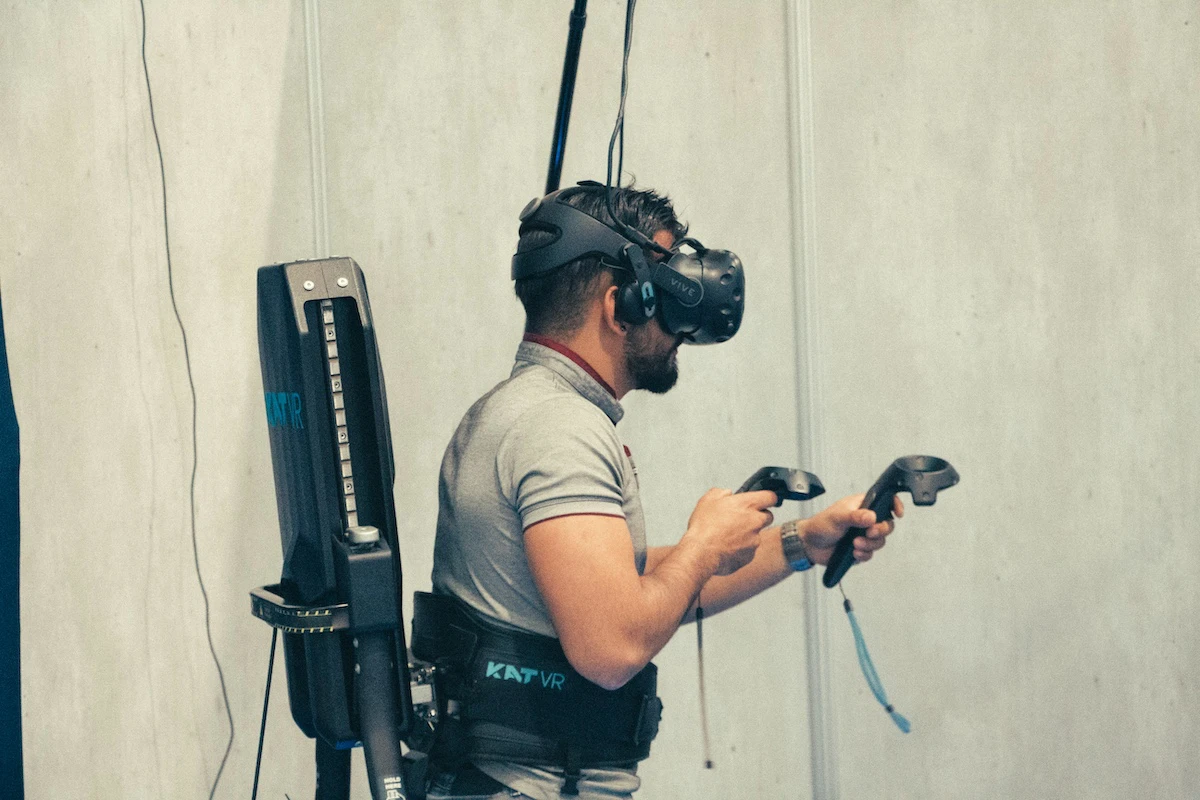
VR makes it possible to access what is no longer accessible, or not easily.
It makes it possible to recreate places that no longer exist, provide access to areas closed to the public, and immerse visitors in past eras with a level of understanding that is difficult to achieve otherwise. We can also integrate narrative elements, such as virtual characters like the virtual influencers we create, or immersive guides, to enhance understanding.
In practice:
- Historical reconstruction : Bring a site back to life as it once was
- Access to restricted areas : Explore fragile or under-restoration spaces
- Immersive educational experiences : Understand a context by being directly immersed in it
The value is twofold. On one side, VR enriches the visit with context, storytelling, and emotion. It does not replace reality, it complements it. On the other, it reaches audiences who do not always visit physically, including younger audiences, international visitors, or remote users.
It also extends the experience beyond the physical location, through content that can be shared in exhibitions, online, or through mobile setups.
✨ VR isn’t here to impress. It’s here to be useful.
If you’d like to go further, we’ve gathered concrete VR project examples (visualize, train, engage) with realistic formats.
How to start a VR project without being technical
A VR project should not start with a headset. That is often the fastest way to fail. It usually starts with a simple question: what do you want to make more understandable?
Here is a simple approach:
- Start with a concrete need : Explain a project, train a skill, create impact at a trade show, enhance a location. Not “do VR”, but solve a real problem
- Define a success metric : Conversion rate, understanding, engagement, error reduction
- Leverage existing assets : Plans, 3D models, training content, archives
- Work with the right partners : To translate your objective into a useful and coherent experience
Many companies still think VR is a technological showcase or that it requires a large budget. In reality, the right approach is simple: start small, test, adjust, then scale.
Conclusion: VR as a tool for clarity
Virtual reality is not an additional technology but it is a tool to make things more understandable, more tangible, and more engaging. And in a context where offerings are often complex, this ability to clarify becomes a real advantage.
You do not need to be a technical expert to create value with VR. Your role is simply to know what you want people to understand.
Want to go further?
Wondering if VR is relevant for your business?
We can help you identify a first concrete use case, tailored to your challenges, starting from your business goals, not from the technology.
📌 Let’s see what’s truly relevant for you
We help you clarify where VR can genuinely create value, based on your context, your priorities, and your teams.
- Source: PwC, The Effectiveness of Virtual Reality Soft Skills Training in the Enterprise, 2020. The study shows that VR learners can be trained up to four times faster and feel significantly more confident applying their skills compared to classroom and e-learning training. ↩︎