
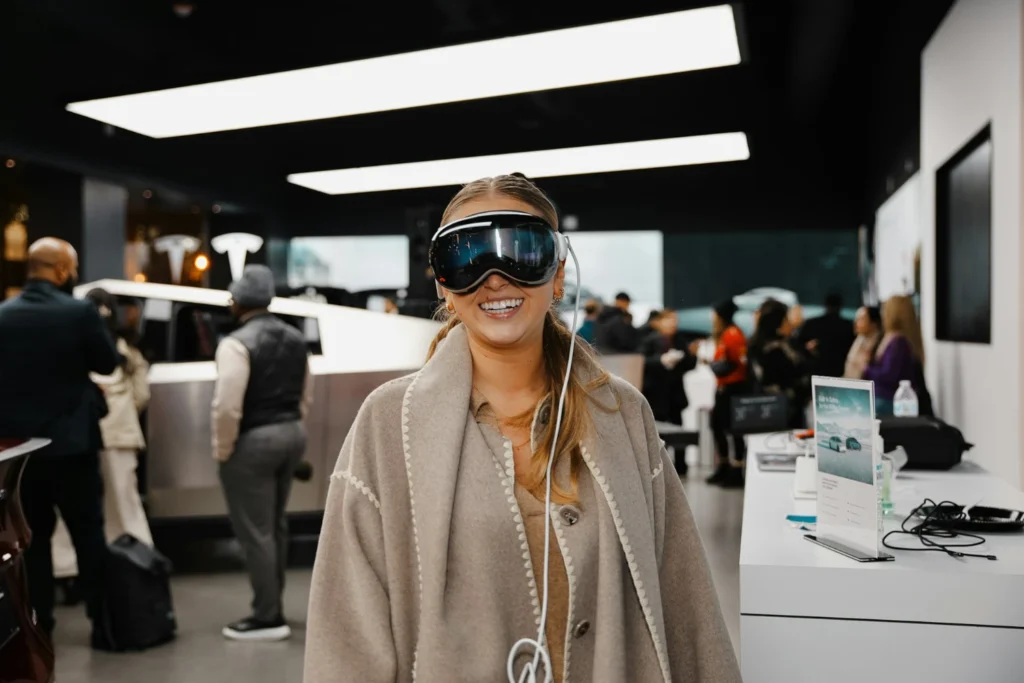

XR was long perceived as a spectacular technology, reserved for major brands or event-driven campaigns. Today, it is beginning to find its place in more concrete marketing use cases: explaining an offer, enriching a demonstration, helping a client picture the outcome, or creating a more memorable brand experience.
In a context where audiences are saturated with content, XR offers another way to engage prospects. It does not simply show a promise. It lets people experience it.
💡 To get straight to the point, here are the key takeaways.
- XR brings together augmented reality, virtual reality and mixed reality to create more immersive and interactive experiences.
- It responds to a major marketing challenge: capturing attention in a content-saturated environment.
- For B2B brands, XR mainly helps make complex offers clearer, more tangible and easier to understand.
- It allows prospects to project themselves more easily, reducing uncertainty before a decision.
- XR experiences can enrich sales demonstrations, especially at trade shows, in showrooms or during key client meetings.
- In retail, real estate, architecture and industry, XR turns an abstract promise into a visible and testable experience.
- A successful XR strategy does not start with the technology, but with a specific need in the customer journey.
- The right starting point is to identify a friction point: poor understanding, difficulty projecting the outcome, an abstract demo or an offer that is hard to explain.
XR, a Response to the Saturation of Traditional Marketing Formats
Capturing the attention of a B2B buyer has never been more difficult. Audiences are exposed to massive amounts of content, decision cycles are getting longer, marketing messages often look alike, and prospects expect more than a simple commercial promise.
They want to understand. To project themselves. To test. To compare. To visualize concretely what a solution could change for them.
This is where XR is starting to find its place in marketing strategies. Not as a passing trend, but as a tool capable of making an offer clearer, more memorable and easier to experience.
XR, or Extended Reality, brings together several immersive technologies:
- Augmented Reality, or AR, adds digital elements to the real world through a smartphone, tablet or connected glasses.
- Virtual Reality, or VR, immerses the user in a fully digital environment through a headset.
- Mixed Reality, or MR, allows real and virtual elements to interact within the same space.
For a brand, the value is not only technological. It is relational. XR transforms content people look at into an experience they can explore. And that difference can change a lot in a marketing journey.
A Market That Is Gaining Maturity
XR is no longer only associated with video games, innovation showcases or spectacular demonstrations. It is gradually moving into more concrete use cases: training, sales, product demonstrations, retail, real estate, industry, events, onboarding and customer support.
According to Market Research Future, the global XR market could reach nearly 300 billion dollars by 2035, with an estimated annual growth rate of around 17% over the 2025-2035 period.1 Immersive marketing is following the same momentum: Fortune Business Insights estimates that this market could reach more than 89 billion dollars by 2034.2
These projections should be read with caution, as with all market estimates. But they point to a deeper trend: immersive experiences are no longer being tested only by a few major brands. They are becoming a lever explored by companies looking to better present their offers, enrich their customer journeys and stand out in highly competitive environments.
For marketing teams, the question is therefore no longer only: “Is XR interesting?” It is becoming: “At which moment in the customer journey can XR truly create value?”
Why XR Responds to a Very Current Marketing Challenge
Marketing is facing an attention crisis. Audiences do not lack content. They lack reasons to spend time with it.
According to a Clutch3 survey published in 2025, a very large majority of consumers say they actively avoid ads, especially by ignoring or skipping them whenever possible. This signal matters for B2B as well: decision-makers are also users saturated with messages, short formats, generic demos and interchangeable promises.
XR offers a different response because it does not only ask the user to receive a message. It invites them to act.
They can move an object into their environment. Explore a space. Manipulate a virtual machine. Test a configuration. Enter a scenario. Discover an offer at their own pace.
This active participation creates a deeper relationship with the content. The user does not simply see what the brand claims. They experience part of the proof.
What XR Changes in a Marketing Strategy
1. It Makes Complex Offers Easier to Understand
Some offers are difficult to explain with a brochure, a video or a web page. This is especially true in B2B, where products and services can be technical, costly, customizable or integrated into complex environments.
An industrial solution, a medical device, a real estate project, a software architecture, an energy innovation or a professional space cannot always be understood in a few slides.
XR makes these subjects more concrete. It helps prospects see volumes, uses, steps, interactions or operational benefits. It can transform an abstract explanation into a visible experience.
This is not about being spectacular. It is about clarity.
When a buyer understands more quickly what they are looking at, they ask better questions. They project themselves more easily. They can share the idea more simply with their teams. And in a B2B sales cycle, that ability to circulate understanding is valuable.
2. It Reduces Uncertainty Before the Decision
One of XR’s strengths is its ability to reduce doubt.
In retail, this can mean visualizing a piece of furniture at home, virtually trying a product or comparing several configurations. Shopify4, for example, has indicated that merchants adding 3D content to their stores saw an average conversion lift of 94%. This figure should not be mechanically applied to every sector, but it illustrates a simple mechanism: the more a client can project themselves, the more confidently they buy.
The same reasoning applies to B2B.
A prospect who can virtually visit a future space, manipulate a prototype, explore a machine or simulate a business use case makes decisions with a clearer understanding of the expected result. XR does not replace the sales conversation, but it enriches it. It gives the client tangible elements to move forward.
In many sectors, the decision is not blocked by a lack of interest. It is blocked by uncertainty. XR can help reduce it.
3. It Transforms Sales Demonstrations
In a B2B marketing strategy, the demonstration is often a key moment. But it is also difficult to get right.
How do you present a machine that is too heavy to transport? How do you show a building that does not yet exist? How do you explain a production line, a training environment or a technical solution to several stakeholders? How do you capture attention at a trade show where every booth already promises innovation?
XR can create a demonstration that is more immersive, more compact and more memorable.
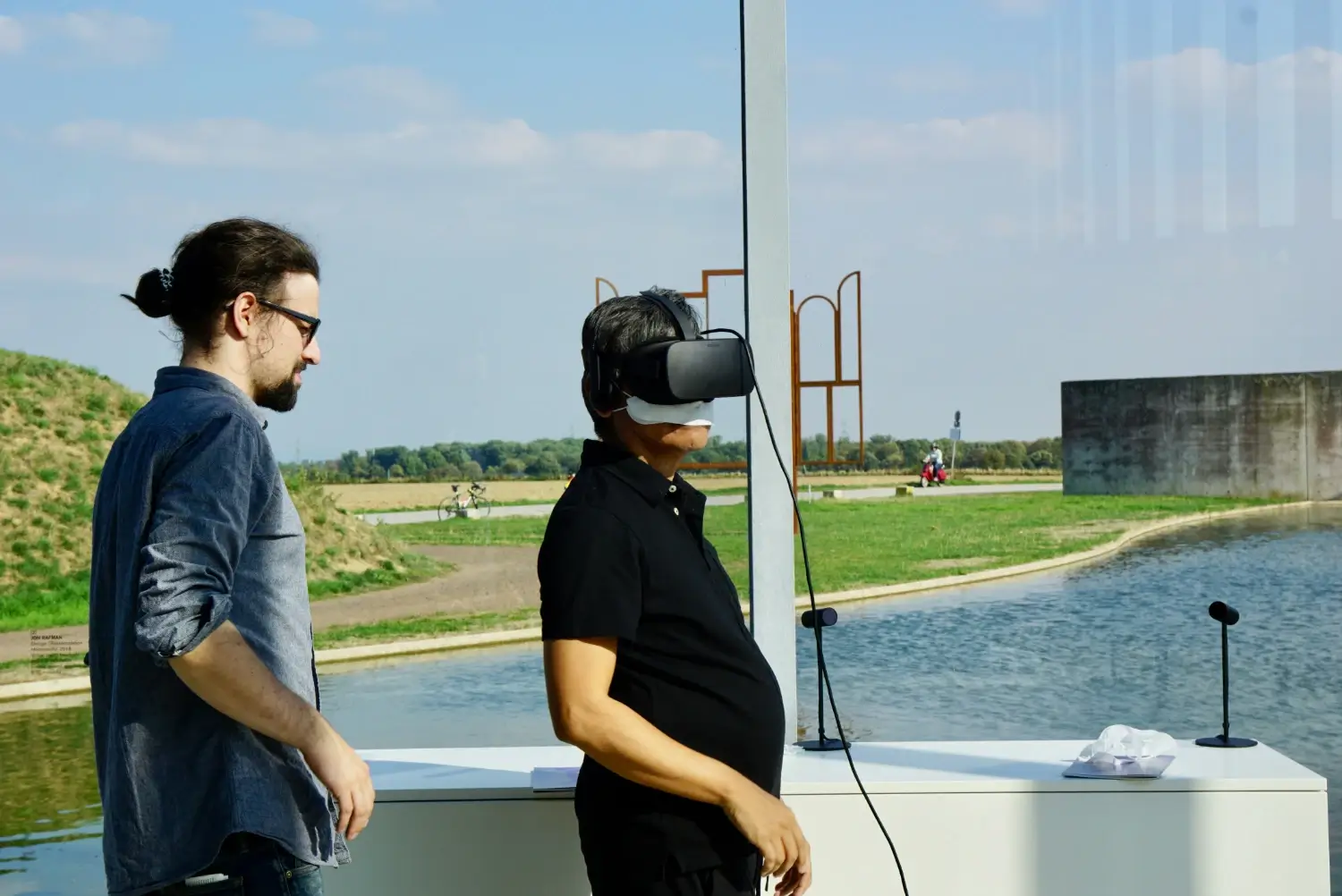
At a trade show, for example, a VR experience can allow a visitor to enter an industrial environment, discover a product at real scale or experience a use case in just a few minutes. In augmented reality, a brochure, a model or a booth can become interactive without requiring a heavy installation.
For sales teams, the value is twofold: they have a more engaging support, and they can better qualify the prospect’s interest. What the person explores, how long they spend in the experience, which features interest them or which scenarios they choose can all become useful signals for the next step in the journey.
XR does not only help attract attention. It can also help better understand intent.
4. It Creates More Memorable Brand Experiences
XR is also a lever for awareness and storytelling. Some campaigns have shown this very visibly.
Burger King, with its “Burn That Ad” campaign in Brazil, used augmented reality to allow users to scan competitors’ ads and virtually “burn” them through the brand’s app. According to WARC5, the activation generated one million app downloads in one month and a 54.6% increase in in-app sales.
This example is very B2C, but it shows something important: an immersive experience works when it is connected to a strong brand idea. Here, the technology was not treated as a gadget. It extended Burger King’s brand territory around flame, challenger energy and mobile activation.
This is a useful lesson for all brands, including B2B. A successful XR experience does not start with technology. It starts with intention: what do we want people to understand, feel or experience?
Concrete Use Cases for Brands
Retail and E-Commerce: Helping Clients Picture the Product
IKEA is one of the best-known examples with IKEA Place, an augmented reality app launched to allow users to visualize furniture in their own homes. IKEA6 indicated that the technology allowed a 98% accurate representation, particularly for proportions, textures, lighting and shadows.
The value is clear: the client no longer looks at a product on a white background. They can imagine it in their real space. This reduces the gap between desire and decision.
In beauty, virtual try-on answers the same need. A user can test a shade, a finish or a style without immediately having to purchase or visit a store. XR then becomes a projection tool, but also a reassurance tool.
Real Estate, Architecture and Professional Spaces: Showing What Does Not Yet Exist
In real estate, architecture and workspace design, XR makes it possible to present a project before it is built.
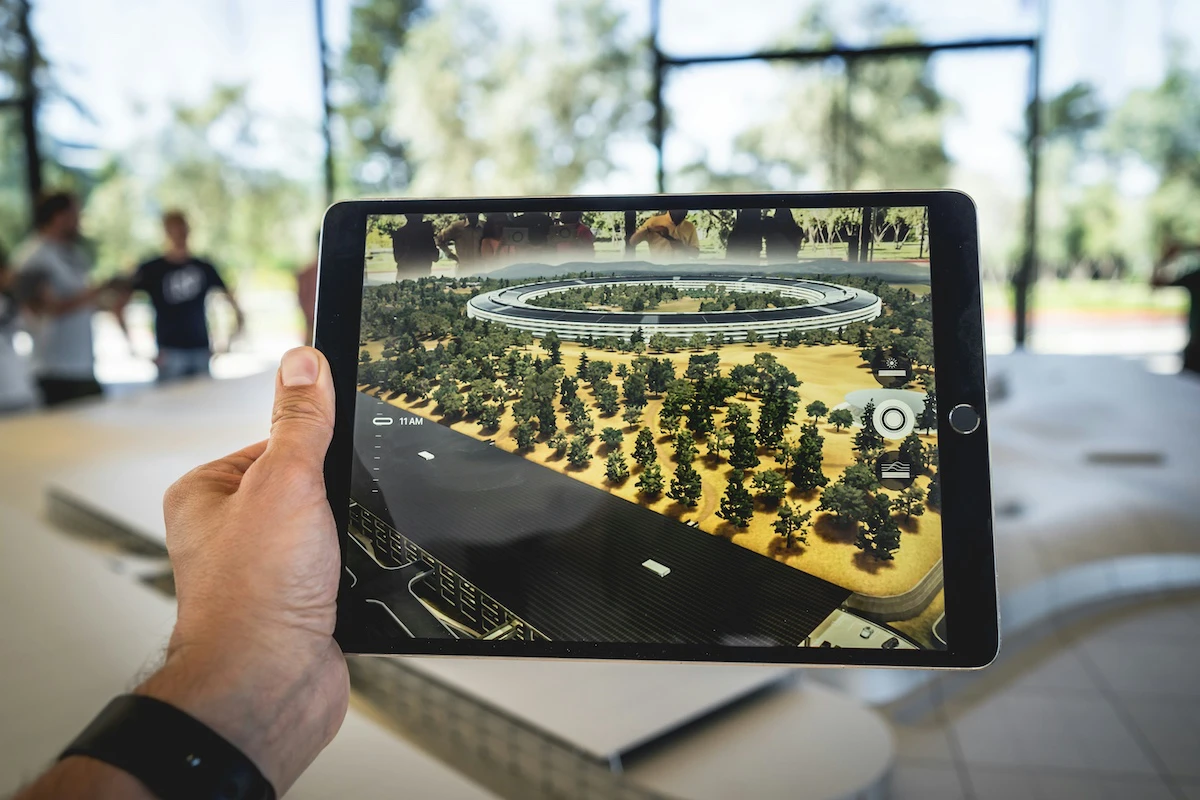
A developer can offer a tour of an apartment that has not yet been constructed. An architect can help a client understand the volumes of a future building. A company can present a showroom, headquarters, training space or booth before launching production.
This type of experience makes discussion easier. Clients, partners and stakeholders do not all project themselves easily from plans, 3D renderings or technical documents. An immersive visit makes the project more accessible, more concrete and often easier to defend.
Industry and B2B: Making the Invisible Visible
In industry, a large part of the value is difficult to show: processes, safety, maintenance, flows, ergonomics, technical innovation and real-life usage conditions.
XR makes these elements visible. It can be used to present a machine at full scale, explain a process, simulate an intervention or train teams in a secure environment.
For B2B marketing, this opens an interesting possibility: transforming expertise that is difficult to describe into an experience the prospect can understand directly.
Events and Trade Shows: Creating a Stronger Entry Point
At a trade show, attention is scarce. Visitors move quickly, compare a lot and remember little.
A well-designed XR experience can become a powerful entry point. It attracts, but more importantly, it gives people a reason to stay. It enables a more qualified conversation than a simple exchange of brochures or business cards.
The goal is not to install a VR headset just to “look innovative”. The goal is to create a short, clear and useful experience, capable of showing in a few minutes what your offer actually brings.
✨ XR isn’t here to impress. It’s here to be useful.
If you’d like to go further, we’ve gathered concrete XR project examples (visualize, train, engage) with realistic formats.
Why Integrate XR Now?
Several factors make XR more accessible than it was a few years ago.
First, usage has become more widespread. Mobile augmented reality does not always require a dedicated app. Some experiences can be accessed from a browser, a QR code or a product page.
Second, VR equipment has become easier to deploy in professional contexts: trade shows, showrooms, training, sales meetings or client presentations.
Finally, companies have gained maturity. XR is no longer approached only as an “innovation to test”, but as a tool connected to clear objectives: generating leads, better qualifying prospects, improving the understanding of an offer, increasing engagement time, accelerating a decision or enriching the customer experience.
This is probably the most important point. An immersive experience only has value if it serves a clear objective.
How to Start Without Overinvesting
Integrating XR into a marketing strategy does not mean transforming the entire system overnight. The best approach is often to start small, but with precision.
The first step is to identify a friction point in the customer journey. Where do prospects misunderstand the offer? Where do they struggle to project themselves? Where do sales teams repeat the same explanations over and over? Where do current visual supports reach their limits?
From there, several formats can be considered:
- A WebAR experience to visualize a product or enrich a brochure.
- A virtual tour to present a place, real estate project, showroom or workspace.
- A VR demonstration to showcase a complex product, machine or use case.
- An immersive trade show experience to attract visitors and open a sales conversation.
- An interactive module connected to the CRM to better qualify a prospect’s interests.
The key is to define the right indicators from the start. Views alone are not enough. You need to look at time spent, interactions completed, content explored, requests generated, qualified leads and the impact on the next steps in the sales journey.
A successful XR experience is not only an impressive experience. It is an experience that helps the client move forward.
XR Is Not a Gadget, If It Responds to a Real Need
XR can quickly be misused when it is approached only as a technological demonstration. In that case, it may attract a few looks, but it does not necessarily leave a useful trace.
On the other hand, when it starts from a clear need, it becomes a powerful marketing tool. It can make an offer easier to understand, a brand more memorable, a demonstration more convincing and a decision more confident.
For B2B brands, this is probably where the true potential lies. XR does not replace strategy, content or the sales relationship. It extends them. It makes visible what is difficult to explain. It turns a promise into an experience. And it puts technology back in the right place: at the service of understanding, projection and the customer relationship.
Conclusion
Brands are starting to integrate XR into their marketing strategy because they face a double challenge: capturing attention and building trust.
In an environment saturated with content, immersive experiences offer another way to communicate. They do not simply tell. They show, they let people test, they make things more tangible.
For a B2B company, XR can become a relevant lever, provided it starts from the right question: not “which technology do we want to use?”, but “which experience would truly help our client understand, decide or project themselves?”
This is often where the best projects begin.
Are you considering integrating XR into your marketing strategy or customer journey? A first scoping workshop can usually help identify the most useful use cases, the most realistic formats and the indicators to track before launching a pilot.
📌 Let’s see what’s truly relevant for you
We help you clarify where XR can genuinely create value, based on your context, your priorities, and your teams.
- https://www.marketresearchfuture.com/reports/extended-reality-market-8552 ↩︎
- https://www.fortunebusinessinsights.com/immersive-marketing-market-113404 ↩︎
- https://clutch.co/resources/advertising-strategies-2025 ↩︎
- https://changelog.shopify.com/posts/shop-adds-3d-and-augmented-reality-ar-previews ↩︎
- https://www.warc.com/article/burger-king%3A-burn-that-ad-cd3a3efe8e914a2a8772f00cdb963e8c ↩︎
- https://www.wired.com/story/ikea-place-ar-kit-augmented-reality/ ↩︎