
Your teams talk about “augmented reality.” You hear about it at trade shows, in sales presentations, or in the context of a project. But in your day-to-day, between operational priorities and business challenges, it often remains unclear. An interesting topic, but not necessarily actionable.
Augmented reality is not a technology reserved for large corporations. It is an accessible tool that addresses very concrete challenges. The key is to clearly understand what it enables, and above all where it actually creates value.
💡 To get straight to the point, here are the key takeaways.
- Augmented reality overlays digital elements onto the real world, via a smartphone or tablet.
- It enables immediate understanding of a product, a project, or complex information, without requiring mental projection.
- In marketing, it replaces part of the explanation with a concrete demonstration.
- In architecture and real estate, it allows you to see a project before it exists, directly on site.
- In training, it guides actions in the real world, which accelerates learning.
- It is now accessible without heavy infrastructure, especially through the web.
- Its value is not technological, but operational: explaining better, convincing better, more quickly.
What is augmented reality?
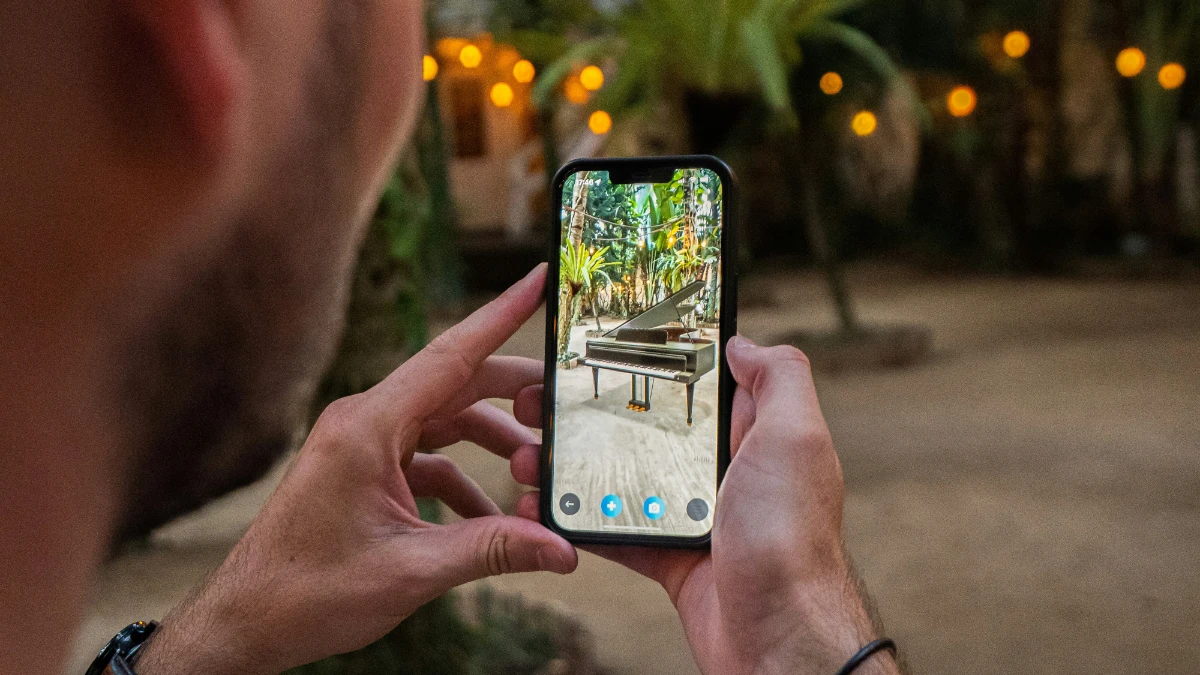
Augmented reality (AR) consists of overlaying digital elements onto the real world in real time. In practical terms, the camera of a smartphone, tablet, or smart glasses captures your environment. Software then adds objects, information, or animations that appear seamlessly integrated into reality.
Unlike virtual reality, which immerses users in a fully digital environment, augmented reality keeps the real world and enhances it. It does not replace reality, it makes it easier to understand.
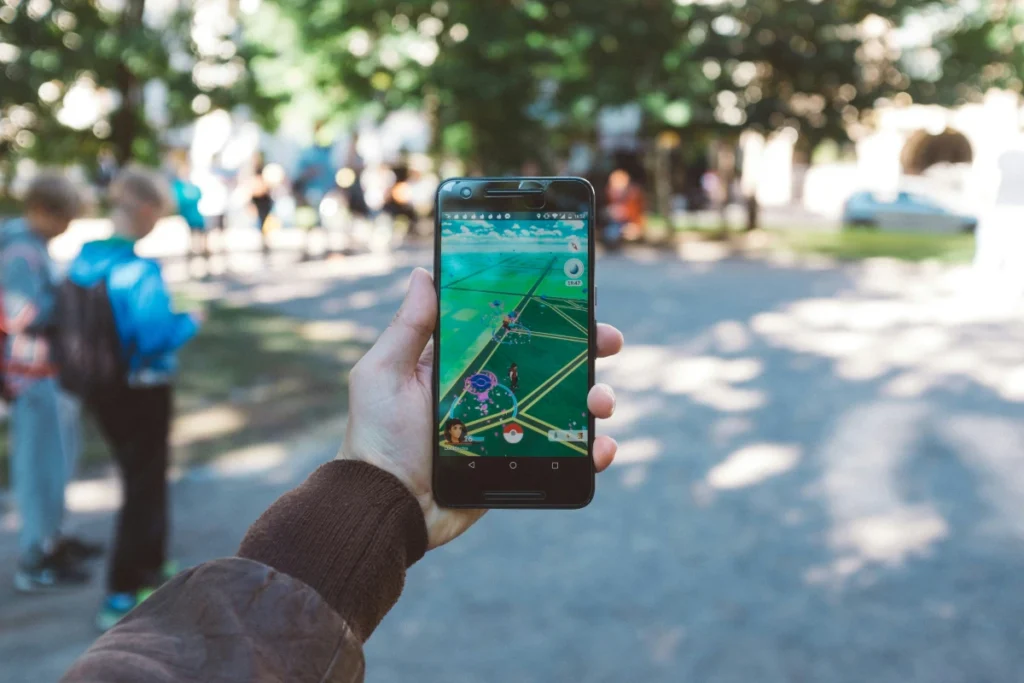
This principle, popularized by applications like Pokemon Go, is now used in far more structured professional contexts.
How does AR work, simply?
Behind any AR experience, three main components are involved:
- A device equipped with a camera, most often a smartphone, making the technology immediately accessible.
- A system capable of understanding the environment, detecting surfaces, and positioning digital elements.
- A 3D engine that displays content in the right place, at the right scale, and in interaction with the real world.
For the user, the experience is immediate: they open a link or an application, point their device, and access interactive content directly integrated into their environment.
Why augmented reality is becoming a strategic topic
The augmented reality and virtual reality market is growing rapidly, driven by concrete use cases across industry, commerce, and services. But beyond the numbers, it is the use cases that explain this momentum.
Companies are already using AR to better showcase their products, support their teams in the field, or make complex information instantly understandable.
For a business, the challenge is not to innovate for the sake of innovation. It is about explaining more clearly, reassuring more quickly, and enabling better decision-making.
Marketing: showing rather than explaining
A product sheet, a presentation, or a PDF always requires an effort of projection. Augmented reality removes that effort.
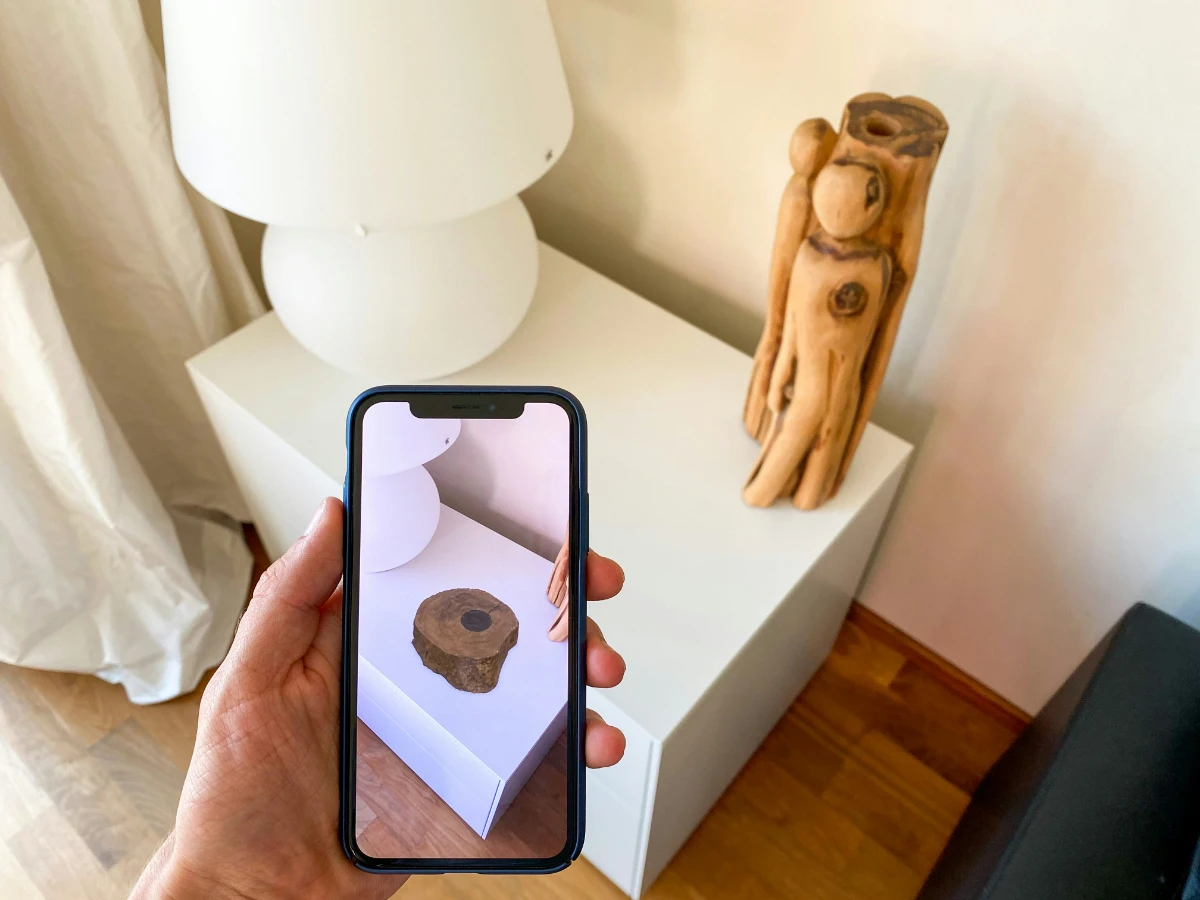
A prospect can visualize a product directly in their own environment. A machine in a workshop, equipment in a real space, a solution in its actual usage context. In just a few seconds, they understand what several slides would have tried to explain.
Traditional materials such as brochures or catalogs become interactive. A simple QR code provides access to 3D demonstrations or contextualized content. This changes the nature of the sales conversation:
- discussions become more concrete
- objections are better qualified
- decision-making becomes faster
AR does not replace the sales pitch. It makes it clearer and more credible.
Training: learning in the real world
Training is another area where AR delivers immediate value. Instead of reading procedures, teams see instructions directly within their work environment. The right components are highlighted, and actions are guided step by step.
This is especially valuable in technical environments, where understanding comes through action. The result is faster skill acquisition, fewer mistakes, and greater autonomy. The impact is very concrete:
- fewer errors
- faster skill development
- more autonomous teams
AR does not replace trainers. It enhances their ability to transfer knowledge effectively.
Architecture, real estate and development: making the invisible visible
In these sectors, many bottlenecks come from the difficulty of visualizing outcomes. Plans, renderings, and models remain interpretations.
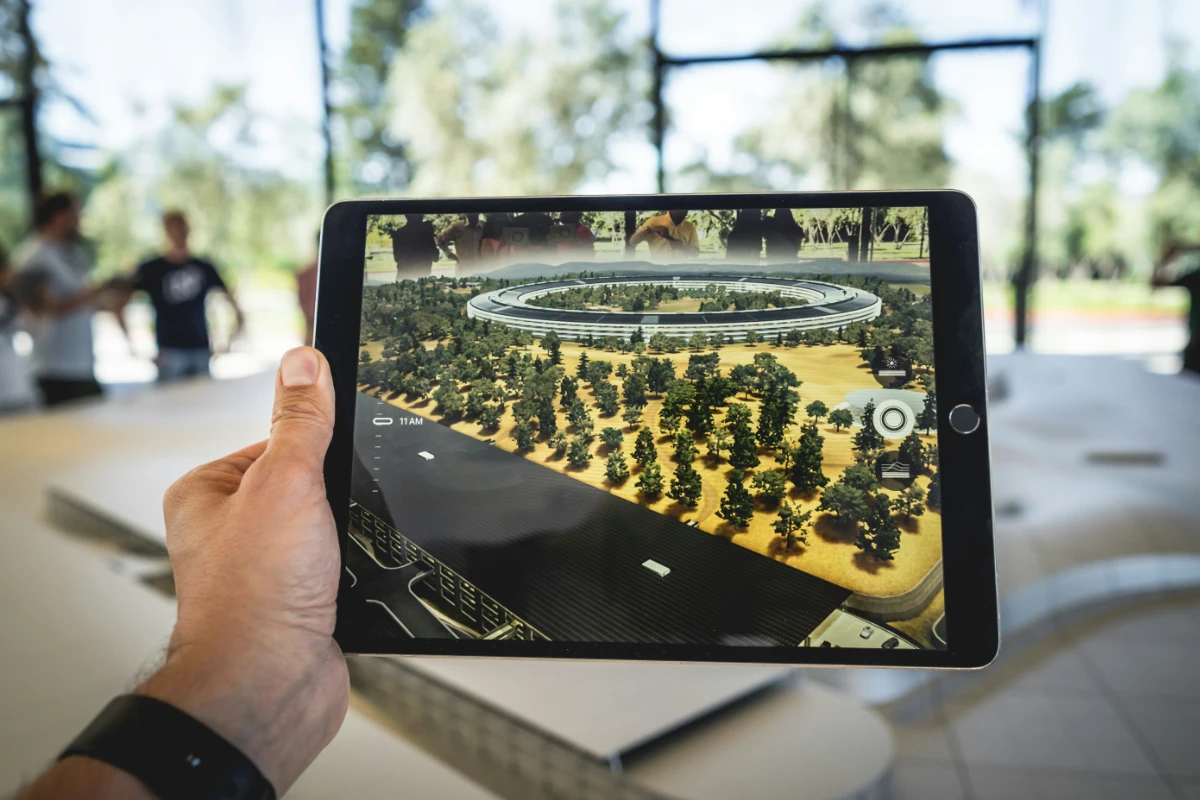
Augmented reality allows projects to be visualized directly on site, even before they exist. A developer can show a building on an empty plot. An architect can present multiple design options in real space. A client can project themselves into a future environment without effort. This fundamentally changes project dynamics:
- fewer back-and-forth exchanges due to misunderstandings
- faster validations
- stronger alignment between stakeholders
It streamlines communication, reduces misunderstandings, and accelerates approvals.
Heritage: enriching without altering
In cultural and heritage sites, the challenge is to inform without overwhelming. Augmented reality makes it possible to add a layer of understanding without physically altering the site. Panels, audio guides, physical materials all have their limits. They add layers, sometimes at the expense of immersion.
Missing elements can be reconstructed, historical scenes can be brought back to life, and educational content can appear directly along the visitor journey. For site managers, this creates several opportunities:
- making visits more accessible without oversimplifying
- engaging younger audiences used to interactive formats
- enriching the experience without heavy infrastructure
It enhances the experience while preserving the integrity of the site. Content can also be contextualized. Historical characters, explanations, animations, like our Virtual Influencers all triggered at the right place and the right moment.
AR becomes a tool for transmission. It does not transform heritage, it makes it easier to understand.
✨ AR isn’t here to impress. It’s here to be useful.
If you’d like to go further, we’ve gathered concrete AR project examples (visualize, train, engage) with realistic formats.
How to get started without complexity
The main barrier is often the perception of complexity. In practice, it is possible to get started quickly. WebAR solutions allow experiences to be delivered through a simple link or QR code, without requiring an app.
The most effective approach is to start with a specific use case:
- a key product to explain
- a project to showcase
- a training need to improve
Conclusion: a technology in service of clarity
Augmented reality is not a technological topic. It is a way to make things more understandable, more concrete, and more engaging.
For a company, the challenge is not to adopt a new technology, but to better communicate what it does within the real context of its clients, employees, or partners. When used effectively, AR does not add complexity. It simplifies.
Identifying a use case
The real question is not “should we use augmented reality?” It is “where can it help us save time, improve clarity, or increase performance?” Within three weeks, it is possible to identify a relevant use case in your context and define a first simple, measurable, and immediately useful pilot.
The goal is not to test a technology, but to solve a concrete problem with visible impact.
If you want to move forward on this topic, we can support you in structuring this first step and identifying a valuable use case aligned with your business challenges.
📌 Let’s see what’s truly relevant for you
We help you clarify where AR can genuinely create value, based on your context, your priorities, and your teams.