

Virtual reality or augmented reality?
For many decision-makers, the question is no longer theoretical. It is becoming concrete, almost operational: how do you choose the right technology without investing in something impressive… but rarely used?
Marketing directors, architects, real estate developers, training managers, and heritage professionals all face the same challenge: turning a technological promise into real value.
Immersive technologies are evolving quickly. Use cases are multiplying. But making the wrong choice can cost time, budget, and most importantly, lead to disappointing experiences for both your teams and your clients.
Rather than comparing features, we suggest a simpler approach: answering three key questions to identify the most relevant technology for your context.
💡 To get straight to the point, here are the key takeaways.
- VR and AR do not serve the same purpose: one immerses, the other enhances the real world.
- The right choice depends first on your business use case, not on the technology itself.
- VR is particularly relevant for simulation, persuasion, and high-impact experiences.
- AR integrates more easily into daily workflows to support, explain, and assist decision-making in real situations.
- The key factor is not just budget, but how easily your teams or clients can adopt the solution.
- The most effective strategies often combine VR and AR at different stages of the journey.
- It is better to start with a simple, useful use case than to aim for a complex project that is hard to deploy.
VR vs AR: two very different ways to experience
Before making a choice, one thing is essential to understand: virtual reality and augmented reality do not serve the same purpose.
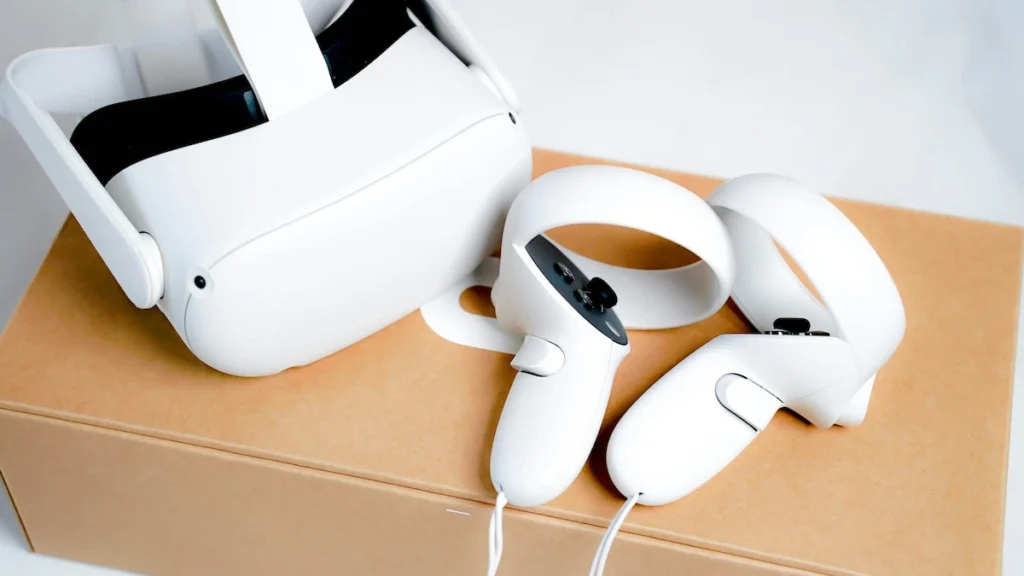
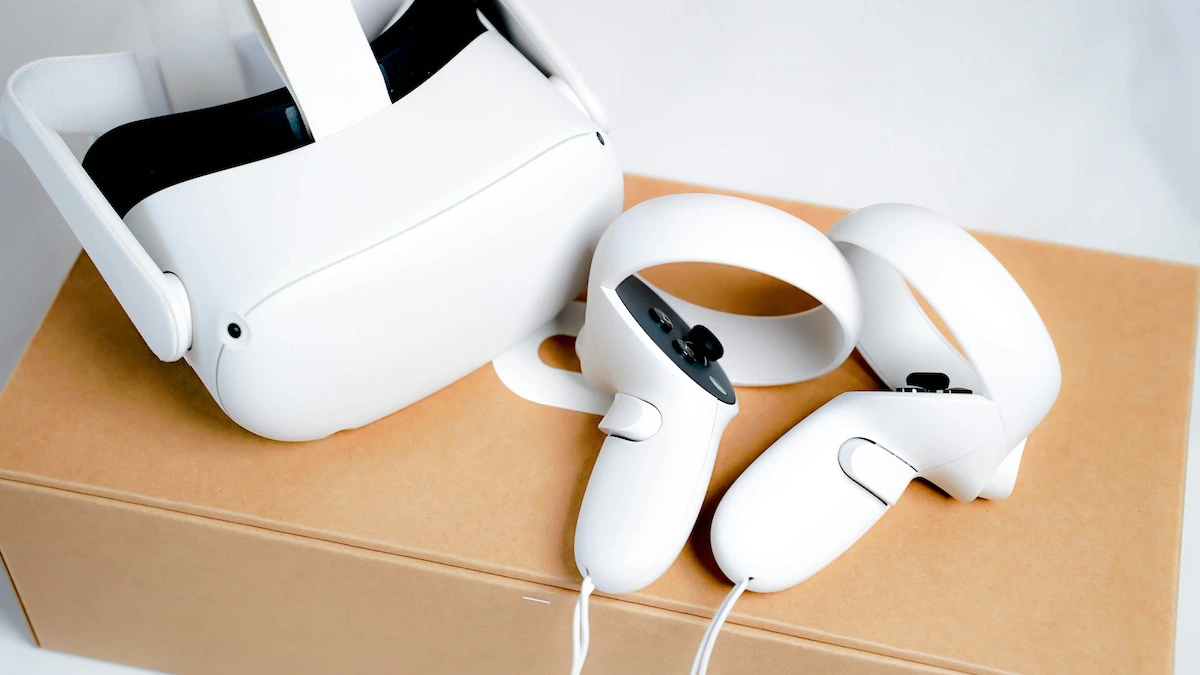
Virtual reality (VR) immerses the user in a fully digital environment, through a headset that cuts off visual contact with the real world. The experience is immersive, controlled, and often designed to capture full attention.
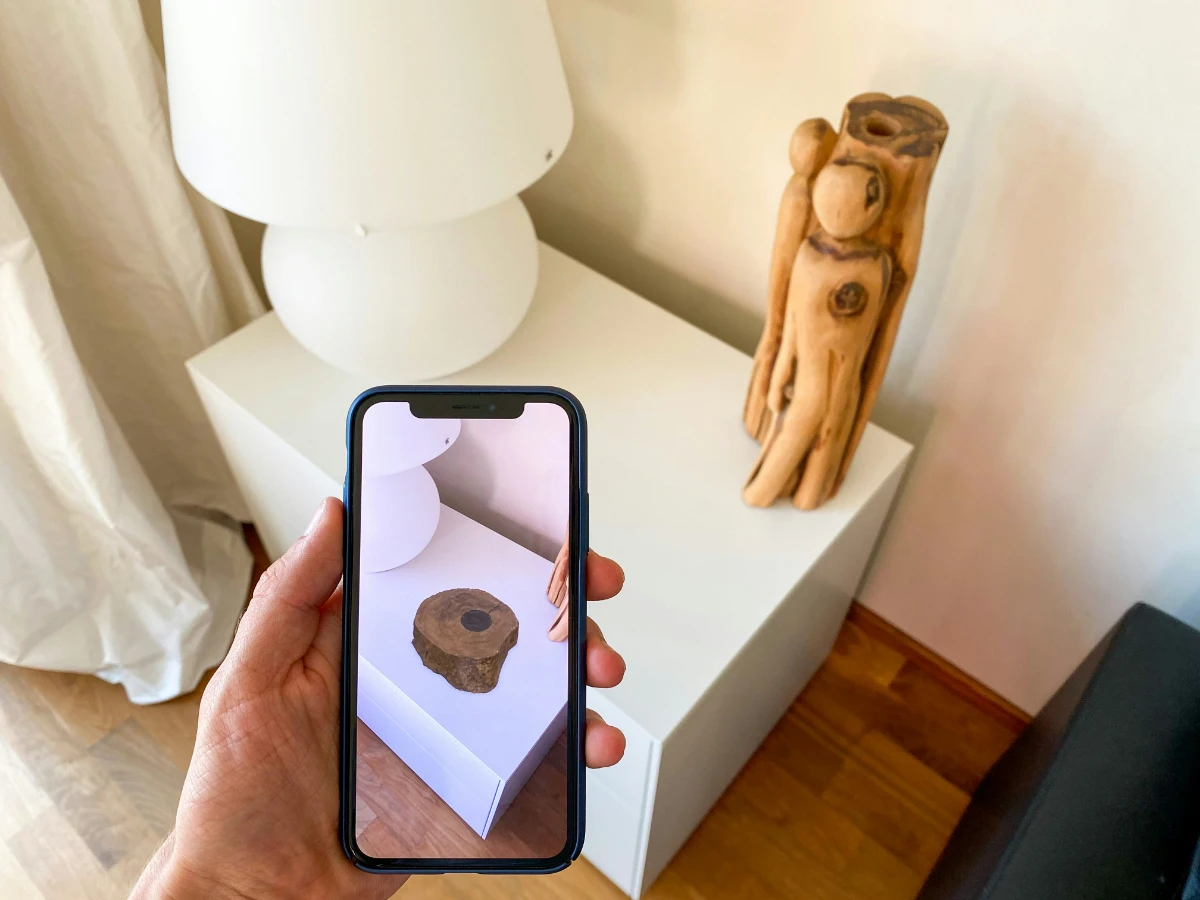
Augmented reality (AR), on the other hand, adds a layer of digital information to the real world. It is used via a smartphone, tablet, or smart glasses, without disconnecting the user from their physical environment.
In other words: VR takes you somewhere else. AR helps you better understand what is already there.
| Criteria | Virtual reality (VR) | Augmented reality (AR) |
|---|---|---|
| Relationship to reality | Fully replaces reality | Enhances reality |
| Equipment | VR headset | Smartphone, tablet, AR glasses |
| Level of immersion | Full | Partial |
| Ideal use | Simulation, training, 3D visualization | Field assistance, marketing, on-site visualization |
| Accessibility | Requires dedicated equipment | More accessible (smartphone is enough) |
Question 1: does your scenario require full immersion?
This is the starting point.
If your goal is to fully capture attention, simulate an environment, or create a powerful experience, VR is usually the best option.
In real estate or architecture, it allows users to visit a project that does not yet exist, creating a concrete, almost tangible projection. This ability to make the invisible visible accelerates decision-making and helps secure early-stage sales.
In training, VR becomes particularly relevant when the stakes are high. Simulating risky situations, training for crisis management, or practicing complex interactions allows people to learn without exposure. Studies show an average 76% increase in knowledge retention in VR training, and a 40% reduction in learning time1. According to Deloitte2, companies can achieve savings of up to 50% on training costs.
On the other hand, if the user needs to remain anchored in their environment, the logic changes.
A technician, a salesperson, or a visitor on site does not need to be disconnected from reality. They need the right information, at the right time, in the right place.
This is exactly the role of augmented reality. It adds a layer of understanding without interrupting the task.
In a museum or historical site, for example, it can enrich artworks or locations with reconstructions, explanations, or audiovisual content directly visible on the visitor’s smartphone.
💡 In simple terms: if your goal is to transport people elsewhere and create an “out-of-time” experience, VR is the best fit. If your priority is to help someone better understand their surroundings, make a decision on the spot, or perform a real-world task, AR has the advantage.
Question 2: are you aiming for a standout moment or everyday use?
Second key question: is your project designed as a memorable event or as an everyday tool?
Virtual reality is highly effective at creating “standout moments.” At trade shows, in showrooms, or during key meetings, putting a headset on a prospect and immersing them in a tailored scenario creates a strong break from the usual flow of information. In real estate, major players already use virtual tours to accelerate decision-making and reduce the number of physical visits. In training, a well-designed VR session can condense the equivalent of several days of observation or traditional role-playing into a single hour.
It is a powerful lever to convince, demonstrate, and accelerate.
Augmented reality, on the other hand, fits more naturally into recurring use, because it relies on devices already in circulation: smartphones, tablets, and sometimes glasses. A salesperson can use an AR application several times a day to project a product at a client’s location or display different variations in context. In the heritage sector, an AR experience can remain permanently accessible on site, with visitors triggering content at their own pace via QR codes or dedicated apps.
In practical terms, if your goal is to deliver an exceptional experience to a limited but highly qualified audience (key accounts, investors, partners), VR is an excellent lever. If you are aiming for broad distribution and natural adoption by a large number of users over time, AR is often more realistic.
Question 3: what is your budget and technical constraint level?
The final point, often underestimated: operational reality.
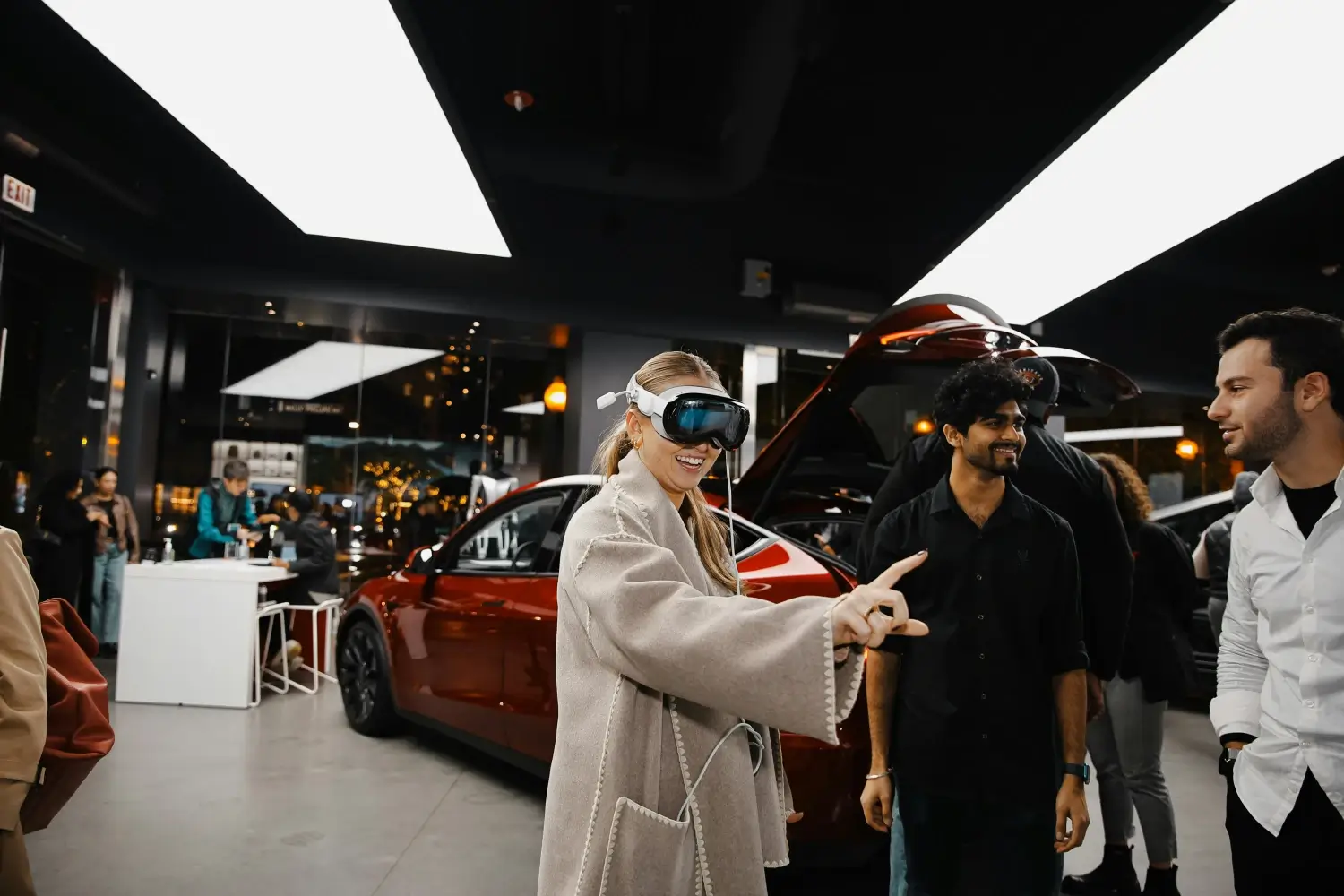
On the hardware side, VR requires managing a fleet of headsets, sometimes connected to PCs, with all the associated logistics: storage, transport, charging, updates, hygiene. This is manageable, but it does require a certain level of organization, especially if you deploy across multiple locations, training centers, or events.
AR, on the other hand, mainly relies on smartphones and tablets that are already available within the company or in your clients’ pockets, which lowers the barrier to entry and enables faster deployment.
From a budget perspective, VR often involves a higher initial investment, but one that is justified by significant gains in high-stakes scenarios, such as training for risky or costly situations, or marketing complex real estate projects. Reducing travel, risks, repeated site visits, or errors can largely offset the cost.
AR, by contrast, typically involves lower unit costs and delivers ROI through improved lead quality, smoother client interactions, and a better ability to qualify projects before moving to more expensive stages.
Finally, industry context matters.
In marketing, a hybrid approach is often relevant: VR for key moments (trade shows, client events, roadshows), and AR as an “always-on” tool for sales teams and digital content. In architecture and real estate, VR helps reassure, convince, and drive decisions, while AR supports discussions, adjustments, and on-site visualization. In training and heritage, VR enables experiences that are impossible in real life, while AR enhances real-world environments.
✨ XR isn’t here to impress. It’s here to be useful.
If you’d like to go further, we’ve gathered concrete XR project examples (visualize, train, engage) with realistic formats.
Decision table: a quick overview
| Sector | Primary use | Recommended technology |
|---|---|---|
| B2B Marketing | Product visualization, trade show experience, interactive demos | AR |
| Real estate development | Visits of unbuilt properties, full 3D projection | VR |
| Architecture | Project co-visualization at scale, client walkthrough | VR |
| Professional training | Risk simulation, onboarding, soft skills | VR |
| Heritage and cultural mediation | On-site visit enhancement, historical reconstruction | AR |
| Heritage (premium / off-site experience) | Full reconstruction of a lost space, traveling exhibition | VR |
What if you need both?
The good news: VR and AR are not mutually exclusive. Many organizations combine both depending on the stage of the customer or learning journey.
A real estate developer may use VR to showcase an apartment during the sales phase, then AR on site to visualize interior layouts once the property is delivered. A cultural organization may deploy VR for a traveling immersive exhibition, and AR to enhance daily visits to its collections.
The goal is not to choose one technology forever, but to choose the right one at the right moment, in the right context.
And most importantly, you can take your time. There is no need to rush into implementation. It is better to start with a concrete need, even a small one, than to aim big and end up with a solution that is never used.
Going further
You have identified an opportunity, but you are still unsure about implementation, budget, or ROI? This is exactly where the right support makes the difference.
At Black Centauri, we help you structure your project, prioritize the right use cases, and secure your decisions before investing. Tell us about your context. We will help you turn an idea into a concrete project.
📌 Let’s see what’s truly relevant for you
We help you clarify where XR can genuinely create value, based on your context, your priorities, and your teams.
- Kwark Education – « Virtual Reality in Vocational Training: A Measurable Educational Revolution » Lien : https://kwark.education/blog/la-realite-virtuelle-en-formation-professionnelle-une-revolution-pedagogique-mesurable ↩︎
- « What is digital reality?» Lien : https://www.deloitte.com/ch/fr/services/consulting/perspectives/digital-reality-explained.html ↩︎