
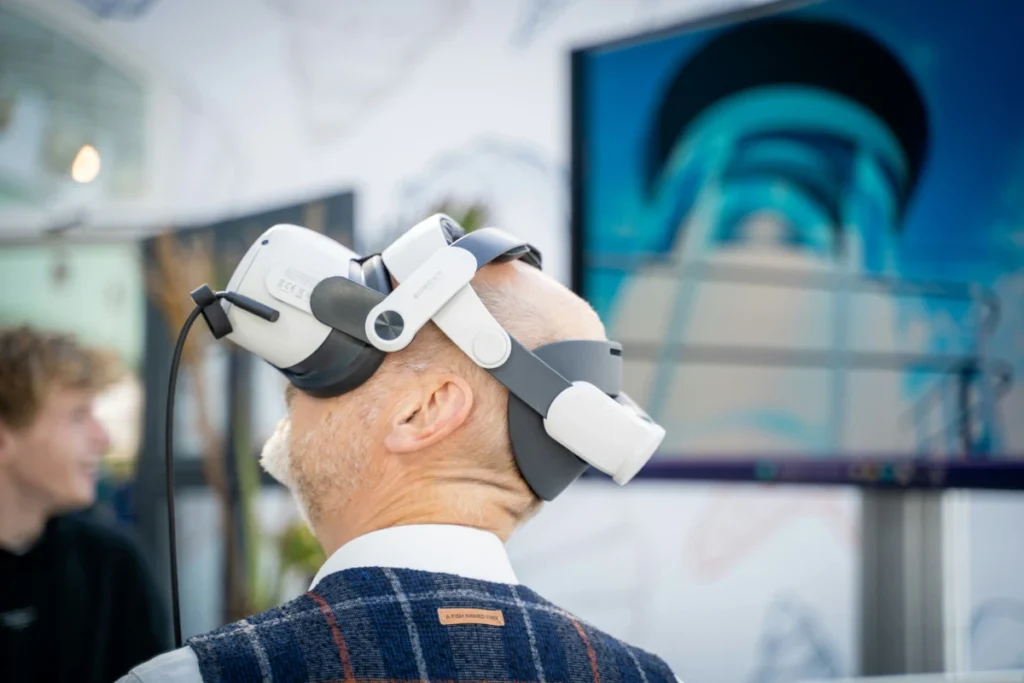

Presenting an apartment before the building has even been constructed has long relied on floor plans, 3D renderings and a few computer-generated images. These materials remain useful, but they still require a significant effort from the client: imagining volumes, understanding circulation, and projecting themselves into a space that does not yet exist.
XR changes this dynamic.
Thanks to virtual reality, augmented reality and interactive 3D experiences, real estate developers and architects can now let clients visit a project before it is built. The buyer no longer simply looks at a property. They explore it. They move from one room to another, understand proportions, visualize materials, compare options and share the experience with their loved ones.
For real estate and architecture professionals, this shift is no longer about novelty. It addresses a very concrete challenge: building trust earlier in the client journey.
💡 To get straight to the point, here are the key takeaways.
- Immersive virtual tours help real estate developers and architects make their projects more tangible before construction even begins.
- In off-plan sales, they reduce uncertainty by helping buyers better understand volumes, circulation, materials and layout options.
- For architects, XR improves discussions with clients, project owners and technical teams through a shared project experience.
- Beyond the technology itself, virtual tours become a lever for trust, qualification and decision-making in the client relationship.
What Does XR Mean in Real Estate and Architecture?
XR, or Extended Reality, brings together several immersive technologies designed to make a project easier to understand, more tangible and more engaging.
Virtual reality, or VR, immerses the user in a digital reconstruction of the property. With a headset, they can visit an apartment, a house, a building lobby or a commercial space as if they were already there. This approach is particularly useful for conveying volumes, ceiling heights, perspectives and movement between rooms.
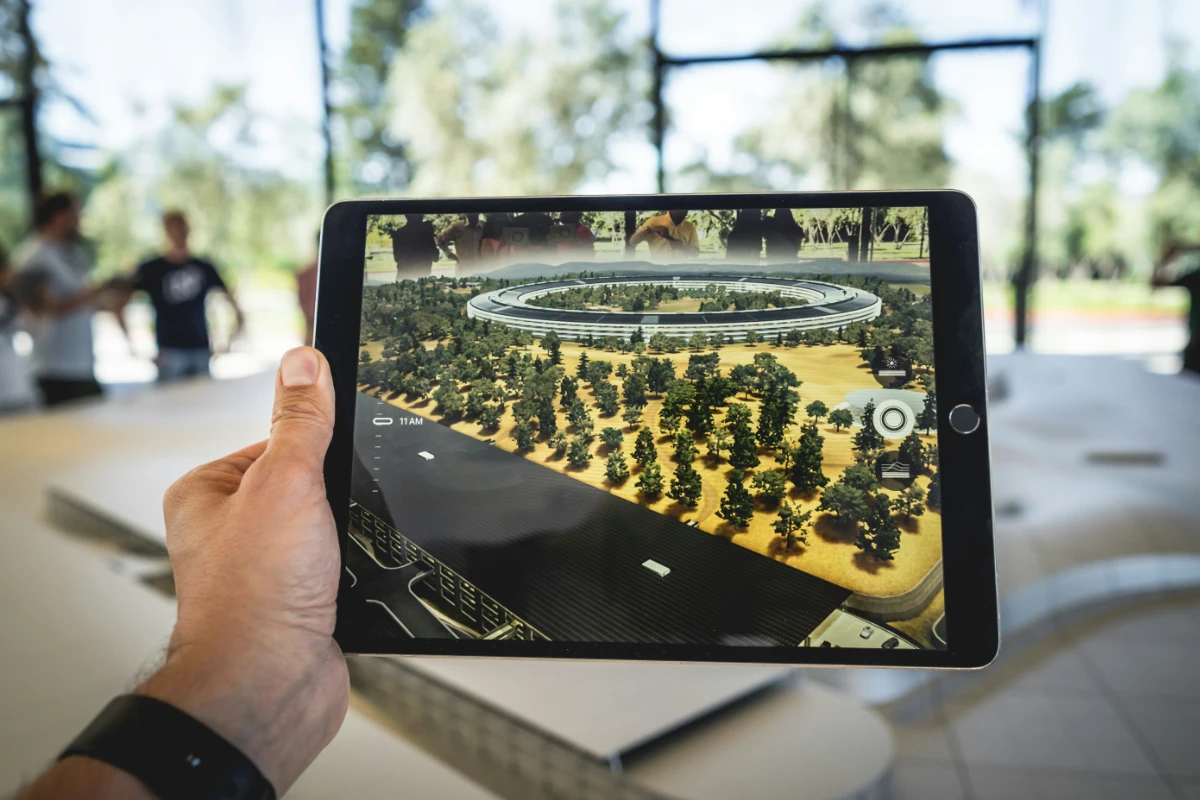
Augmented reality, or AR, adds digital elements to a real environment. On a smartphone or tablet, it becomes possible to display a building on a plot of land, visualize an extension, or present a 3D model directly in a sales office.
Mixed reality, or MR, goes further by anchoring digital objects in the physical space. It is especially useful during design phases, project reviews and site monitoring, in connection with BIM models.
In every case, the goal remains the same: to make the project easier for all stakeholders to understand, without overwhelming them with technical drawings or documents that are difficult to interpret.
Why Virtual Tours Are Becoming Essential in New-Build Real Estate
Virtual tours are no longer just a differentiating tool. They are gradually becoming a standard part of the real estate experience.
The global virtual tour software market was estimated at $492.2 million in 2025 and is expected to reach $1.37 billion by 2034, with a projected compound annual growth rate of 11.9%.1 This growth reflects increasing demand for more interactive discovery experiences, particularly in real estate, tourism and professional environments.
Real estate platforms are also observing an impact on engagement. Zillow, for example, reports that listings featuring a 3D tour sold 14% faster on average than those without one, according to its own data.2 Matterport also highlights significantly higher engagement for properties featuring a 3D tour compared with listings based only on photos.3
These figures should be interpreted with caution, as results vary depending on the market, property type and quality of the experience offered. Still, they point to a clear trend: the faster a client understands a property, the more easily they can project themselves and move forward in their decision.
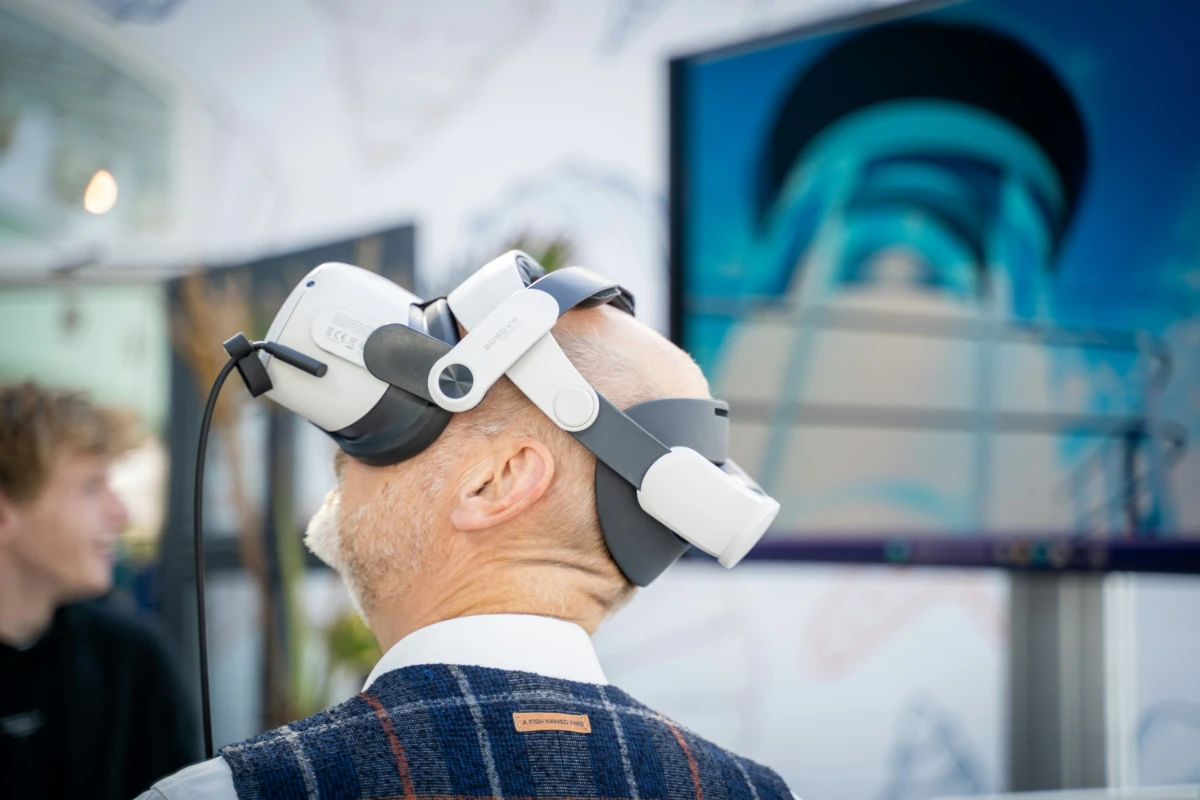
Virtual Tours and Off-Plan Sales: Helping Buyers Project Themselves Before Construction
Off-plan sales concentrate one of the biggest projection challenges in real estate.
A buyer may have to commit to a home they cannot visit, in a building that does not yet exist, based on 2D plans, a technical description and a few visuals. Even with strong sales support, a degree of uncertainty remains.
XR virtual tours help reduce that uncertainty.
They help the buyer understand the real size of each room, the relationship between spaces, exposure, possible views and layout choices. They also make it possible to test several configurations: parquet or tiles, open or semi-open kitchen, bright or warmer atmosphere, standard or custom furniture.
This is not only a projection tool. It is a reassurance tool.
In off-plan sales, the buyer benefits from a legal 10-day withdrawal period after being notified of the contract, as recalled by the Notaires de France4. In a context where real estate decisions are long, significant and sometimes stressful, every element that clarifies the project can help reduce hesitation.
XR does not eliminate questions. It makes them more concrete. And that is precisely what improves the quality of the commercial relationship.
Real Estate Developers: A Tool to Qualify, Reassure and Convert
For real estate developers, immersive virtual tours can be used at several stages of the client journey.
Upstream, they capture attention on a listing, landing page or sales campaign. They allow prospects to discover the development remotely, without waiting for an in-person appointment.
During the appointment, they transform the sales conversation. The client is no longer simply listening to an explanation. They explore, ask questions, compare and project themselves. The advisor can then adapt the conversation to what the client is actually seeing: a room that feels too narrow, an appealing view, a customization option, or a smoother circulation than expected.
After the appointment, the experience can be shared with a partner, family member, associate or investor. This is often decisive, because real estate purchases are rarely decided alone. By making the project accessible remotely, the virtual tour makes the decision-making conversation easier.
The result: the client moves forward with a clearer understanding of the property. And the developer speaks with a better-qualified prospect.
Architects: Helping Clients Understand Projects from the Design Phase
For architects, XR also transforms the client relationship during the design phase.
A plan, section or elevation may be perfectly clear to a professional, but remain abstract for a client. Virtual reality and augmented reality help bridge this gap in understanding.
During an immersive project review, the client can enter their future building, observe volumes, understand lighting choices, test materials or visualize the impact of a modification. Discussions become more precise because everyone is working from a shared experience.
This approach brings several benefits.
It limits misunderstandings, because the client immediately visualizes the consequences of an architectural choice. It speeds up approvals, because decisions are made in context. It also reduces the risk of late-stage changes, which are often costly once construction has started.
Combined with BIM, XR can also become a coordination tool between architects, engineering teams, project owners and contractors. The model is no longer just a technical file. It becomes a shared workspace, more readable and more accessible.
A useful tool for convincing local authorities and stakeholders
Real estate projects are not only addressed to buyers. They also need to be understood by local authorities, elected officials, residents, investors and partners.
In these contexts, XR can play an important role.
A virtual tour or augmented reality visualization can show how a building fits into its environment: height, volumes, materials, street-level perspectives, relationship with neighboring buildings, and impact on traffic flows or public spaces.
For a local authority, these elements are often more meaningful than a technical file or static image. For residents, they make the project more tangible and can help ease certain concerns.
XR does not replace consultation. It can, however, make it clearer, more transparent and more constructive.
✨ XR isn’t here to impress. It’s here to be useful.
If you’d like to go further, we’ve gathered concrete XR project examples (visualize, train, engage) with realistic formats.
How to Integrate 3D Virtual Tours into Your Real Estate or Architecture Projects
Integrating XR does not mean transforming your entire organization overnight. The most effective projects often start with a simple, well-defined use case directly connected to a business objective.
The first step is usually to create a 3D virtual tour for a new development, a show apartment, a sales space or an architectural project in the design phase. This is the most accessible format, as it can be shared on a website, in a sales office, on a tablet, on a screen or through a VR headset.
The second step can be to add interactive options: changing materials, testing layout variants, comparing several units, visualizing furniture or exploring different usage scenarios.
Augmented reality can then be used on site, particularly to present a future building on a plot of land or show an extension in its real environment.
For architects and technical teams, integration with BIM allows projects to go further: immersive reviews, project coordination, inconsistency detection and stakeholder presentations.
The key is to measure impact. Time spent in the experience, number of qualified inquiries, conversion rate, reduction in back-and-forth, sales timeline, quality of client approvals: XR should be approached as a measurable lever, not as a simple technology showcase.
What XR Really Changes in the Real Estate Client Relationship
The real value of XR is not simply showing a project in 3D.
It changes the nature of the conversation.
When a buyer can visit their future home before construction, they are no longer starting from an abstraction. They are starting from an experience. They understand what they are buying more clearly, ask more precise questions and move forward with greater confidence.
When an architect’s client can walk through their future building, they are no longer just approving an intention. They are validating a feeling, a circulation, an atmosphere, a use.
In a sector where decisions are significant, long and often emotional, the ability to make a project tangible is valuable. It reduces the distance between the idea and the decision. It puts technology in its rightful place: at the service of understanding, trust and support.
For real estate developers and architects alike, virtual tours are therefore not just a presentation tool. They are a new medium for dialogue with the client.
Want to Go Further?
Would you like to assess how virtual reality, augmented reality or 3D virtual tours could enrich your real estate or architecture projects?
Black Centauri supports real estate and architecture professionals in designing immersive experiences that are useful, measurable and adapted to their real-world needs.
📌 Let’s see what’s truly relevant for you
We help you clarify where XR can genuinely create value, based on your context, your priorities, and your teams.
- Fortune Business Insights, Virtual Tour Software Market Size, Share & Growth Statistics [2034]. ↩︎
- How Virtual Tours Can Help Your Home Sell Faster ↩︎
- Buyers are shown to be 300% more engaged with properties that feature a 3D Tour than with 2D photos alone. ↩︎
- Compromis de vente : sort du dépôt de garantie en cas de non-réalisation de la vente
Mis à jour le Mercredi 5 mars 2025 ↩︎