


Extended reality, or XR, brings together virtual reality, augmented reality and mixed reality. Long associated with spectacular demos, video games or futuristic prototypes, it is now entering a much more concrete phase.
In 2026, the question is no longer only what XR makes possible. The real question is: where can it create value within an organization?
Training, sales, design, virtual tours, maintenance, remote collaboration, decision support: use cases are becoming clearer. Devices are becoming more accessible. Artificial intelligence is making experiences more adaptive. And smart glasses are opening a new chapter, one that is lighter, more contextual and closer to everyday use.
Here are the key trends to follow to understand what XR is already changing, and what it can unlock for businesses.
💡 To get straight to the point, here are the key takeaways.
- In 2026, XR is entering a more concrete phase, driven by business use cases such as training, sales, design, virtual tours and collaboration.
- Artificial intelligence is becoming a key driver of XR, making experiences more adaptive, contextual and useful for users.
- Smart glasses and spatial computing are bringing digital interfaces closer to everyday life by integrating voice, gaze, gesture and the real-world environment.
- For businesses, the value of XR does not come from the technology effect itself, but from its ability to reduce uncertainty, improve understanding and create more measurable experiences.
A market entering a phase of consolidation
Projections for the XR market vary significantly depending on the scope considered. Some firms measure the entire ecosystem, including software, services, content and devices. Others focus on narrower segments, such as hardware or specific professional use cases.
IMARC1, for example, estimates that the global XR market reached $176.8 billion in 2025 and could exceed $2.7 trillion by 2034. Mordor Intelligence2, on the other hand, values the XR market at $10.64 billion in 2026, with a projection of $59.18 billion by 2031 based on a narrower scope. These differences are not necessarily contradictory. They mainly show that the very definition of the XR market depends on what is included in the analysis.
What matters is simpler: XR is no longer a marginal topic. It is becoming a set of technologies that can be used, tested and integrated into very different business contexts.
For companies, this changes the approach. It is no longer about “doing XR” to follow a trend. It is about identifying the situations where immersion can reduce uncertainty, accelerate understanding or improve the experience.
Trend 1: the convergence between XR and artificial intelligence
The most structural trend of 2026 is probably the convergence between XR and artificial intelligence.
Until now, many immersive experiences relied on fixed environments, scripted in advance. Users could explore, interact and move around, but the experience itself remained largely predefined.
AI changes that logic. It makes it possible to imagine more adaptive environments, assistants capable of understanding context, faster content generation and more natural interactions. In a headset, a training application can adjust to the learner’s level. In a virtual tour, an assistant can answer questions based on what the user is looking at. In smart glasses, the camera, sound and sensors become entry points for understanding the real-world environment.
Google is clearly positioning Android XR in this direction3, with Gemini as the intelligence layer for headsets and future smart glasses. The goal is not only to display information in the user’s field of view, but to provide contextual support, at the right time, in the right format.
For businesses, this is a key point. The value of XR will not come only from immersion. It will come from its ability to make information more useful, more contextual and more actionable.

Trend 2: smart glasses are scaling up
Smart glasses are one of the most closely watched topics in 2026. After several cycles of experimentation, the market seems to be entering a new phase: less focused on technological demonstration, and more oriented toward wearable objects that can be used in everyday life and better integrated into mobile ecosystems.
Google is working with Samsung, Warby Parker and Gentle Monster on Android XR glasses powered by Gemini. Two main categories are emerging: AI glasses without a display, capable of capturing context and interacting through voice, and glasses with an in-lens display, designed for use cases such as navigation, translation or discreet access to information.
Meta is also moving quickly in this space. Its Ray-Ban Meta glasses have shown that a lightweight, socially acceptable format focused on simple use cases can gain real traction. According to Reuters4, Meta’s smart glasses sales tripled in 2025, even though the market is still young and far from mass adoption.
Apple, for its part, is currently advancing mainly through the Vision Pro ecosystem and visionOS. Rather than announcing consumer AR glasses, the company is gradually strengthening spatial computing: widgets anchored in space, enhanced spatial scenes, improved Personas, shared experiences and APIs designed for professional use cases.
| Player | 2026 direction | Key takeaway |
|---|---|---|
| Meta | Consumer smart glasses | A lightweight format already understood by the market |
| Android XR and AI glasses | An approach centered on Gemini and user context | |
| Samsung | XR headsets and future glasses | A key role in the Android XR ecosystem |
| Apple | Vision Pro and visionOS 26 | A structured vision of spatial computing |
| Snap | AR Spectacles | A creative and experimental approach to wearable AR |
The important point is not knowing which player will win. The real topic is elsewhere: digital interfaces are moving closer to gaze, voice, gesture and real-world context.
Trend 3: VR is becoming a credible training tool
Virtual reality has long been seen as an impressive tool, but one that was difficult to industrialize. That perception is changing, particularly in professional training.
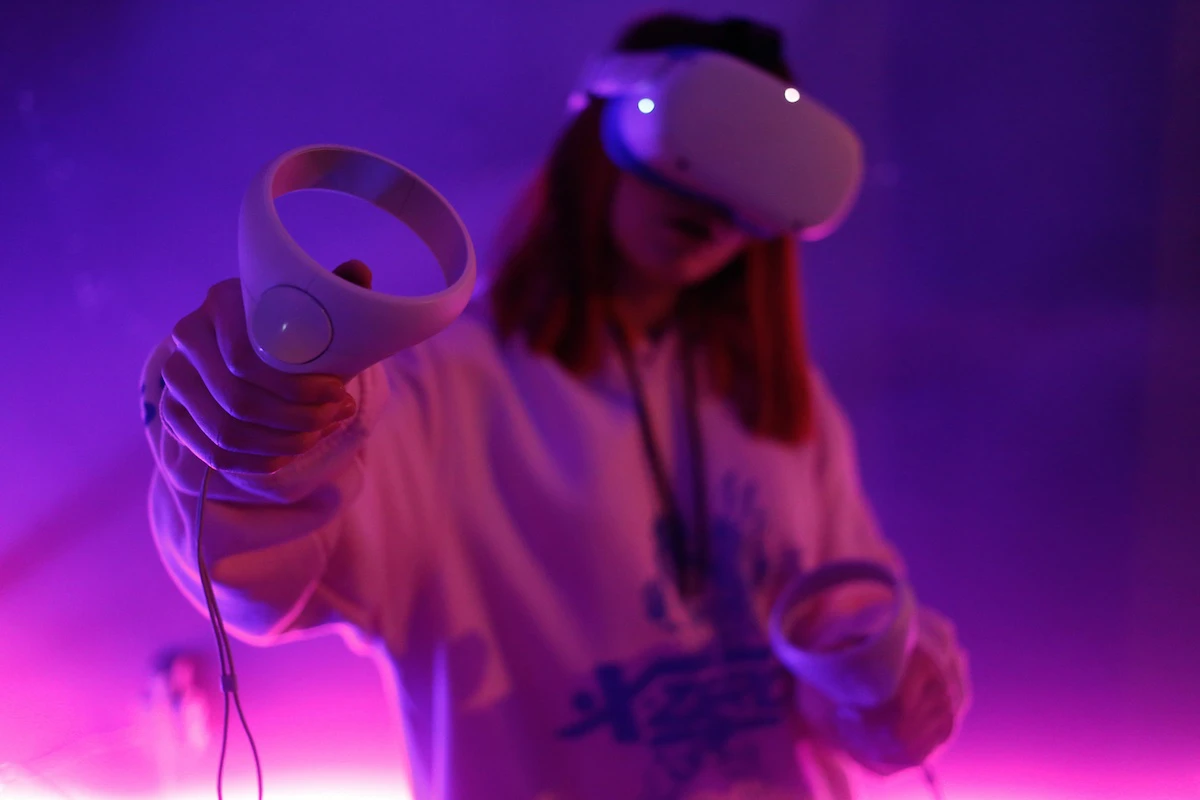
VR allows an employee to be placed in a realistic situation without being exposed to the real risk. It can be used to repeat a technical gesture, simulate a crisis situation, prepare for a complex intervention, train for safety procedures or develop interpersonal skills.
What interests companies is not only immersion. It is repetition, measurement, standardization and the ability to train in environments that are difficult to reproduce physically.
A PwC5 study on VR training indicates that learners were able to complete their training up to 4 times faster than in classroom training and felt up to 275% more confident in applying what they had learned. These results relate to a specific context, but they clearly illustrate the potential of VR when it is applied to a well-defined use case.
The most common applications today include:
- Training for technical gestures
- Workplace safety
- Crisis management
- Onboarding new employees
- Soft skills and management
- Industrial maintenance
- Architecture, real estate and project visualization
The relative drop in equipment costs also helps make these projects more accessible. Standalone headsets such as Meta Quest devices or equivalent solutions make it possible to launch experiments without installing heavy infrastructure. Even though prices fluctuate with component costs, the entry ticket remains far more accessible than it was a few years ago for a structured first pilot.
For a company, the challenge is therefore not to immediately deploy a large-scale VR program. It is rather to start with a targeted, measurable use case that is close to the field.
Trend 4: XR is moving from pilot projects to business infrastructure
XR is changing status. It is no longer only a topic for innovation teams or communication campaigns. In some sectors, it is becoming an operational building block.
In industry, it helps simulate gestures, prepare interventions, visualize machines or support maintenance. In healthcare, it supports planning, training or certain rehabilitation protocols. In real estate and architecture, it makes it possible to visit, understand and sell spaces before they are even built. In retail and events, it enriches brand experiences and customer projection.
This shift from pilot to infrastructure requires a different way of thinking about projects. An isolated XR experience can impress. An XR experience integrated into a business journey can transform the way a company sells, trains or makes decisions.
This is where return on investment becomes easier to read. XR can help:
- Reduce certain travel or demonstration costs
- Accelerate understanding of a complex project
- Improve sales qualification
- Standardize sensitive training programs
- Reduce risks in technical environments
- Help teams collaborate better remotely
The maturity of an XR project is therefore not measured by its level of visual sophistication. It is measured by its usefulness within an existing value chain.
Trend 5: spatial computing is redefining interfaces
Spatial computing is based on a simple idea: interfaces are no longer confined to screens. They can be anchored in space, layered onto the real world and adapted to the user’s context.
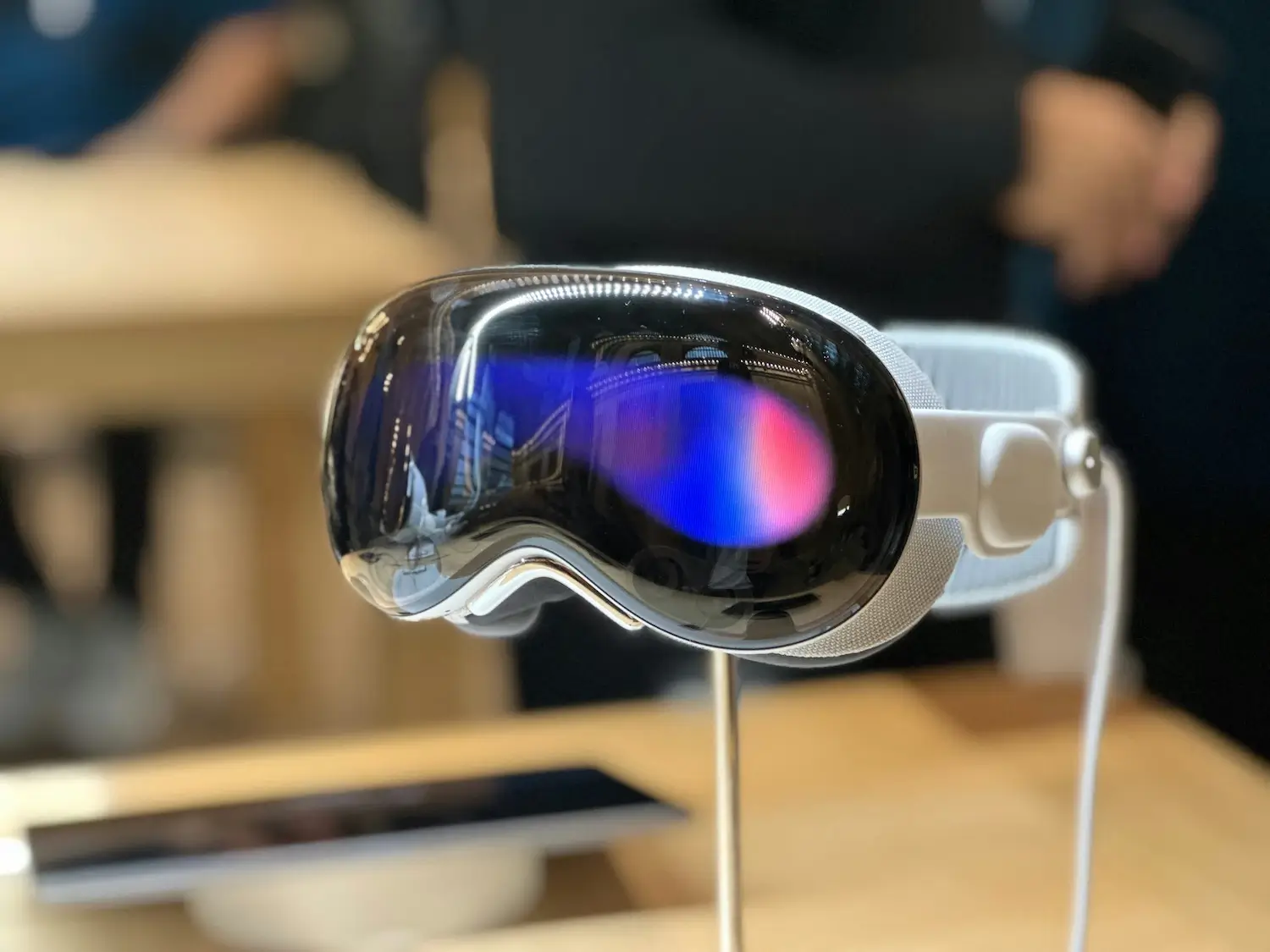
With visionOS 26, Apple is pushing this logic further. Widgets can be integrated into physical space. Photos can be transformed into spatial scenes with depth. Personas are becoming more realistic. Shared experiences are progressing. New enterprise APIs also give developers more control to create specific professional use cases.
This evolution matters because it goes beyond headsets alone. It points to a broader transformation of interfaces: fewer menus, less friction and more natural interactions with the environment.
For businesses, this opens up very concrete use cases. A salesperson can present a product in 3D in the customer’s space. An architect can help clients understand a volume before construction. A technician can access contextual information during an intervention. A trainer can create a learning environment that is more engaging than a traditional support document.
Spatial computing does not replace existing tools. It complements them when space, gesture, scale or visualization bring additional value.
Trend 6: 3D creation is becoming more accessible
XR also depends on another factor: the ability to produce high-quality immersive content.
For a long time, creating a 3D environment required a lot of time, expertise and budget. This barrier is gradually lowering. Capture tools, 3D reconstruction, generative AI and real-time rendering are making production more accessible.
Gaussian Splatting, for example, makes it possible to reconstruct 3D scenes from images, often with a highly realistic rendering. Combined with other technologies, it can accelerate the creation of virtual tours, digital twins or immersive environments.
This does not mean production becomes automatic or no longer requires expertise. The quality of an XR experience still depends on art direction, usability, fluidity, storytelling and the business objective. But the tools are moving in the right direction: they reduce certain technical constraints and allow teams to focus more on the use case.
This is good news for companies. It is becoming possible to test faster, prototype more simply and improve an immersive experience progressively.
✨ XR isn’t here to impress. It’s here to be useful.
If you’d like to go further, we’ve gathered concrete XR project examples (visualize, train, engage) with realistic formats.
What these trends change for businesses
In 2026, XR is no longer an abstract promise. It is becoming a concrete tool to train better, sell better, design better and make complex ideas easier to understand.
But its value does not come from the technology alone. It comes from its ability to respond to situations where traditional formats reach their limits.
- When something is difficult to explain, XR can make it visible.
- When something is risky to practice, VR can make it trainable.
- When something does not yet exist, 3D can make it visitable.
- When a decision requires projection, immersion can reduce uncertainty.
This is probably the most important point to remember: XR should not be approached as a trend to follow, but as a lever to activate in the right place.
How to start without overbuilding the project
For a company, the best starting point is not necessarily the most ambitious project. It is often the clearest use case.
A good first XR project generally meets three criteria:
- It is based on an already identified business need
- It relates to a situation where visualization or immersion brings real value
- It makes it possible to measure a concrete result: time saved, better understanding, better qualification, risk reduction or improved experience
This could be a virtual tour to accelerate customer projection. A VR simulation to train for a sensitive gesture. A 3D model to present a real estate project. An immersive experience to explain a complex offer. Or a sales enablement tool that makes a product more tangible.
The goal is not to transform everything at once. It is to start with a useful use case, easy to understand and concrete enough to build internal buy-in.
Conclusion: XR is becoming a technology of use
XR is entering a new stage. Less futuristic in the way it is discussed, more concrete in the way it is used. Less centered on the “wow” effect, more focused on business value.
AI makes it smarter. Smart glasses bring it closer to everyday life. Standalone headsets make first deployments easier. Spatial computing is redefining how we interact with content. And 3D creation tools are making immersive experiences more accessible.
For businesses, 2026 is therefore an interesting moment. Not because XR should be adopted on principle. But because the conditions are becoming more favorable for using it where it can truly help: training, convincing, explaining, simulating, visiting and collaborating.
The right approach starts from the field. Identify a friction point. Understand what is blocking projection, decision-making or learning. Then design an immersive experience that responds to that need with clarity.
This is often how XR becomes useful: not as one more technology, but as a tool in service of better understanding.
Wondering where XR could create value in your business?
The best way to start is not by choosing a technology, but by identifying the right use case.
Training, virtual tours, sales demonstrations, 3D visualization, immersive collaboration: we help you understand where XR can truly bring clarity, efficiency and impact to your organization.
📌 Let’s see what’s truly relevant for you
We help you clarify where XR can genuinely create value, based on your context, your priorities, and your teams.
- https://blackcentauri.co/vr-ar-mr-differences/ ↩︎
- https://www.mordorintelligence.com/industry-reports/extended-reality-xr-market ↩︎
- https://blog.google/products-and-platforms/platforms/android/android-xr-gemini-glasses-headsets ↩︎
- https://www.reuters.com/business/warby-parker-google-launch-ai-powered-smart-glasses-2026-2025-12-08 ↩︎
- https://www.pwc.com/us/en/tech-effect/emerging-tech/virtual-reality-study.html ↩︎