

Avatar, mascot, VTuber, virtual influencer… These terms are appearing more and more often in marketing conversations. Yet they do not mean the same thing.
For a brand, the difference matters. Creating a mascot, using an avatar or developing a virtual influencer does not involve the same goals, budgets or level of editorial commitment.
If you are a founder, marketing manager or communications lead in a small or medium-sized business, this guide will help you clarify these concepts and identify the most relevant format for your brand.
💡 To get straight to the point, here are the key takeaways.
- Avatars, mascots, VTubers and virtual influencers are not the same thing: each serves a different marketing purpose.
- Mascots remain the most accessible starting point to humanize a brand, improve brand recall and build an emotional connection.
- Avatars are especially useful for embodying a brand or person in digital, immersive or interactive experiences.
- VTubers and virtual influencers belong to more advanced strategies that require a clear editorial direction, the right audience and careful management.
Digital characters are taking up more space in marketing
Over the past few years, brands have started exploring a new way to communicate: giving their business a face.
That face can be simple, like an illustrated mascot. It can be interactive, like an avatar used in a digital environment. It can also become a fully developed editorial character, capable of publishing content, interacting with a community or embodying a brand universe.
This is no longer a niche phenomenon. According to Grand View Research1, the global virtual influencer market was valued at 6.06 billion dollars in 2024 and could reach 45.88 billion dollars by 2030.
A 2024 survey by The Influencer Marketing Factory2 also found that 79% of respondents were aware of virtual influencers, and that more than half followed at least one.
But behind the broad idea of a “virtual character”, several very different realities coexist. Avatars, mascots, VTubers and virtual influencers do not play the same role in a communication strategy.
The mascot: the brand’s emotional landmark
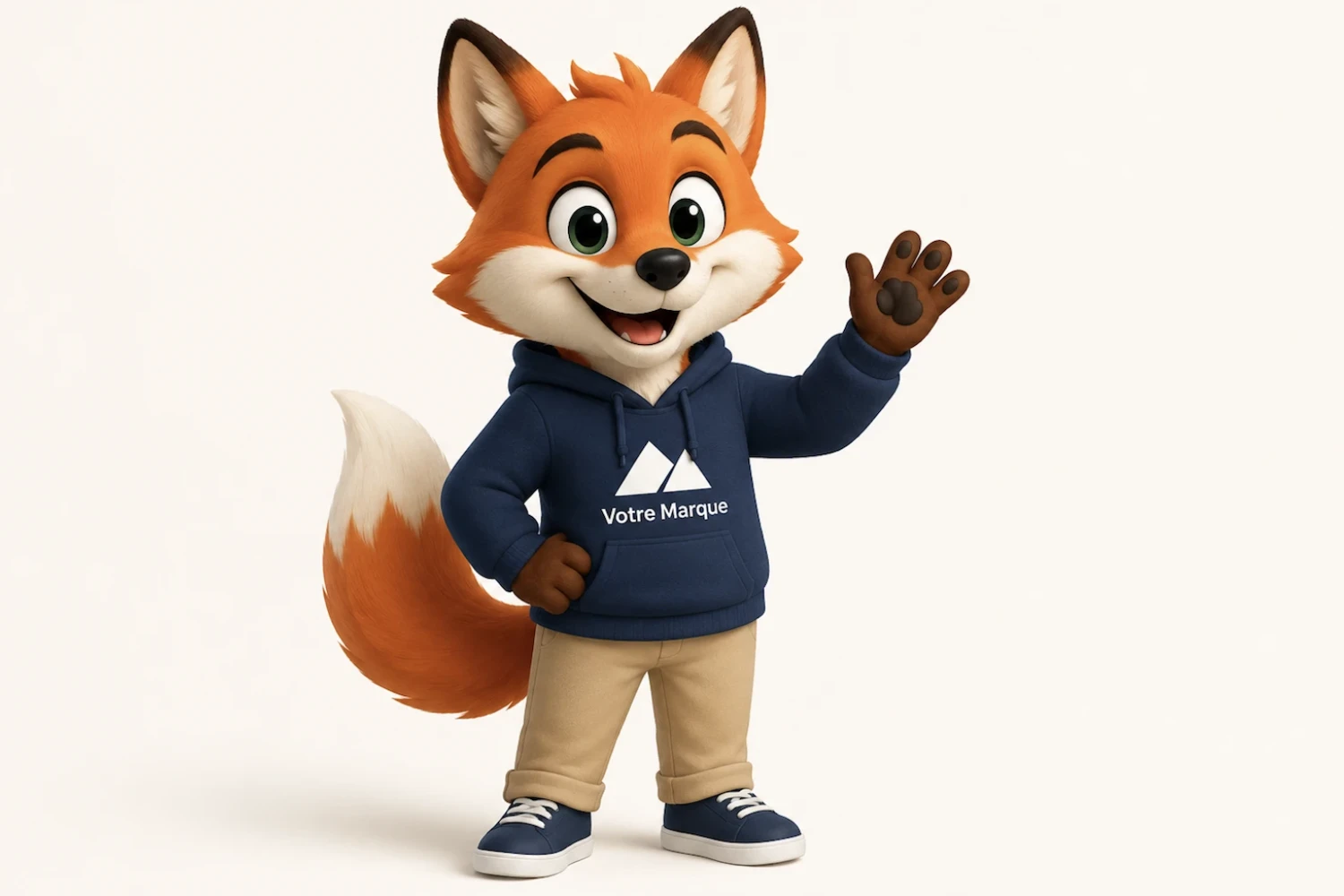
The mascot is the oldest and most familiar format. It is a character, whether human, animal, object or imaginary creature, that visually represents a brand.
The Michelin Man, The Laughing Cow or Mr. Clean are well-known examples. Their strength lies in their ability to make a brand instantly recognizable, memorable and more accessible.
For a small or medium-sized business, a mascot can serve several concrete purposes:
- strengthening brand recall;
- creating a warmer emotional connection than a purely institutional message;
- unifying communication materials;
- making a complex offer easier to understand;
- giving the company a clear and identifiable personality.
A mascot does not produce content independently. It is used by the brand in campaigns, sales materials, social media, videos or events.
It is therefore primarily a brand asset. It does not replace your message, but gives it a face.
The avatar: the digital representation of an identity
An avatar is a broader concept. It refers to the visual representation of a person, brand or character in a digital environment.
An avatar can take several forms:
- an illustrated or 3D version of a company founder;
- a character used in an immersive presentation;
- a brand representation in a virtual space;
- an interactive version of a mascot;
- a character used in training, product demonstrations or collaboration tools.
In B2B, avatars become especially relevant when a company wants to create more embodied digital experiences: immersive demos, virtual tours, onboarding, training, digital trade shows, 3D spaces or interactive sales presentations.
The difference with a mascot is simple: a mascot is mainly designed to make the brand recognizable and memorable. An avatar, on the other hand, represents an identity within a specific digital use case.
The VTuber: a real creator behind a virtual character
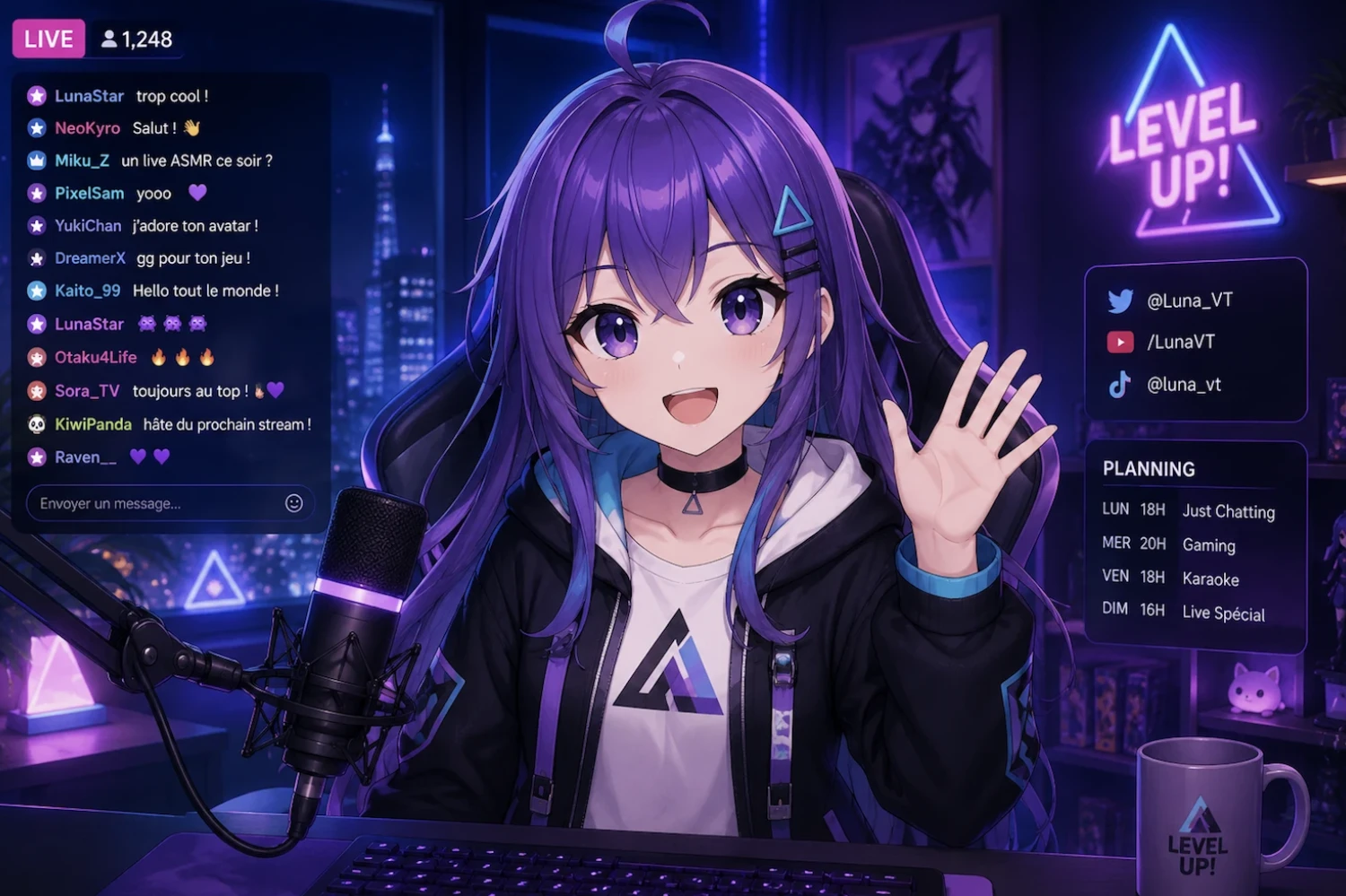
The term VTuber comes from “Virtual YouTuber”. It refers to a real content creator who appears on screen through a virtual avatar, often in 2D or 3D.
Unlike a virtual influencer, a VTuber is not a fully autonomous or fictional character. There is a real person behind the avatar: they speak, improvise, play, react and host content in real time.
The technology usually relies on motion capture. The creator’s gestures, facial expressions and movements are translated onto the virtual character.
The phenomenon started in Japan, then expanded internationally, especially on YouTube, Twitch and TikTok. According to data reported by YouTube, VTuber-related content generated an average of 50 billion views per year over the past three years.3
For a small or medium-sized business, VTubing can be relevant if the brand targets a young audience that actively consumes live content, gaming, entertainment or specific digital communities.
In B2B, the format is still emerging. However, it can be relevant in specific cases: technical education, digital events, community animation, product demonstrations or differentiated video formats.
The virtual influencer: a fictional character that publishes like an influencer
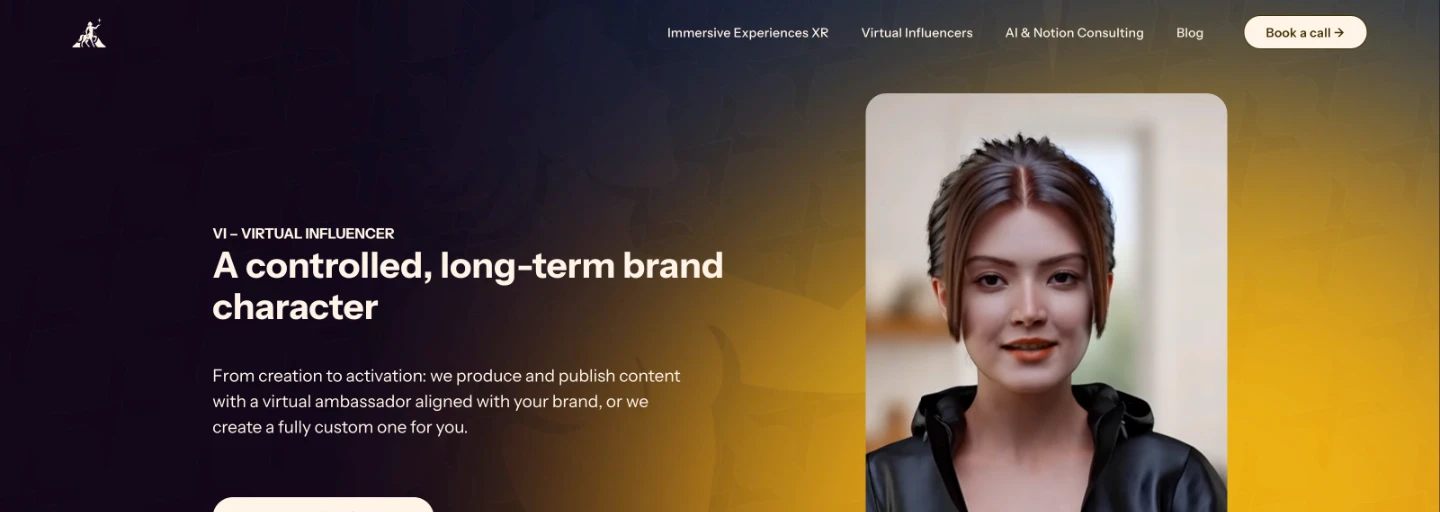
A virtual influencer is a fictional character designed to exist on social media. It can be created using CGI, 3D, artificial intelligence tools or a combination of creative techniques.
It publishes content, interacts with an audience, carries brand messages and can collaborate with companies in the same way a human influencer would.
Some of the best-known examples include Lil Miquela, Shudu Gram and Lu do Magalu. These characters do not physically exist, but they have an editorial presence, an aesthetic, a personality and a community.
For brands, the benefits can be real:
- stronger control over image, tone and storytelling;
- strong consistency across content;
- the ability to build a proprietary universe;
- more flexible content production;
- new opportunities to test narrative formats.
But a virtual influencer also requires discipline. The risk is not only technical. It is strategic, editorial and reputational.
Consumers can be curious, but also skeptical. A Sprout Social study found that 37% of consumers would be more interested in a brand using an AI influencer, while another 37% said it would make them distrust the brand.4
This is a key point: a virtual influencer does not work simply because it feels innovative. It needs to be useful, coherent, transparent and aligned with the brand.

Comparison table
| Mascot | Avatar | VTuber | Virtual influencer | |
|---|---|---|---|---|
| Definition | Character representing the brand | Digital representation of an identity | Real creator embodied by an avatar | Fictional character active on social media |
| Human behind it? | Managed by the brand | Sometimes | Yes | No, but managed by a team |
| Main goal | Branding, recall, emotional connection | Digital presence, interaction, immersion | Live content, entertainment, community | Influence, storytelling, engagement |
| Production level | Moderate | Low to high depending on use | Moderate to high | Variable, often high |
| B2B relevance | Highly relevant | Highly relevant | Worth exploring depending on the audience | Emerging, requires careful framing |
| Key watchout | Avoid creating a purely decorative character | Clearly define the use case | Match the format to the audience | Avoid a gimmicky or artificial effect |
✨ Virtual influencers are not here to create buzz. They are here to serve your strategy.
To go further, we have gathered concrete examples of virtual influencer use cases (engage, embody, guide) with realistic formats.
Which format should your brand choose?
These four formats have one thing in common: they allow a brand to communicate with a face, a personality and narrative continuity.
But they do not answer the same need.
For a small or medium-sized business, the mascot is often the most accessible starting point. It helps strengthen brand identity, humanize communication and create a recognizable reference over time.
The avatar becomes relevant when the brand wants to go further into digital experience: interactive demonstrations, virtual spaces, immersive training, digital events or sales presentations.
The VTuber can be interesting for brands that want to produce regular content, hosted by a real person, while using a distinctive visual identity.
The virtual influencer, finally, belongs to a more advanced strategy. It is not just about creating a character, but about building a full editorial presence, with a content direction, a personality, a voice and a community logic.
Key takeaway
The right choice does not depend on the technology. It depends on your objective.
- Do you want your brand to be more memorable? A mascot may be enough.
- Do you want to embody your brand in digital experiences? An avatar is likely the most suitable format.
- Do you want to produce embodied content without directly exposing a real person? VTubing can be an interesting direction.
- Do you want to create a media character in its own right? A virtual influencer can be considered, provided you have a clear strategy and the resources to manage it over time.
In every case, the character should never be a simple stylistic effect. It should support understanding, strengthen the relationship with your audience and make your brand clearer, more human and more memorable.
Ready to find the right format for your brand?
Are you considering creating a mascot, an avatar or a virtual character for your B2B communication?
Every project deserves a specific framework: your sector, audience, marketing goals, budget and distribution channels should guide the choice.
📌 Let’s see what’s truly relevant for you
We help you identify where a virtual influencer can truly create value, based on your context, your priorities, and your teams.
- The Influencer Marketing Factory’s Survey Reveals 27% of Respondents Would Trust a Virtual Influencer ↩︎
- The Influencer Marketing Factory’s Survey Reveals 27% of Respondents Would Trust a Virtual Influencer / The State of Virtual Influencers in 2024 (Report + Infographic) ↩︎
- YouTube proves virtual influencers are gaining popularity, but hesitance remains ↩︎
- New Research Reveals Influencers Significantly Drive Purchasing Decisions ↩︎