
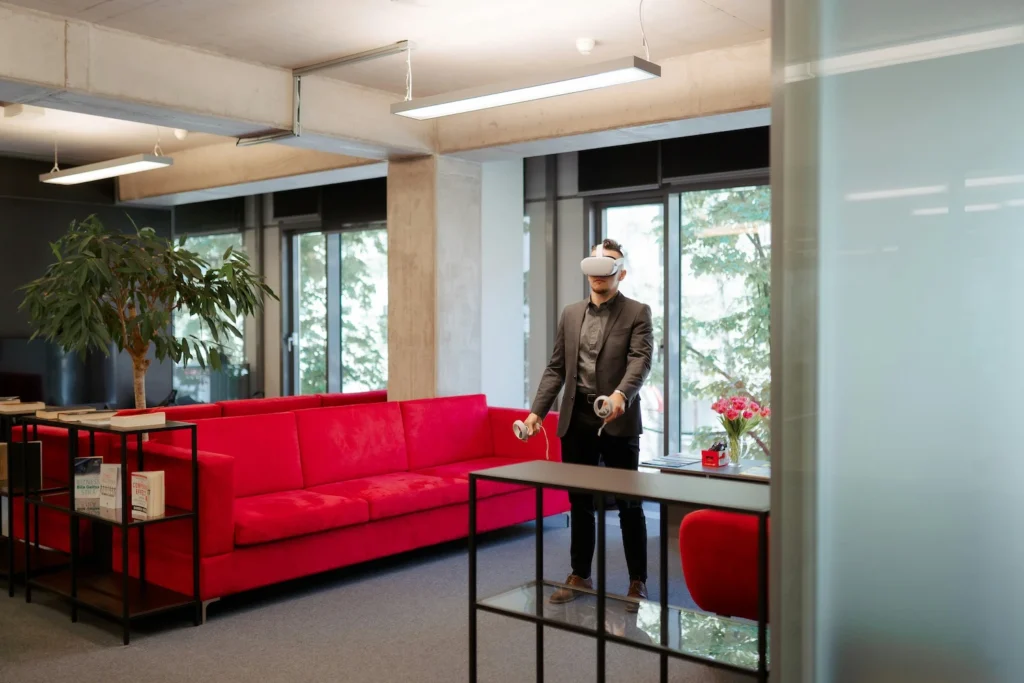

XR is as fascinating as it is impressive. For many companies, it is still associated with spectacular demos, tech events, or campaigns led by major brands. Yet behind this sometimes intimidating image, the reality is simpler: XR is becoming a practical tool to show, explain, and bring experiences to life more effectively.
Its value does not depend only on the size of the company, but on the clarity of the need. Training more effectively, presenting a project before it is built, helping a client visualize an idea, making an offer more tangible: these are all use cases that also concern SMEs, independent firms, and specialized organizations. This is precisely the misconception we need to move beyond.
💡 To get straight to the point, here are the key takeaways.
- XR is no longer reserved for big brands: it is becoming accessible to SMEs, architecture firms, real estate developers, training organizations, and specialized agencies.
- The value of XR does not depend on the size of the company, but on the clarity of the business need it addresses.
- An XR experience can start small, with a focused first use case, then gradually evolve with new content or features.
- For architects and real estate developers, XR helps clients and stakeholders better visualize projects that have not yet been built.
- For training, XR can create more immersive, repeatable, and safer learning environments.
- The right starting point is not the technology itself, but a concrete problem: explaining better, selling better, training better, or supporting better decisions.
A Misconception That Still Holds Many Companies Back
When we talk about XR, or Extended Reality, the images that often come to mind are those of major brands such as Nike, IKEA, or Airbus: spectacular experiences, large budgets, and dedicated technical teams.
That is understandable. Large companies were among the first to bring these uses into the spotlight, and their experiments played a major role in shaping the collective imagination around XR.
But this view no longer tells the whole story.
In 2026, XR is no longer only an experimental playground for major brands. It is gradually becoming accessible to architecture firms, independent real estate developers, training organizations, marketing agencies, and wealth management professionals.
For an SME, the goal is not to replicate the spectacular experiences of large corporations. It is to identify a simple, useful, and measurable use case: presenting a project more clearly, training a team more effectively, convincing a client, or making an offer more concrete.
So the real question is no longer only: “Can I afford it?” It becomes: “Which first use case would truly make sense for my business?”
What Is XR, in Practical Terms?
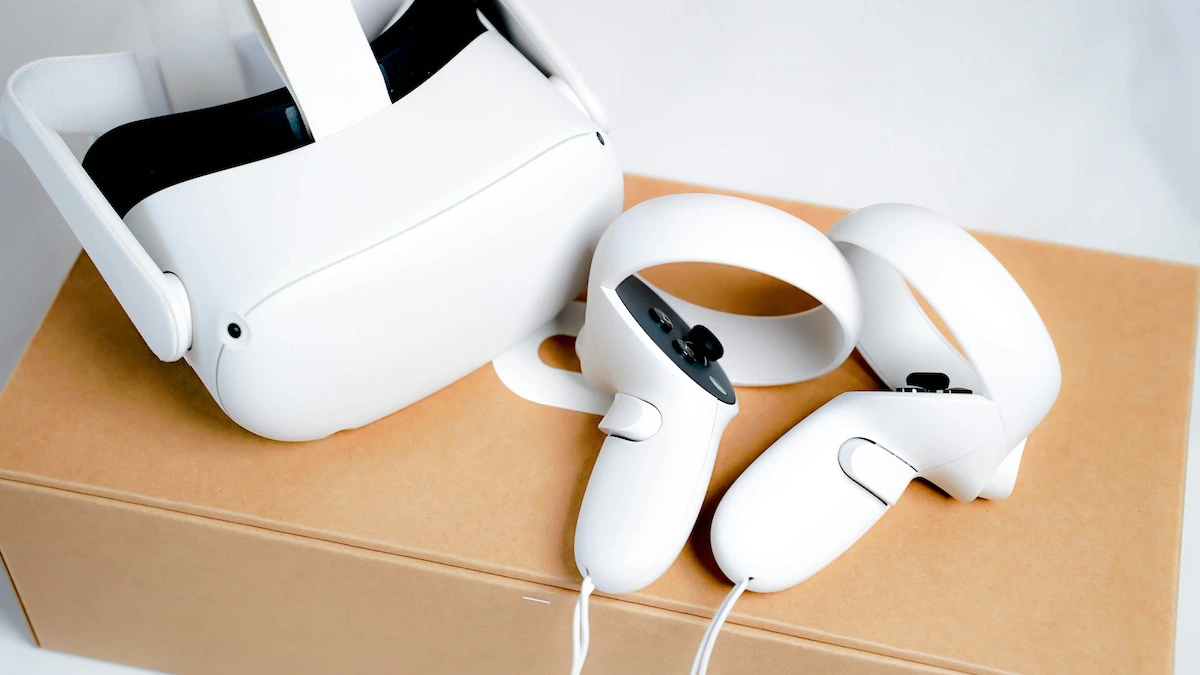
XR is an umbrella term that brings together several immersive technologies. They all have one thing in common: they enrich the way a person sees, understands, or explores an environment.
There are generally three main categories.
- VR, or virtual reality: the user is immersed in a fully digital environment, most often through a headset. It is particularly useful for simulations, visits of unbuilt properties, or training people on technical procedures.
- AR, or augmented reality: digital elements are added to the real world through a smartphone, tablet, or connected glasses. For example, it can be used to visualize a future building on an empty plot of land or to add interactive information to a physical medium.
- MR, or mixed reality: digital objects are integrated into the real space and can interact with it. It is used in particular for co-design, advanced 3D visualization, and certain forms of immersive collaboration.
You can also read our detailed article on What is XR? A complete guide to understanding its uses in business.
For a B2B professional, XR can be seen as a new medium for interaction. Not as an end in itself, but as a way to make an idea easier to understand, an experience more concrete, or a decision easier to make.
The Democratization of Costs: An Important Turning Point
A few years ago, launching an XR project often meant high costs, specialized equipment, and a significant level of technical complexity.
That is no longer always the case.
Standalone headsets have become more widely available, AR experiences can now run on smartphones, and many software solutions make it possible to get started without developing a fully custom platform. For example, in April 2026, Meta announced a price increase for its Quest headsets in the United States, bringing the Meta Quest 3 512 GB to $599.99. Even with this increase, the order of magnitude remains very different from historical professional equipment, which was often reserved for large enterprises.
This does not mean that an XR project is always inexpensive. The budget depends heavily on the level of interactivity, the expected realism, the number of scenes to produce, the target platforms, and any integration with your existing tools.
As an indication, here are budget ranges often observed for a first XR project:
| Technology | Main use cases | Indicative budget |
|---|---|---|
| VR (virtual reality) | Training, simulation, immersive visits | €3,500 to €100,000 |
| AR (augmented reality) | Real estate sales, field assistance, marketing experiences | €2,000 to €50,000 |
| MR (mixed reality) | Co-design, 3D meetings, advanced prototyping | €10,000 to €100,000 |
The key idea is this: an SME does not need to start with a complex system. A first project can be focused, progressive, and connected to a clear business objective.
It is also important to remember that an XR experience is built around your needs, priorities, and budget. If the initial budget is limited, that is not a barrier: a project can be designed in stages. As with software or a video game, it is possible to gradually add new content, new scenarios, or new features.
The goal is not to “catch the train” before everyone else, but to build a useful first foundation, then enrich it over time, at the pace of your business or your needs.
What XR Can Do for You, Depending on Your Business
Architects and Real Estate Developers
In real estate and architecture, one of the biggest challenges is projection. How can you help a client, investor, or local authority understand a project that does not yet exist?
Plans, models, and 3D renderings remain useful. But they are not always enough to convey volumes, circulation, light, or how a building fits into its environment.
XR can help overcome this obstacle.
With on-site AR, a prospect can visualize a future building directly from the plot of land, using a smartphone or tablet. They are no longer just looking at an image: they understand the scale, the location, the volumes, and the impact of the project in its real context.
With VR in a showroom, a client can visit an unbuilt apartment, explore the rooms, feel the proportions, and compare different layout or material options. This experience makes the project easier to understand and can reduce hesitation linked to buying off-plan.
For a real estate developer or architect, the value is not simply to “look modern”. It is to better support decision-making, reduce uncertainty, and create a more concrete conversation with stakeholders.
These use cases deserve to be explored in more depth, especially in the context of real estate development and architecture. We have published a dedicated article on virtual tours for developers and architects, with practical examples to better present a project, support client projection, and strengthen relationships with stakeholders.
Training Organizations and Professional Trainers
Training is now one of the areas where XR offers the most mature use cases.
It is particularly relevant when learners need to repeat a gesture, make decisions in a complex environment, or train for a situation that is difficult to reproduce in person: safety, maintenance, customer relations, management, field operations, or technical procedures.
A PwC1 study on virtual reality training showed that VR learners could complete training up to 4 times faster than classroom learners, and feel up to 275% more confident in applying what they had learned. PwC also indicates that VR can become more cost-effective at scale, particularly as the number of learners increases.
These figures should be read with perspective: they do not mean that VR is always better than every traditional training method. They mainly show that, in well-chosen contexts, it can accelerate learning, strengthen engagement, and make practice safer.
For a training organization, XR can therefore become a useful tool to standardize a learning experience, train remotely, reduce certain logistical costs, or make sensitive situations easier to practice.
Marketing Teams, Agencies, and Wealth Management Professionals
For marketing teams, XR makes it possible to create more participatory experiences than traditional digital formats. Instead of simply watching content, the user interacts, explores, manipulates, or visualizes themselves in a situation.
This can take several forms: an AR filter to discover a product, a virtual showroom for a trade show, an immersive tour of a location, an interactive demo, or a brand experience linked to a launch.
In wealth management or real estate investment, XR can also help make an opportunity more tangible. An advisor can present a property, showcase a project, or materialize an investment scenario in a more concrete way than with a brochure or slideshow.
The challenge remains the same: not to use XR as a stylistic effect, but as a tool for understanding and trust.
✨ XR isn’t here to impress. It’s here to be useful.
If you’d like to go further, we’ve gathered concrete XR project examples (visualize, train, engage) with realistic formats.
Where Should You Start? A Step-by-Step Approach
The main risk with XR is not only cost. It is launching an attractive experience that is disconnected from a real business problem.
To avoid this, it is better to move forward step by step. Before choosing a technology or format, it can be useful to look at what is already possible in different sectors: training, sales, industry, real estate, marketing, or customer relations. We have published an article bringing together 15 practical examples of XR in business to help identify the use cases closest to your activity.
Step 1: Identify a Priority Use Case
Start by identifying a specific moment where your clients, prospects, or learners face a difficulty.
For a real estate developer, this could be the first projection into an off-plan property. For an architect, it could be understanding a volume or an urban integration. For a trainer, it could be a procedure that learners struggle to master. For a marketing team, it could be a product that is difficult to explain with traditional materials.
A good first XR project should answer a simple question: what problem does it make easier to understand, sell, or learn?
Step 2: Choose a Proportionate Solution
Not every project requires a VR headset, a full application, or a complex 3D environment.
In some cases, an AR experience accessible from a smartphone is enough. In others, a simple immersive tour can already transform the way a project is presented. The right solution is not necessarily the most impressive one: it is the one that best serves the use case.
Step 3: Measure the Results
XR should produce more than a sense of wonder.
It can be connected to concrete indicators: conversion rate, sales cycle length, level of understanding, customer satisfaction, training completion rate, assessment results, or number of errors avoided.
This measurement makes it easier to decide whether the project should be enriched, repeated, or extended to other uses.
Step 4: Expand Gradually
Once the first use case has been validated, it becomes possible to go further: adding new scenarios, adapting the experience to other audiences, integrating more data, or connecting XR to a broader sales or learning journey.
This progressive logic is often what allows SMEs to adopt XR without putting themselves at risk.
XR Is Becoming an Accessible Lever, Provided You Start from the Right Need
XR is entering a more operational phase. Tools are becoming simpler, entry costs are decreasing, and use cases are becoming clearer. It is no longer only an innovation topic for large corporations. It can become a practical tool for smaller organizations, provided it is approached with method.
For architecture firms, real estate developers, training organizations, marketing agencies, and wealth management professionals, the point is not to follow a technology trend. It is to help people understand better, experience more clearly, and make decisions with greater confidence.
XR is therefore not reserved for big brands. But it does require a clear starting question: which moment in your customer, sales, or learning journey deserves to be made more concrete?
You are wondering whether XR can truly serve your business without launching a heavy or disproportionate project? A scoping workshop can help identify your most relevant use cases, estimate the level of investment required, and define a first measurable pilot.
📌 Let’s see what’s truly relevant for you
We help you clarify where XR can genuinely create value, based on your context, your priorities, and your teams.