

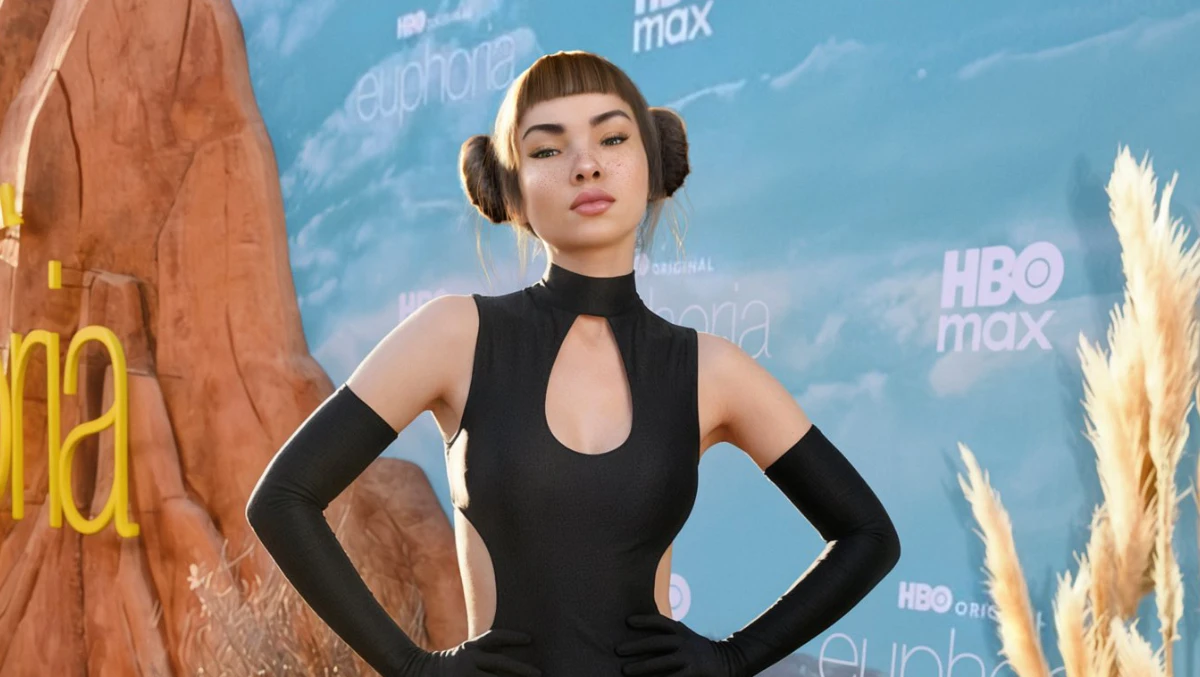
Lil Miquela has collaborated with Prada. Noonoouri is part of the world of Dior, Valentino and Balenciaga. Shudu Gram has appeared in a Balmain campaign. These figures are not human models. They are virtual characters, created in 3D, CGI or with the help of artificial intelligence.
For fashion and luxury brands, this phenomenon is no longer just a creative curiosity. It is becoming a new way to embody a brand universe, produce content, build relationships with digital audiences and test more immersive formats.
For marketing leaders and SME founders in fashion, luxury or retail, the real question is not only: “Are virtual characters trendy?” The more useful question is: “What role can they play in a brand strategy?”
💡 To get straight to the point, here are the key takeaways.
- Virtual characters allow fashion and luxury brands to create a more consistent, controlled and reusable brand asset over time.
- They are not limited to virtual influencers. They can also take the form of an avatar, a digital mascot, a virtual model or a guide integrated into an immersive experience.
- Their main value is not to replace human creators, but to enrich brand storytelling with a proprietary character.
- In fashion and luxury, they address key challenges: visual consistency, desirability, innovation, content production and connection with younger audiences.
- Their use requires caution: transparency, image rights, realism, representation and alignment with brand values must be clearly framed.
- For an SME, the best starting point is often to test a character within a limited scope before developing a complete virtual influencer.
Virtual character, avatar, virtual model: what are we really talking about?
Before going further, it is important to clarify the terms.
A virtual character is a digital figure created to represent a brand, a universe or an idea. It can be realistic, stylized, human, animal, fantasy-based or entirely imaginary.
But not all virtual characters play the same role.
A digital brand avatar can represent a company, an expert or an advisor in a digital experience. A virtual mascot can humanize a brand and create a simple visual reference. A virtual model is mainly used to present clothing, accessories or collections in an e-commerce or editorial context. A virtual influencer goes further: it has a personality, an editorial line, a social presence and the ability to publish like a content creator.
This distinction matters because it directly influences the budget, production pace, governance level and performance expectations.
If you want to explore these differences in more detail, we have dedicated a full article to the topic: Avatar, Mascot, VTuber, Virtual Influencer: What Are the Differences?
A market that is becoming more structured, but should still be read with caution
The virtual influencer market is growing quickly. Grand View Research estimates that the global virtual influencer market could reach $45.88 billion by 2030, with a compound annual growth rate of 40.8% between 2025 and 2030.1
These figures reflect a real dynamic: brands are testing avatars, digital models, AI characters and social experiences built around virtual figures more actively.
Still, they should be interpreted with caution. Market estimates vary significantly depending on what research firms include in their scope: creation technologies, agency services, influencer campaigns, 3D content, AI avatars, software solutions or social platforms.
The key point is simpler: virtual characters are no longer a marginal topic. They are gradually becoming a strategic lever for brands looking to build more consistent, flexible and digitally adapted universes.
In fashion and luxury, this shift is especially visible because these sectors already rely heavily on image, storytelling, desire and staging.
Why fashion and luxury are so interested in virtual characters
1. Creating a fully consistent brand asset
In fashion and luxury, image is not just about aesthetics. It carries a vision, an imaginary world, a promise and a standard of excellence.
A virtual character allows a brand to build a figure that is fully aligned with this universe. Its appearance, vocabulary, settings, cultural references, poses, outfits and statements can be defined from the start.
This does not mean that risk disappears. A virtual character can also be poorly received if it lacks transparency, sensitivity or coherence. But the brand has greater control over the creative parameters than it would with an external human influencer.
The real advantage is not “total control”. It is continuity. A character can become a proprietary asset, recognizable and reusable over time, much like a visual territory, a brand signature or an editorial platform.
2. Exploring new narrative formats
A virtual character is not limited by the physical constraints of a traditional photoshoot.
It can appear in an impossible setting, move across several visual universes, wear a collection before it is physically produced, enter an immersive space, guide a user through a virtual experience or create content that would be impossible to film in real life.
For a luxury house, this opens up a powerful narrative territory. The character does not simply wear a product. It can embody a world.
This helps explain why some brands are interested in figures such as Lil Miquela, Noonoouri or Shudu Gram. Their value is not based only on their appearance. It comes from their ability to connect fashion, digital culture, social media, music, gaming, animation and storytelling.
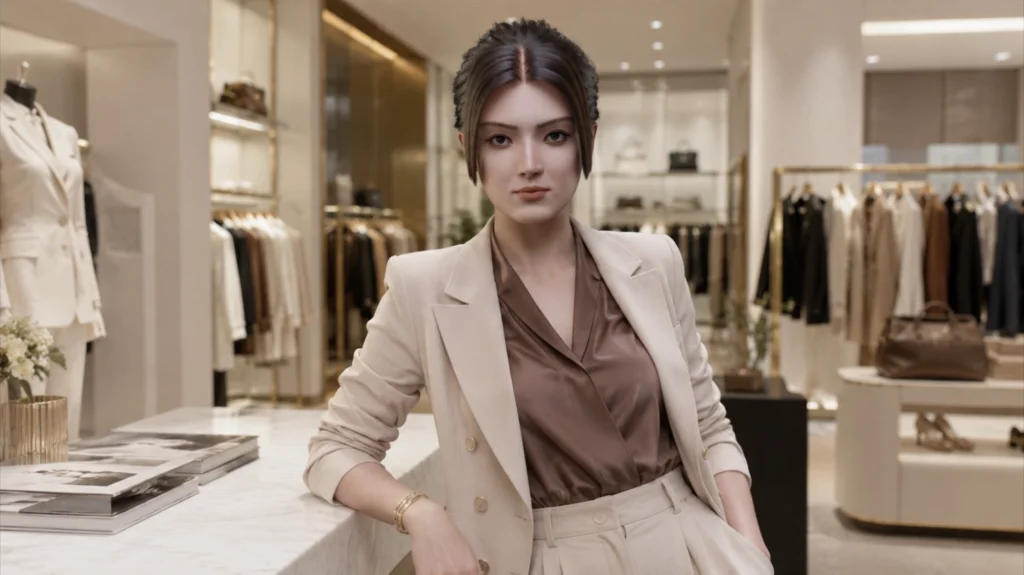
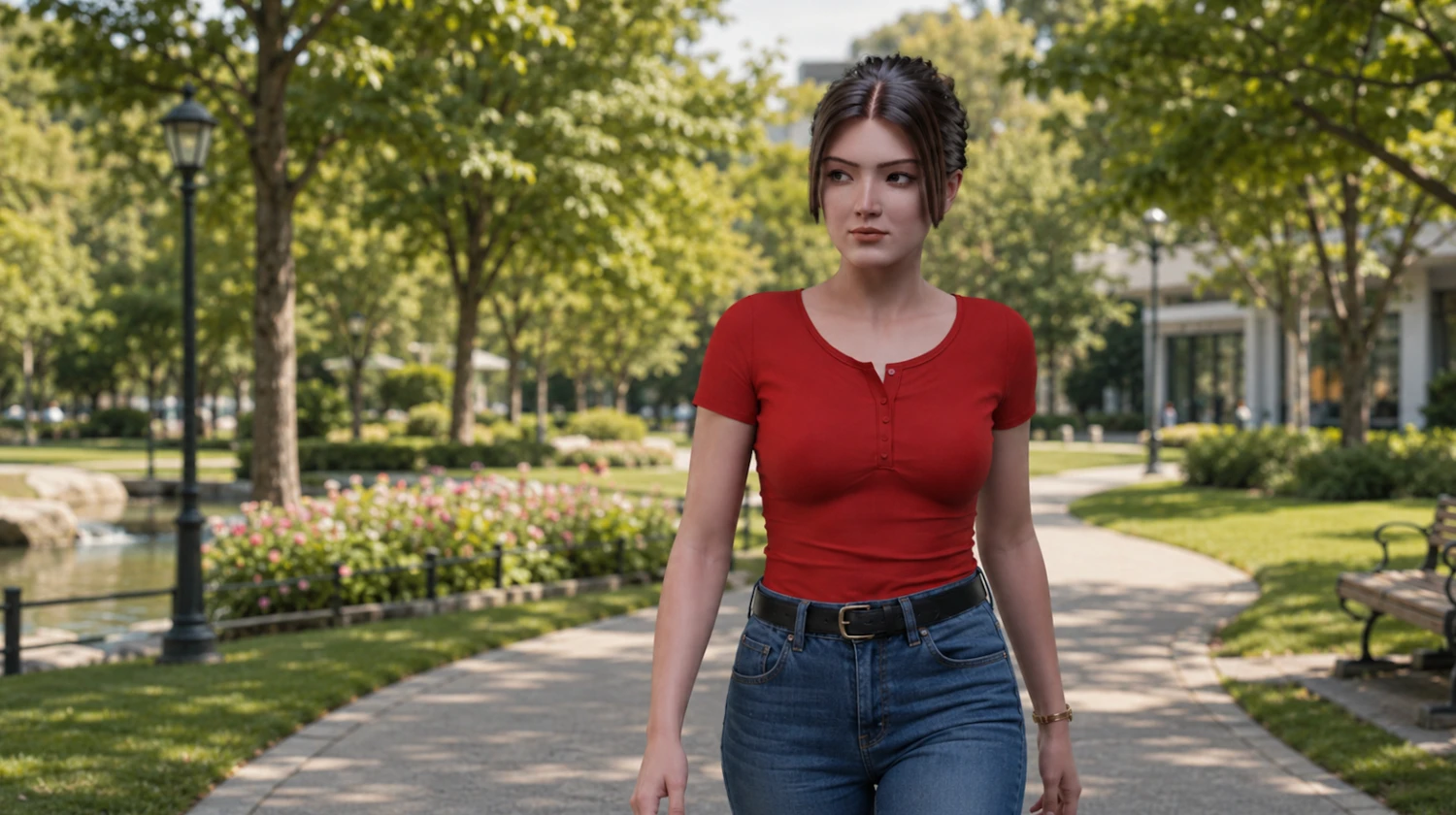
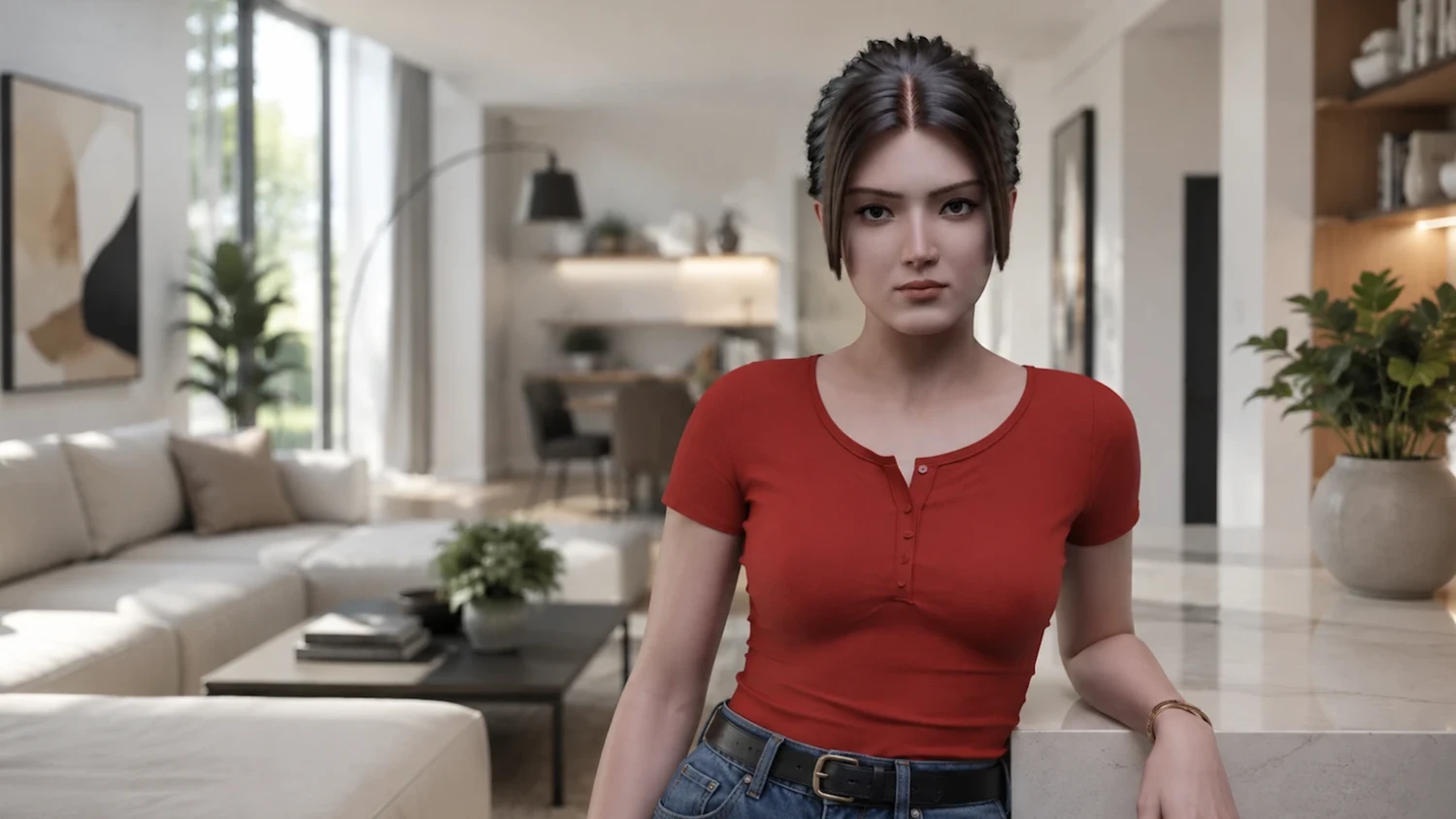
This is also the logic behind Marine, our virtual character at Black Centauri. Marine was not designed as a simple digital muse, but as a presence capable of embodying a universe, supporting content, making certain ideas more accessible and exploring formats that traditional communication does not always allow. She enables us to test, in a very concrete way, what a virtual character can become when treated as a brand asset: a stable identity, a recognizable tone and a more human entry point into topics that can sometimes feel complex.
To explore concrete examples, you can read our article: Virtual Influencers: 9 Real Examples for Brands
3. Responding to the codes of younger audiences
Younger consumers have grown up with avatars, filters, online games, social platforms, virtual worlds and digital characters. For them, digital identity is not necessarily opposed to real identity. It is part of the experience.
In luxury, this is a strategic issue. Bain & Company estimates that Gen Z could represent 25% to 30% of luxury purchases by 2030, while Millennials could represent 50% to 55%.2
This does not mean brands should bet everything on avatars or AI influencers. It means they need to understand the new cultural codes of these audiences: personalization, creativity, community, hybridization between physical and digital worlds, and stronger attention to value consistency.
A virtual character can become a bridge between these codes and the brand universe. But only if it is designed as an editorial project, not as a simple technological effect.
4. Producing content with greater flexibility
Content production in fashion and luxury often requires heavy organization: casting, styling, location, art direction, shooting, post-production, retouching, approval and format variations.
Virtual characters can bring more flexibility. Once the character has been created and properly framed, it becomes possible to produce visuals, short videos, social content, outfit variations, staged scenes or e-commerce assets with greater agility.
This does not mean everything becomes simple or inexpensive. Creating a credible character requires strong art direction, visual consistency, approvals and sometimes advanced 3D modeling. But for certain formats, especially creative tests, social content or visual variations, production can become faster and more predictable.
The goal is not to replace human photoshoots. It is to add a reusable creative asset that can extend campaigns and enrich existing content.
What this changes for fashion, luxury and retail marketing
E-commerce: presenting products more effectively
In e-commerce, virtual characters can take the form of digital models, 3D silhouettes, avatars or style guides.
Their role is very concrete: helping users better visualize a cut, a silhouette, a size, a texture or a product combination.
This logic connects directly to the growth of 3D content and augmented reality in online commerce. Shopify has stated that merchants adding 3D content to their stores see, on average, a 94% increase in conversion.3 This figure should be read with caution, as it depends on the sector, the product and the quality of integration. But it confirms a simple idea: the more a customer can project themselves, the more confidently they move forward.
For a fashion or accessories brand, the value is clear: a virtual character can make the product experience more vivid, contextualized and memorable.
Social media: building a recognizable presence
On Instagram, TikTok or YouTube Shorts, brands need to produce content regularly without losing consistency. This is exactly where a virtual character can become useful.
It can introduce a collection, comment on a trend, tell the story behind a creation, guide a product selection, embody a campaign or create a recurring format.
But a virtual character does not work simply because it looks good. It needs a clear role. Why does it speak? Who is it speaking to? What can it say that the brand is not already saying? What relationship does it have with human teams, creators, stylists or customers?
Without clear answers to these questions, the character risks becoming decorative.
Immersive experiences: giving a face to the brand universe
Virtual characters can also be integrated into more immersive experiences: virtual showrooms, augmented try-on, digital events, 3D boutiques, interactive visits or trade show activations.
In this context, they are not used only for “influence”. They become guides, advisors, mediators or embodiments of the brand universe.
An avatar can welcome a visitor into a virtual store. A character can present a collection in a 3D showroom. A recurring figure can support an augmented reality experience. This type of use is especially interesting for brands that want to connect storytelling, product and digital experience.
If you want to understand how immersive technologies can fit into a marketing strategy, you can read our article: Why Brands Are Starting to Integrate XR Into Their Marketing Strategy.
The limits to understand before getting started
Virtual characters open up new possibilities, but they are not a magic solution.
The first limit is trust. A study cited around Sprout Social’s 2024 report shows that 37% of consumers would be more interested in a brand using an AI influencer, while 37% would also become more distrustful of that brand.4 This double signal is essential: curiosity exists, but it does not replace credibility.
The second limit is transparency. In France, the law regulating commercial influence states in particular that AI-generated content representing a face or silhouette must include the mention “Virtual images”, or an equivalent mention adapted to the format.5 When there is a commercial intent, it must also be clearly identifiable.
The third limit concerns representation. A virtual character is never neutral. Its apparent age, body, style, presumed origin, voice and behavior all say something. In fashion and luxury, where visual standards are already highly codified, this point must be handled responsibly.
Finally, maximum realism is not always the best choice. A character that is too realistic but poorly animated can create discomfort. By contrast, a more stylized character with a coherent universe can be more memorable and easier to produce over time.
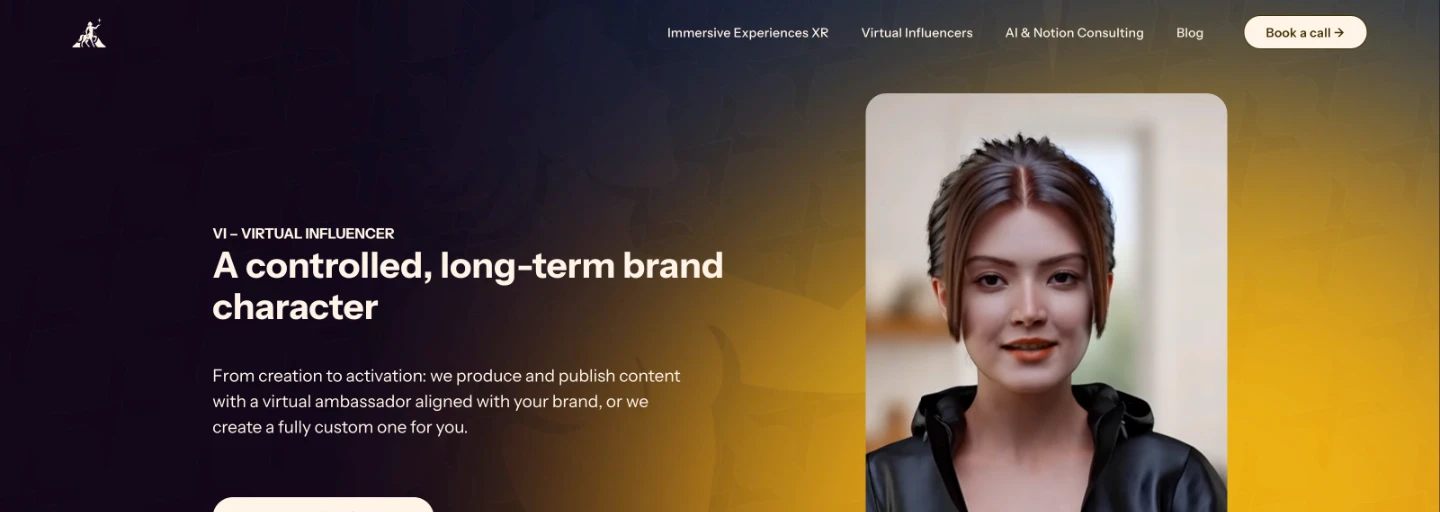
✨ Virtual influencers are not here to create buzz. They are here to serve your strategy.
To go further, we have gathered concrete examples of virtual influencer use cases (engage, embody, guide) with realistic formats.
What SMEs can take from this
This trend is not reserved for major luxury houses. But SMEs do not need to start with a complete virtual influencer.
A fashion, retail or lifestyle brand can begin more simply with:
- a brand avatar to present a collection;
- a digital mascot to animate social content;
- a virtual model to test e-commerce visuals;
- a recurring character to guide customers through a product universe;
- a short content series to measure audience response;
- a virtual guide in an immersive experience or digital showroom.
The right starting point is not the technology. It is the character’s role.
Should it reassure? Inspire? Explain? Present a collection? Create proximity? Strengthen memorability? Support a digital experience? Carry a more creative universe than institutional brand messaging?
Only after answering this question does it make sense to choose the format: avatar, mascot, virtual model, virtual influencer or character integrated into an XR experience.
To frame this type of project, we have also published a dedicated guide: Creating a Virtual Influencer for Your Brand: 5 Key Points
Where should you start?
For an SME, the best approach is to move step by step.
Start by identifying a simple use case: a campaign, a collection, a product launch, a series of posts, an e-commerce page or a limited immersive experience.
Then define the character’s identity: its role, appearance, voice, boundaries, visual references, level of realism and the topics it can address.
Then test. Observe reactions, concept understanding, engagement, customer questions, your team’s ability to produce regularly and the consistency between the character and your brand.
A virtual character does not need to be perfect from the start. It needs to be clear, relevant and useful.
Conclusion: a new way to embody the brand
Virtual characters do not replace human creators, stylists, marketing teams or real ambassadors. Their value lies elsewhere.
They allow fashion and luxury brands to create a proprietary asset capable of embodying a universe, enriching an experience and extending a content strategy over time.
Their value does not come only from the technology behind them. It comes from the clarity of the role they are given.
A successful virtual character is not a visual gimmick. It is a brand presence designed with the same level of care as a logo, an art direction or an editorial campaign.
Are you thinking about the role an avatar, mascot or virtual character could play in your digital strategy? The best starting point is often a simple audit: your current content, your audiences, your channels, your products and the moments where a character could genuinely improve understanding, memorability or engagement.
Let’s discuss your digital strategy and how a virtual character could enrich it.
📌 Let’s see what’s truly relevant for you
We help you identify where a virtual influencer can truly create value, based on your context, your priorities, and your teams.
- https://www.grandviewresearch.com/press-release/global-virtual-influencer-market ↩︎
- https://www.bain.com/insights/long-live-luxury-converge-to-expand-through-turbulence/ ↩︎
- https://www.shopify.com/blog/3d-ecommerce ↩︎
- https://www.customerexperiencedive.com/news/influencer-creator-generative-ai-marketing-report/714367/ ↩︎
- https://www.legifrance.gouv.fr/jorf/id/JORFTEXT000047663185 ↩︎