


Creating a virtual influencer for your brand has never been more accessible. In just a few hours, it is now possible to generate a face, a voice and even a first video ready to publish.
This accessibility opens up new possibilities for SMEs, allowing them to test new formats quickly without mobilising significant technical resources.
But producing a few pieces of content is not enough to create a genuine virtual influencer.
To remain credible over time, the character needs a recognisable identity, a consistent personality and a clear role within the brand’s strategy. It also needs a reliable production process capable of maintaining that consistency across every format.
For a broader introduction to the topic, you can also read our guide, What is a virtual influencer and why are brands interested in them?, which covers the fundamentals and the main uses of these digital characters.
The question is therefore not whether it is possible to start independently. In many cases, it is. The more useful question is this: what needs to be defined to turn an experiment into a lasting brand asset?
💡 To get straight to the point, here are the key takeaways.
- AI tools make production easier, but they do not replace strategy or art direction.
- A virtual influencer must remain consistent in appearance, voice, personality and communication.
- Transparency about the character’s virtual nature helps build a clearer relationship with the audience.
- Maximum realism is not always the best option. A controlled visual style is often more effective than an almost-human character that is difficult to animate convincingly.
- Rights relating to the character, voice and content should be clarified before launch.
- An SME can start in-house, then seek support for the areas it does not fully control.
- The budget depends mainly on the level of ambition, the required formats and the frequency of production.
- The starting point should always be the role the character will play in the marketing journey.
Creating a virtual influencer with AI: why the tools are not enough
A convincing image can now be produced very quickly. Yet a virtual influencer is not simply a face generated by artificial intelligence.
For the character to become identifiable, several elements need to remain consistent over time:
- visual features
- apparent age
- manner of speaking
- vocabulary
- values
- subjects they are entitled to address
- relationship with the brand
- position alongside the company’s human employees and experts.
This continuity is what turns a one-off character into a genuine communication asset.
AI can accelerate the creative process. It does not define the positioning, tone of voice, editorial direction or boundaries of the character. These decisions remain human and should be made before increasing the production volume.
How can you maintain the visual consistency of a virtual influencer?
When a character is generated using several tools or suppliers, small variations can appear from one piece of content to the next: facial structure, hairstyle, apparent age, proportions or expressions.
These differences may seem minor in an isolated image, but over time they can weaken recognition of the character.
The objective is not to create the exact same image repeatedly. The character should be able to change clothes, posture and environment. What needs to remain stable is their identity.
To achieve this, it is useful to create a character guide, much like a brand style guide. It can define:
- the distinctive features that must remain consistent
- the range of expressions
- clothing styles
- preferred framing
- types of environments
- dominant colours
- situations to avoid
- approved visual references.
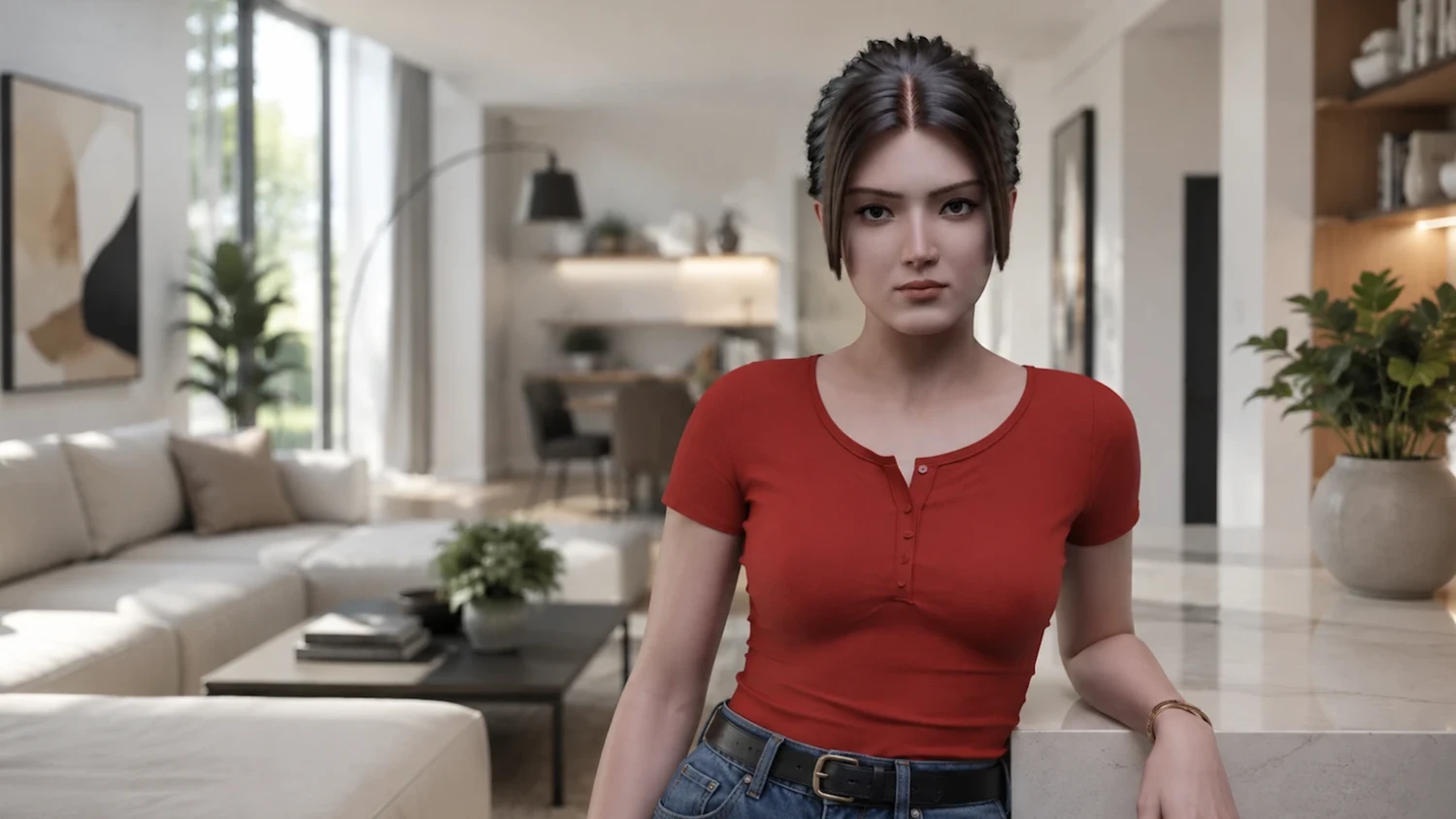
At Black Centauri, we model the character in 3D. This approach makes it easier to preserve the same features and proportions, regardless of the angle, posture or format.
The model can then be reused to produce images, videos, animations or experiences in augmented, virtual and mixed reality. The character becomes a lasting digital asset that can evolve with the brand’s needs without being recreated from scratch for every new project.
How can you preserve audience trust?
A virtual influencer can generate curiosity, interest and sometimes a genuine sense of attachment. But this relationship depends on a clear understanding between the character, the brand and the audience.
The character may be fictional. They may be stylised, realistic or openly presented as digital. However, trying to make the audience believe that the character is a real person can damage trust once the ambiguity is discovered.
Transparency is not limited to adding a discreet statement to a post. It can be integrated naturally into the character’s identity:
- the biography can state that the character is virtual
- the backstory can openly embrace their digital nature
- the brand can explain who manages the character
- content can reveal part of the creation process
- the character’s role can be clearly connected to the company.
Research published in 2025 suggests that the way a character’s virtual nature is disclosed can influence perceived credibility and responses to the brand.1
The objective is therefore not to hide the technology, but to integrate it intelligently into the narrative.
The experiences attributed to the character should also remain coherent.
A virtual influencer can explain a service, present a product or tell a story. Credibility becomes more fragile when the character claims to have physically tasted, touched or felt something without clearly acknowledging the fictional nature of the experience.
This issue already concerns advertisers. In a survey published by the World Federation of Advertisers involving 27 large international companies, 96% of respondents cited consumer trust and acceptance among their main concerns regarding AI influencers.2
This sample relates to large organisations and does not represent every SME. It nevertheless highlights a useful question for any brand: how can the character remain creative without making the relationship confusing?
What level of realism should you choose for an AI influencer?
Realism is often treated as an objective in itself. The more closely the character resembles a human, the more credible they may appear.
In practice, this is not always the case.
A highly realistic character creates high expectations. Small imperfections become more visible: a fixed expression, inaccurate lip synchronisation, an unnatural voice or overly rigid movements.
The issue does not necessarily come from realism itself. It often appears when the different components of the character do not reach the same level of quality.
A photorealistic face paired with approximate animation can create more distance than a deliberately stylised character with a fully coherent visual world.
Before defining the art direction, it is helpful to consider the intended uses:
- Will the character appear only in static images?
- Will they need to speak in videos?
- Will they be used in short-form or long-form content?
- Will they need to respond in real time?
- Will they be integrated into an immersive or interactive experience?
- Can the team maintain this level of quality every week?
An SME does not need to begin with a character that is impossible to distinguish from a real person.
A strong, recognisable and repeatable visual identity can be far more effective. It provides greater creative freedom and reduces the technical pressure on production.
The right level of realism is therefore the one that supports the brand’s world while remaining compatible with its resources.
What legal rules should be considered before publishing?
The legal framework should not be addressed at the end of the project. A few checks at the beginning can prevent complications once the character has been launched.
In France, commercial influence regulations state that certain AI-generated images representing a face or silhouette must include the wording “Images virtuelles”, meaning “Virtual images”, or equivalent wording suited to the medium.3
When a piece of content has a commercial purpose, this intention must also be clearly identifiable. Terms such as “advertisement” or “commercial collaboration” may be required depending on the nature of the operation.4
These two disclosures do not provide the same information:
- “Images virtuelles” identifies the nature of the content
- the advertising disclosure identifies its commercial purpose.
Not every publication involving a virtual character falls under the same legal arrangement. The applicable obligations may depend on how the character is used, the brand’s role and the presence of commercial partners.
For an SME, the most useful approach is to clarify a few points before publication:
- Is the virtual nature of the character sufficiently clear?
- Is the commercial purpose of the content identifiable?
- Who owns the rights to the character’s appearance?
- Who owns the source files and models?
- Can the voice be used across every planned medium?
- Can a supplier reuse the content produced?
- Who approves commercial claims?
- Who intervenes if a publication is challenged or considered sensitive?
The objective is not to make the project unnecessarily complex. It is to establish the rules that will allow the character to develop with greater confidence.
What role should a branded virtual influencer play?
The main risk is not technical. It is strategic.
A character may be visually successful and still bring little value to the brand. This often happens when the character is created before their role has been defined.
Before choosing a face or a voice, the company needs to answer a simple question: what is this character supposed to achieve?
Their role might be to:
- make a complex offer easier to understand
- embody the brand’s world
- explain technical subjects
- present products or use cases
- guide a prospect through a demonstration
- animate a community
- appear in a virtual tour
- strengthen brand recognition
- create intellectual property that can be used over time.
These objectives do not all require the same type of character.
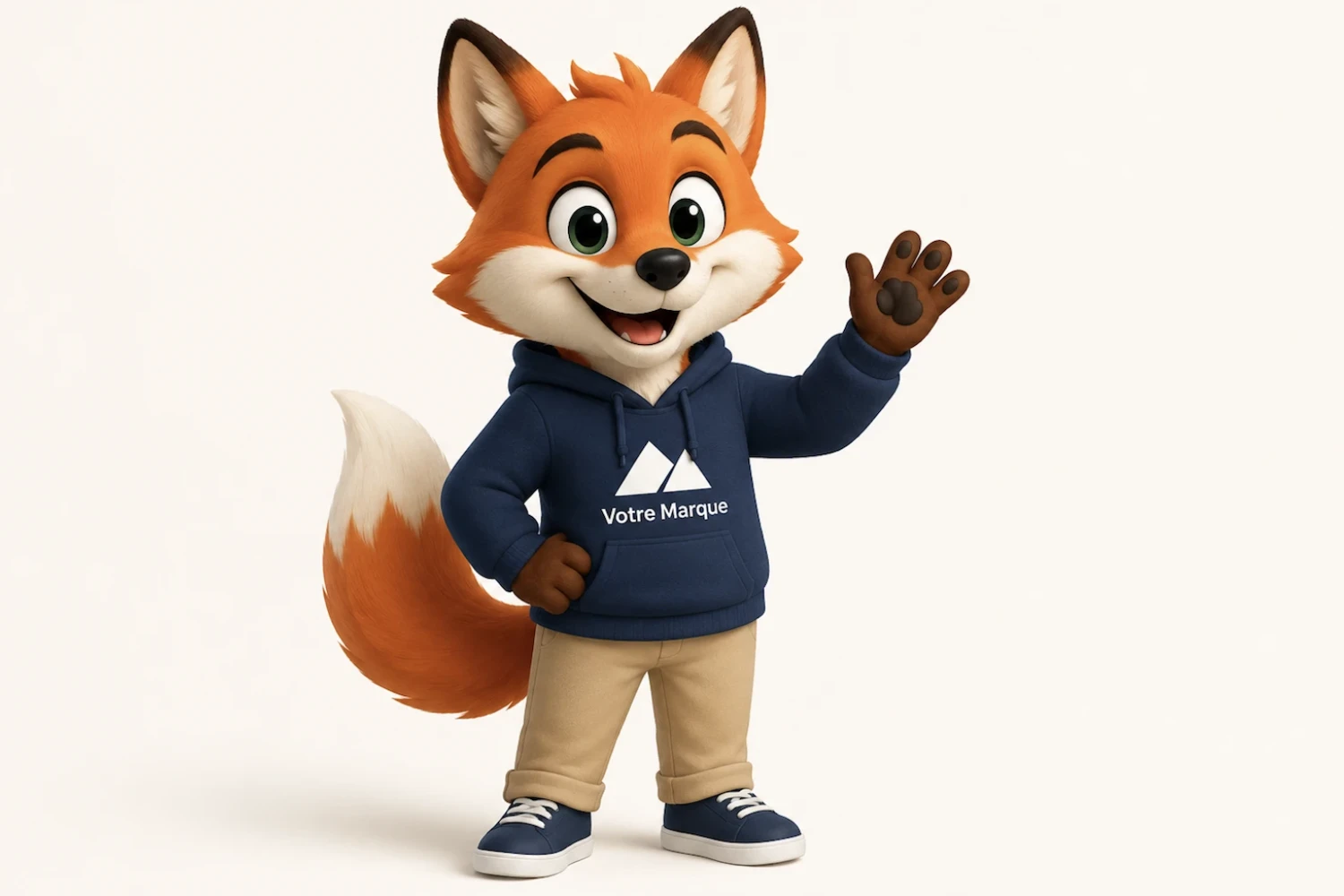
A company that simply wants to add a recognisable visual element to its content may begin with a mascot. A brand that wants to represent a director or expert in digital formats may choose an avatar.
A virtual influencer goes further. They have an editorial presence, a personality and the ability to communicate regularly over time.
For a clearer comparison, our article Avatar, mascot, VTuber or virtual influencer: what is the difference? explains the uses, benefits and limitations of each type of digital character.
This distinction matters because it affects the budget, production rhythm and level of governance required.
Creating a virtual influencer should therefore not be the automatic answer. In some situations, a simpler mascot or avatar will meet the need more effectively and will be easier to maintain.
Should you create a virtual influencer in-house or work with a specialist?
A marketing team can certainly produce a first prototype, test several creative directions and publish a limited series of content.
This initial phase makes it possible to assess whether the concept is understood and whether it genuinely adds value to the company’s communication.
In-house management becomes more demanding when the character needs to appear regularly, across several platforms and in different formats.
| Question | In-house production may be suitable | Specialist support may be useful |
|---|---|---|
| What volume do you want to produce? | A limited number of test pieces | Regular, multichannel production |
| Do you have art direction resources? | Yes, with dedicated time | No, or only occasionally |
| Does the character need to speak? | Simple, short videos | Recurring voice, animation and expressions |
| Is the role clearly defined? | Clear objective and audience | Character created mainly to test AI |
| Will the character address sensitive topics? | General content | Regulated sector or significant claims |
| Who approves publication? | One clearly assigned owner | Several teams or suppliers without governance |
| Is the project intended to last? | One-off campaign | Long-term brand asset |
It is not necessary to produce everything internally or outsource every stage.
A hybrid approach is often the most relevant. The company retains its business knowledge, expertise and editorial direction, while relying on specialists for areas requiring additional control, such as visual identity, animation, automation, legal compliance or production structure.
How much does it cost to create a virtual influencer?
The budget depends less on the number of images produced than on the overall ambition of the character.
A series of static visuals used to test a concept does not require the same resources as a virtual influencer who speaks in video, publishes every week or appears in an interactive experience.
Several factors directly influence the cost:
- the desired level of realism
- the creation of a proprietary visual identity
- the formats to be produced
- publication frequency
- animation and synthetic voice requirements
- the number of languages
- editorial and community management
- rights transferred to the brand
- tools, retouching and approval stages.
The budget should also be considered over time.
An initial investment may be used to define the character’s identity, create visual references and establish the production process. Ongoing costs then relate to content production, approval, platform adaptation and, where relevant, community management.
For an SME, the most sensible approach is to define a first test scope, with limited objectives and a controlled volume of content. The budget can then evolve according to the results and the role the character ultimately plays in the wider strategy.
What should specialist support actually provide?
Working with a partner should not simply result in more impressive images.
The purpose of specialist support is to turn a creative idea into a system that can be used over time.
A relevant approach should help clarify several dimensions.
Positioning
What place does the character occupy within the communication strategy? Who are they speaking to? What can they bring that the brand’s current content does not already provide?
To explore different approaches already used by brands, read our selection of 9 practical examples of virtual influencers. The examples range from conversational mascots to highly visible virtual ambassadors.
Identity
The character’s appearance, personality, voice, vocabulary and boundaries should form a coherent whole.
Production
Which tools should be used? Which stages can be accelerated with AI? Which approvals should remain human? How can the same standard of quality be maintained from one publication to the next?
Governance
Who is authorised to speak through the character? Who approves the content? How should the company respond to an error, criticism or sensitive question?
Performance
Results should not be assessed only through views. Depending on the character’s role, useful indicators may include:
- brand recall
- content engagement
- time spent within an experience
- inbound enquiries
- understanding of an offer
- prospect qualification
- production costs over time.
A model designed for multiple uses
The way a character is created determines what the brand will be able to do with it later.
A character developed only to produce a few images may be suitable for a one-off campaign. It will be more difficult to reuse in videos, interactive environments or immersive experiences.
At Black Centauri, we use 3D modelling to create a durable foundation. The same character can then be integrated into conventional content as well as augmented, virtual or mixed reality experiences.
This continuity means the brand does not need to start again whenever a new requirement appears. It can begin with social media content, then gradually extend the character into video, a sales demonstration, a virtual tour or a broader XR experience.
The purpose is not to add technology for its own sake. It is to create a character that is flexible enough to support the brand over time.
This approach keeps creativity connected to a clear business objective.
✨ Virtual influencers are not here to create buzz. They are here to serve your strategy.
To go further, we have gathered concrete examples of virtual influencer use cases (engage, embody, guide) with realistic formats.
How can you test a virtual influencer through a first pilot?
For an SME, there is rarely a need to launch a character across every platform immediately.
A first pilot might take the form of:
- a series of social media posts
- a one-off campaign
- a character created to explain an offer
- a virtual guide used in a demonstration
- a short video sequence
- an activation at a trade show or event.
The objective is to test a few essential points:
- Is the character’s role understood?
- Does the identity remain consistent?
- Can the team maintain the production process?
- Does the content generate the intended reactions?
- Does the character improve understanding or engagement?
- Is the concept worth developing further?
A pilot reduces uncertainty while giving the company concrete information to guide the next decision.
It also makes it possible to adjust the character based on real audience reactions, rather than attempting to predict every detail before the first publication.
Conclusion: begin with the role, not the tool
Creating a virtual influencer has become more accessible. Building a credible, useful and lasting character nevertheless remains a genuine brand project.
It is entirely possible to start in-house, with a focused ambition and a limited number of test pieces. The key is not to confuse accessible tools with a simple strategy.
Before production begins, the company should define the character’s role, identity, communication rules, budget and performance indicators.
Are you considering creating a virtual influencer, avatar or digital mascot? A useful starting point is a simple question: what role should this character genuinely play for your brand?
📌 Let’s see what’s truly relevant for you
We help you identify where a virtual influencer can truly create value, based on your context, your priorities, and your teams.
- Z. M. C. van Berlo and P. L. Breves, “Disclosing the virtual nature of virtual influencers: The impact of disclosure prominence on credibility and brand responses”, 2025. ↩︎
- World Federation of Advertisers, “Major brands wary of using AI influencers”, survey published in April 2025 involving 33 respondents representing 27 multinational companies. ↩︎
- French Law no. 2023-451 of 9 June 2023, Article 5, including provisions relating to AI-generated images representing a face or silhouette. ↩︎
- French Ministry of the Economy, “Influenceurs : quels sont mes devoirs ?”, including guidance on clearly identifying the commercial or advertising purpose of content. ↩︎