


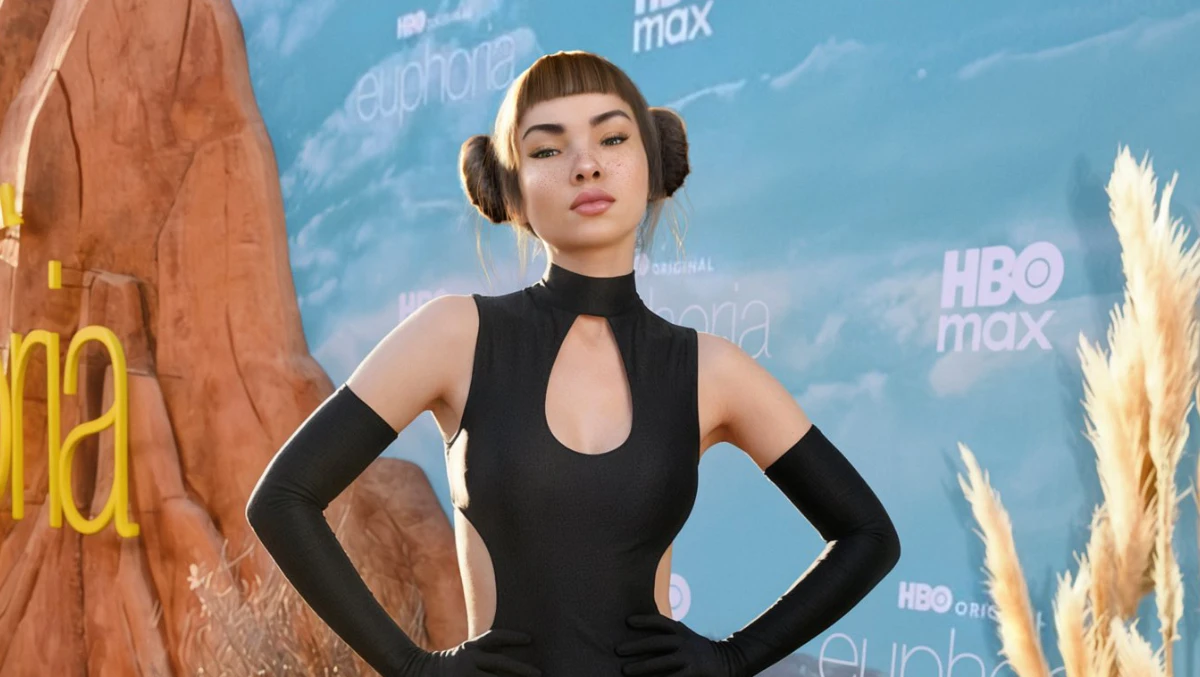
You may have already come across Lil Miquela on Instagram, or noticed a brand ambassador with a look almost too perfect to be real. What you saw was probably a virtual influencer: a digital character, created using technologies such as artificial intelligence, that publishes content, collaborates with brands, and gathers millions of followers… without existing in the physical world.
Still relatively confidential just a few years ago, this phenomenon is now establishing itself as a structural evolution of digital marketing. But one question remains central: is it a real business opportunity, or a spectacular tool reserved for large consumer brands?
In concrete terms, a virtual influencer functions as a fully controlled persona: its appearance, personality, values, tone, and the messages it conveys are defined in advance to serve a specific brand strategy.
💡 To get straight to the point, here are the key takeaways.
- A virtual influencer is a controlled digital character designed to represent a brand and publish content like a human influencer.
- It provides full control over image, messaging, and publishing, reducing risks associated with human talent.
- It can lower certain costs (logistics, production) while maintaining strong communication consistency.
- Engagement rates can be higher than with human influencers, due to their hybrid nature between fiction and reality.
- The market is growing rapidly, driven by AI, 3D engines, and the expansion of content platforms.
- Its use requires careful attention to transparency, authenticity, and alignment with your audience.
What exactly is a virtual influencer?
A virtual influencer is a computer-generated digital character, typically created using technologies such as CGI (3D computer graphics) or artificial intelligence. It has a complete identity: a name, a personality, opinions, and a visual aesthetic. And most importantly, it regularly publishes content on platforms like Instagram, TikTok, or YouTube, just like a human influencer would.
The difference is simple, but fundamental: it exists only in the digital world. And that is precisely what makes it a distinct marketing lever, both controllable and differentiating.
Behind these avatars are creative teams, sometimes supported by algorithms, who manage every piece of communication. The result: no unpredictability, no fatigue, no missteps. Each piece of content is part of an editorial strategy designed to serve the brand over time.
Among the most well-known examples:
- Lil Miquela: launched in 2016 by the American studio Brud, she has more than 2.4 million followers on Instagram and has collaborated with brands such as Prada, Calvin Klein, and Samsung.
- Noonoouri: a highly recognizable avatar, she signed a contract with Warner Music in 2023 and became a Dior Beauty ambassador.
- Shudu Gram: often presented as the first “digital supermodel,” aligned with the codes of luxury and haute couture.
Note: a virtual influencer should not be confused with a virtual model. The latter generally refers to a 3D representation used in e-commerce to showcase clothing or products. Both rely on similar technologies, but their roles differ: one builds a relationship and an audience, the other primarily serves to showcase a product in a transactional context.
Why brands are interested
Full control over brand image
This is often the first advantage mentioned. A virtual influencer is fully controlled: its messaging, appearance, positions, and publishing schedule are all defined in advance. Each piece of content is part of a consistent strategy, without relying on external uncertainties.
In industries where image is critical, such as fashion, luxury, or cosmetics, this level of control becomes a real advantage. The fashion house Balmain understood this well by launching its “Virtual Army,” composed of three avatars, Shudu, Margot, and Zhi, to embody its aesthetic codes and reinforce the consistency of its communication.
A often more competitive cost
Working with a top-tier human influencer can represent a significant investment, sometimes difficult to justify in terms of return. In contrast, virtual influencers offer more flexible alternatives.
For small and medium-sized businesses, creating their own avatar or working with a specialized agency can therefore represent a more accessible entry point.
In addition, a frequently overlooked factor: logistical costs disappear. No travel, no physical shoots, no constraints related to talent availability. Production becomes more agile and more predictable.
Often higher engagement than humans
Early data points in the same direction. According to HypeAuditor1, virtual influencers have an average engagement rate of 5.9%, compared to 1.9% for human influencers. In other words, they generate on average three times more interactions.
This level of engagement is partly explained by their hybrid nature, at the intersection of fiction and reality, which sparks curiosity and conversation.
Constant availability and consistency
A virtual influencer can publish continuously, adapt quickly to current events, or support a product launch without scheduling constraints. This ability to produce over time, while maintaining strong visual and editorial consistency, is particularly valuable.
For organizations that must balance multiple priorities, this ensures a steady presence without adding operational complexity. It is less about volume than about consistency and control over time.
A rapidly growing market
The virtual influencer market is still emerging, but its trajectory is clear. Today, there are more than 130 active virtual influencers worldwide, with more than 70% operating in fashion and lifestyle niches. Together, they already generate interactions with over 50 million users on platforms such as Instagram and TikTok.
In terms of value, early estimates confirm this acceleration. The global virtual influencer market is estimated at around $605 million in 2026 and could reach nearly $832 million by 2035, representing an average annual growth rate of 11.2%.2 Some analyses even suggest more ambitious projections, with a CAGR between 39% and 41%, reflecting a market that is still structuring but has strong potential.3
This development is part of a broader trend. Influencer marketing as a whole was estimated at just over $30 billion in 2025 and could exceed $100 billion by 2032, according to several research firms.4 In other words, virtual influencers are not an isolated phenomenon, but an evolution within an already strategic lever for brands.
This growth is driven by several converging factors:
- The rapid advancement of generative AI technologies and 3D engines, which make avatar creation more accessible and faster
- The diversification of content platforms such as Instagram, TikTok, YouTube, or LinkedIn, which multiply audience touchpoints
- A growing demand from brands for more controlled, more consistent, and less risk-exposed campaigns
What to keep in mind: limitations and risks
Like any innovation, virtual influencers are not a universal solution. Some brands are now taking a more measured approach, particularly in response to risks of rejection or fatigue. Before investing, it is useful to clarify several points.
- On authenticity: Academic studies and market feedback converge on one point: transparency is essential. It is better to clearly state that it is a virtual character rather than maintain ambiguity. When used explicitly, the avatar becomes a creative lever. In most cases, it does not replace human communication but complements it. Experts, sales teams, or executives remain at the core of the relationship. If your audience is more traditional, the approach should be adjusted, with a stronger focus on education and innovation rather than on promoting the character itself.
- On unrealistic standards: Virtual influencers often convey a form of visual perfection that is difficult to achieve. This can reinforce certain standards, especially among younger audiences. For brands, this requires particular attention to creative choices and associated messaging.
- On regulatory transparency: The legal framework is evolving and imposes clear rules. In France in particular, sponsored content must be explicitly identified, including when it is carried by avatars. Failure to comply exposes companies to legal risks as well as a loss of credibility with audiences.
- On actual brand interest: Market signals are mixed. According to an analysis by the platform Collabstr reported by Digiday, brand interest in virtual influencers declined by around 30% between October 2024 and summer 2025, with the share of brands willing to include AI creators in their campaigns dropping from 86% to 60%.5 This shift is partly explained by concerns related to AI usage and potential audience backlash.
✨ Virtual influencers are not here to create buzz. They are here to serve your strategy.
To go further, we have gathered concrete examples of virtual influencer use cases (engage, embody, guide) with realistic formats.
And for you, concretely?
Once the opportunities and limitations are clear, the challenge is not to follow a trend, but to make decisions aligned with your objectives. As with virtual reality or augmented reality, everything starts with a simple question: how can this tool actually serve your strategy?
Marketing: credibility and thought leadership
In a marketing strategy, a virtual influencer can play a structuring role. It is not only an acquisition lever, but also an identity element, similar to a logo or a brand guideline.
This avatar becomes a reference point. It embodies your universe, your messages, and your positioning over time. And unlike an external influencer, it fits into a logic of continuity: you control its evolution, its messaging, and overall consistency.
It does not replace humans. It complements them. You can structure your content between this avatar and your teams, depending on formats, messages, and key moments. This combination is what allows you to build a presence that is both recognizable and credible.
Architecture and real estate development: the combination of VR, AR, and influence
This is probably the sector where the convergence between virtual reality, augmented reality, and virtual influencers makes the most sense.
Virtual reality is already transforming how properties are presented. Today, one in two buyers expects a 3D virtual tour before even considering a physical visit. According to a study cited by several industry players, 75% of buyers consider virtual tours a determining factor in their decision.6
In this context, adding an avatar opens a new dimension. It is no longer just about showing a place, but about bringing it to life. A virtual influencer can welcome visitors, present features, provide context, and guide the discovery journey.
Available at all times, without logistical constraints, it enhances the experience while reinforcing the consistency of your messaging. Immersive tours already improve program attractiveness, reduce sales cycles, and facilitate access to international clients. Adding an avatar amplifies this impact by making the experience more engaging and more memorable.
Heritage: immersive education and personalization
For training organizations and cultural institutions, the challenge is often the same: making complex content accessible without losing quality.
A virtual expert can play this role of mediator. It becomes a stable point of contact, capable of explaining, contextualizing, and guiding without availability constraints. This makes it possible to deliver a consistent message while scaling to large volumes of visitors or learners.
In heritage contexts, these avatars can take various forms, directly linked to places and eras. A monk in an abbey, a captain in a fortress, an artisan in an industrial site. They welcome, narrate, and stage experiences.
The result: a more vivid, more embodied form of mediation, easier to deploy at scale than traditional supports alone. The goal is not to replace existing tools, but to enrich them to strengthen understanding and engagement.

Enhancing your immersive experiences (VR/AR)
If you are already using VR or AR, a virtual influencer can integrate naturally into your systems as a guide, coach, or mediator. It is not about adding another layer of technology, but about giving a voice and continuity to the experience.
Some concrete use cases:
- Guided VR tour: the avatar welcomes the visitor into a showroom, building, industrial site, or heritage experience. It structures the journey, explains key elements, and guides the user step by step, making the experience easier to understand and more engaging.
- AR coach on site: via a smartphone or glasses, the character integrates into the real environment, whether it is a machine, a construction site, or a historical location. It guides actions, provides context, and makes information immediately actionable.
- Hybrid journey: the same character intervenes at multiple stages of the journey. It can introduce the experience on social media, guide the VR or AR visit, then extend the relationship through additional content afterward. This continuity strengthens memorability and overall consistency.
Conclusion
Virtual influencers are no longer an experiment reserved for a few large brands. They are now part of a tangible evolution of influencer marketing, with concrete benefits: precise control over brand image, more predictable costs, strong engagement potential, and continuous availability.
The real question is no longer whether this trend will affect you, but when and under what conditions it becomes relevant for your organization.
In most cases, the most effective approach is incremental. There is no need to deploy everything at once. Start by framing a first use case: identify a specific context, define a simple avatar, and set a few clear metrics to measure impact.
An ideation workshop or a proof of concept on a targeted campaign often allows you to quickly validate interest, refine creative choices, and test audience reception before scaling further.
If this topic resonates with your challenges, the simplest next step is to discuss it. Our team can help you identify relevant use cases and structure an initial experiment tailored to your context.
📌 Let’s see what’s truly relevant for you
We help you identify where a virtual influencer can truly create value, based on your context, your priorities, and your teams.
- HypeAuditor, “The top Instagram virtual influencers in 2021,” study cited in “Virtual influencers vs real influencers: what the latest HypeAuditor study reveals,” MyDigitalWeek, accessed in 2026. ↩︎
- Global Market Statistics, “Virtual Influencers Market Size and Industry Analysis” 2026 (figures: $605.02M in 2026, $831.93M in 2035, CAGR 11.2%). ↩︎
- Fundamental Business Insights, “Virtual Influencer Market Size & Share, Forecast Report 2032,” 2024 (CAGR > 39.6% over the 2026–2035 period); Grand View Research, “Virtual Influencer Market Size & Share, Industry Report 2025–2030,” 2024 (CAGR of 40.8% between 2025 and 2030); Spherical Insights, “France Virtual Influencer Market Size, Analysis, Forecasts to 2035,” 2023 (CAGR of 41.19% in the French market between 2025 and 2035). ↩︎
- Statista, “Global influencer marketing market size,” 2015–2025 (around $33B in 2025); The Report CUBES, “Influencer Marketing Market Size & Trends 2026–2032” (from $19.96B in 2025 to $99.52B in 2032); Allied Market Research, “Influencer Marketing Market Size, Analysis – 2032” (from $16.5B in 2022 to $199.6B in 2032). ↩︎
- Digiday, “Crunching the numbers on brands and virtual influencers in 2025” September 10, 2025, based on data from the platform Collabstr (86% of brands willing to include AI creators in October 2024, compared to 60% in August 2025). ↩︎
- Planet Home study cited by BoxBrownie, “8 reasons why virtual tours are more important than ever,” 2022 (“75% of prospects surveyed say they prefer virtual tours to support their decision-making process”), and by Another Reality Studio, LinkedIn post dated October 16, 2023. ↩︎